Openfort Blog
The Openfort Blog.
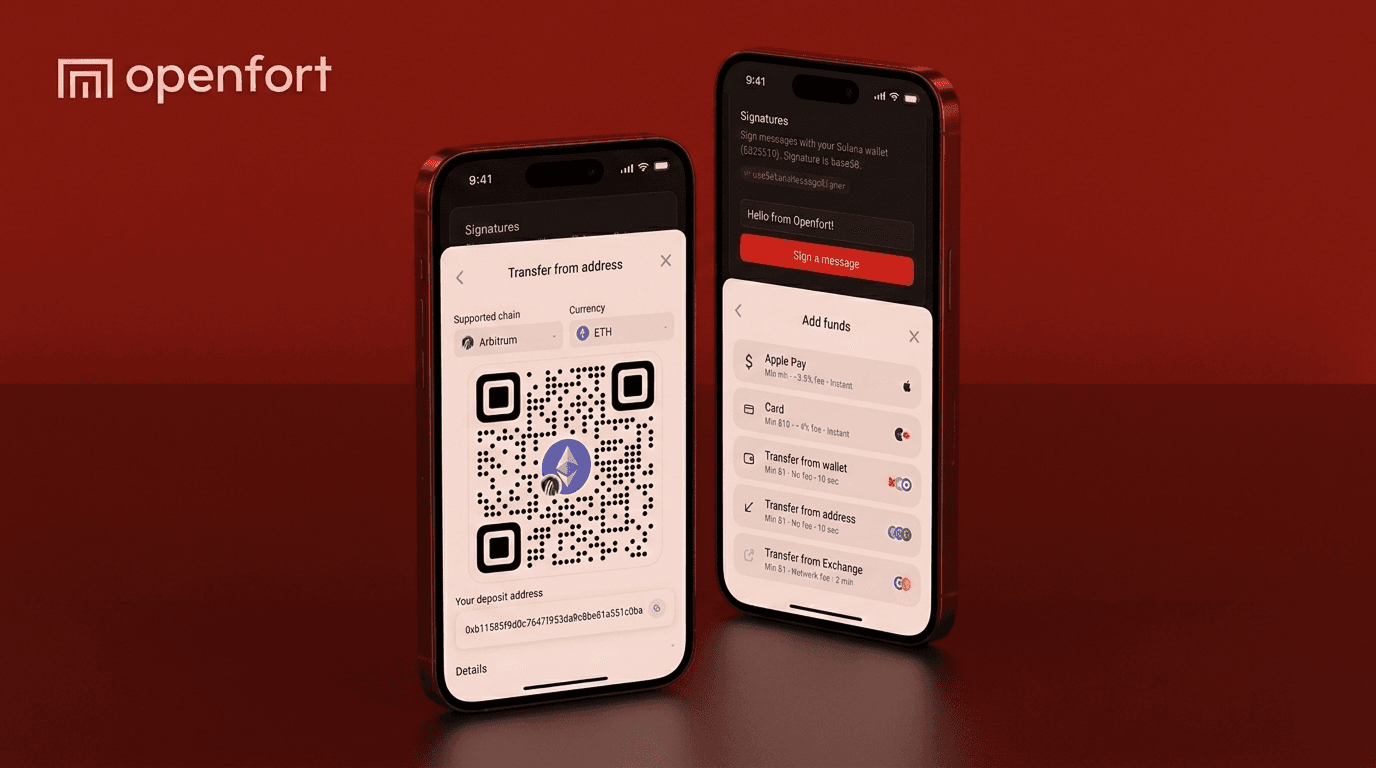
7 MoonPay Alternatives for Developers in 2026
Compare MoonPay alternatives for adding a crypto onramp to your app: Openfort, Transak, Ramp Network, Banxa, Coinbase Onramp, Stripe, and Onramper.
All Posts
Best Wallet Authentication Providers for Developers in 2026
Wallet authentication providers compared on login methods, key custody, bring-your-own-auth, and pricing: Openfort, Privy, Web3Auth, Dynamic, Magic, Turnkey.
Best Mass Payout and Global Payroll Platforms for Stablecoins
Openfort, Triple-A, NOWPayments, BVNK, and Stripe compared on batch throughput, corridor coverage, fiat off-ramps, gas sponsorship, and compliance reporting.
x402 and Agent-to-Agent Payments: Guide and Comparison
What x402 is, how the v2 spec works, and how it compares to AP2, MPP, and plain MCP tool-calling, plus which wallet providers have shipped support.
Wallet policy engines compared: Openfort, Privy, Turnkey
Spending limits, allowlists, session keys, enforcement point and audit-trail export compared across five wallet policy engines, on documented evidence.
Key Management for Wallets: TEE vs MPC vs Shamir vs HSM
A vendor-by-vendor comparison of non-custodial key management: TEE, MPC, Shamir secret sharing, device enclaves, and HSM, sourced from vendor docs.
Best AI Agent Wallets for Developers in 2026, Compared
The best AI agent wallets for developers in 2026, compared on key storage, signing location, signing latency, scoped keys, revocation, and pricing.
Best Account Abstraction Providers 2026: ERC-4337 vs 7702
Account abstraction providers compared on who runs the bundler, who runs the paymaster, which EntryPoint versions ship, and which support EIP-7702.
Multi-Tenant Wallet Infrastructure: Requirements Checklist
What wallet infrastructure needs to serve business clients: key isolation, tenant-scoped policies, deposit addresses, sweeping, and automated withdrawals.
Stablecoin Account Infrastructure for Neobanks and Fintechs
A stablecoin account needs four layers: wallet, ledger, compliance, and issuing. Openfort, Crossmint, Circle, Bridge, and Stripe compared on coverage.
Payment Orchestration for Stablecoin Payments, Compared
How stablecoin payment orchestration routes across chains, cards, banks, and ramps, and how Openfort, Fireblocks, Circle, and Crossmint compare.
What Is a Crypto Onramp? How to Add One to Your App
A crypto onramp converts fiat into crypto and delivers it to a wallet. How onramps work, the main providers, how to add one to your app, and what it costs.
AI Agent Wallet Compliance: Custody and Control Requirements
The controls an enterprise AI agent wallet needs: custody, policy, identity, audit, screening. Openfort, Circle, Coinbase, Fireblocks, and Ledger scored.
Stablecoin Wallet Infrastructure: Compliance and Security
Fireblocks, Chainalysis, TRM Labs, Sumsub, Cobo, and Openfort compared on KYC/AML, transaction monitoring, audit trails, SOC 2, and key management.
Crypto Custody Providers: Who Is Actually Licensed (2026)
A guide to crypto custody providers and digital asset custody: what regulators count as custody, which entities hold real licences, and when you need one.
Confidential balances and private yield with Zama
Openfort embedded wallets can now hold and move USDC with encrypted balances and amounts on-chain, and deposit into confidential DeFi vaults.
Wallet infrastructure: the complete guide (2026)
What wallet infrastructure covers, its four layers, custodial vs non-custodial models, build versus buy economics, and how to compare providers.
Privy vs Turnkey (2026): Pricing, Architecture, and Fit
Privy vs Turnkey in 2026: signing latency, MAU vs per-signature pricing, auth flexibility, smart account support, and who each one fits.
Fireblocks vs Turnkey (2026): custody or infrastructure?
Fireblocks and Turnkey are different categories. Compare custody, MPC vs TEE, certifications, deployment models, and pricing before you shortlist.
Agent wallet identity, permissions, and compliance
Three questions decide whether an agent can be trusted with money: who it acts as, what it may do, and what you can prove afterwards.
Server Wallets: The Backend Wallet API for Automated Payouts
Server wallets run batched payouts, treasury operations, and agent transactions from your backend. Keys stay in a TEE and a policy is checked before signing.
Fast Solana transactions using Jito bundle submission
Sponsored Solana transaction batches now go through Jito bundles, so dependent transactions execute atomically and in order.
How to Build a Telegram Bot with Built-In Crypto Wallets
Build a Telegram bot where /start creates a wallet and /send moves USDC gas-free, using Openfort backend wallets, plus the Mini App path for React.
Best Stablecoin Wallets for Apps and Businesses (2026)
The best stablecoin wallets to build into an app or business: 8 embedded wallet SDKs compared on custody, chains, gas sponsorship, self-hosting, and pricing.
Best Embedded Wallets in 2026: Top 10 SDKs Compared
Side-by-side comparison of 10 embedded wallet SDKs for 2026: pricing, auth options, smart accounts (4337/7702), and vendor lock-in scored for builders.
Private stablecoin payments using Unlink
What confidential stablecoin payments with Unlink mean for builders on Openfort
Best Ethereum Wallets for Developers in 2026
The best embedded wallet SDKs for Ethereum in 2026, compared on smart accounts, gas sponsorship, self-hosting, and pricing across EVM chains.
Best Wallet-as-a-Service (WaaS) Providers in 2026
The best Wallet-as-a-Service providers in 2026, compared on features, pricing, and use cases: Openfort, Privy, Turnkey, and Fireblocks.
Openfort adds Robinhood Chain support
Openfort now supports Robinhood Chain, giving builders the wallet infrastructure to run consumer and financial apps on Robinhood's new network from day one.
Introducing Universal Deposit Address
Universal deposit address: one address per user that auto-swaps any token on any chain into the destination wallet's native asset.
The GENIUS Act for Fintechs: What Changes by July 2028
The GENIUS Act regulates stablecoin issuers, but apps embedding USDC, PYUSD, or USD1 inherit the cascade. What changes, and 11 things to ship by July 2028.
Stablecoin KYC for Fintechs: Who Owns the Perimeter
Who owns stablecoin KYC when you embed USDC, PYUSD, or USD1: the FATF, MiCA, and GENIUS triggers, and the split between issuer, wallet provider, and app.
Polygon Wallet: A Developer's Guide to Embedding One
How developers embed a Polygon wallet with account abstraction, gas sponsorship, and HTTP 402 payments — and how Openfort compares to Crossmint.
Self-custody Crypto Wallet: A Developer's Guide
Self-custody is now an SDK decision, not a download. How embedded self-custody wallets work — and how Openfort and Privy compare for developers.
Software Cryptocurrency Wallet: A Developer's Guide
How software cryptocurrency wallets manage keys, the MPC vs smart-account trade-off, and how to embed one in your app in days.
What is an Onchain Wallet? A Developer's Guide
An onchain wallet holds the keys that control blockchain assets directly. How they work, how keys stay safe without seed phrases, and how to ship one.
EIP-7702 Explained: How Smart EOAs Work in 2026
EIP-7702 lets EOAs delegate to a smart contract — batching, gas sponsorship, and session keys without changing address. Architecture and builder's checklist.
How to Migrate from Alchemy AccountKit
Step-by-step guide to migrate your React app from Alchemy Account Kit to Openfort embedded wallets after Alchemy's signer sunset.
Best Privacy Apps in 2026
A curated lineup of consumer-facing privacy apps worth knowing in 2026, with a short feature spotlight on each.
Best Stablecoin Apps in 2026
A curated lineup of consumer-facing stablecoin apps worth knowing in 2026, with a short feature spotlight on each.
Best Trading Apps in 2026
A curated lineup of consumer-facing trading apps worth knowing in 2026, with a short feature spotlight on each.
Best Solana Wallets for Developers in 2026
Compare the top Solana wallet providers for developers in 2026. Embedded wallets, signing, SDKs, onramps, and compliance across the Solana ecosystem.
How to Pay Employees in Stablecoins
Everything you need to know about crypto payroll — stablecoins, embedded wallets, compliance, and automation.
Building Payment Apps for LATAM
Building stablecoin payment apps for Latin America: country-by-country market analysis, regulatory landscape, and infrastructure requirements.
What Is Stablecoin Infrastructure?
Stablecoin infrastructure is the developer stack for stablecoin apps: embedded wallets, smart accounts, gas sponsorship, orchestration, and key management.
Non-Custodial Wallet Infrastructure: Why Open Source Wins
The difference between custodial, closed-source non-custodial, and open-source non-custodial wallet infrastructure, and why transparency matters.
Building with Stablecoin Remittances: The Complete Guide
A technical guide to building a stablecoin remittance app: wallets, gas sponsorship, transaction orchestration, and off-ramps.
Crypto Wallet Security: A Plain-English Guide for Builders
Crypto wallet security without the jargon: what it means, where it usually breaks, and what good looks like for both users and builders.
Agentic Payments: MPP, x402, ACP and AP2 Compared
What agentic payments are, and how the four protocols behind them compare: MPP (Tempo/Stripe), x402, ACP (OpenAI/Stripe), and AP2 (Google).
Treasury Wallets: How Businesses Manage Digital Assets
A guide to treasury wallets: what they are, how they work, and how enterprises use them to secure and move digital assets across chains.
Build a Fintech App with Stablecoin on Solana
A builder's guide to creating a fintech app with embedded wallets and stablecoin payments on Solana — from architecture decisions to production deployment.
Meet the Openfort CLI
Manage wallets, gas sponsorship, policies, and transaction flows from your terminal across EVM and Solana.
What EIP-8141 Means for Developers
EIP-8141 brings native account abstraction to Ethereum, but Base backs EIP-8130 and Paradigm proposed Tempo. The tradeoffs, and how to position for each.
How to Set Up Gasless Transactions
Set up gasless transactions on Ethereum and Solana with Openfort's paymaster: code examples, policy configuration, and gas sponsorship for users and agents.
Machine Payments: When Software Pays Software
Machine-to-machine payments go past agentic commerce. What changes in the payment stack when IoT devices and servers transact with no human in the loop.
What Is Agentic Commerce? How AI Agents Buy and Pay
Agentic commerce is shopping and paying done by AI agents on a person's behalf. How it works, the protocols behind it (ACP, AP2, x402), and how agents pay.
Ethereum Gasless Transactions: Pay Gas in Stablecoins
Let users pay Ethereum gas fees in stablecoins like USDC, or sponsor gas so they never hold ETH. ERC-4337 paymasters and EIP-7702, in a few lines.
How to Build an Agent Wallet
Build an agent wallet with Openfort backend wallets: create a TEE-secured wallet, add EIP-7702 delegation, sponsor USDC gas, and send on Base Sepolia.
Top 7 Web3Auth Alternatives in 2026
Compare the top Web3Auth alternatives in 2026 after MetaMask's acquisition. Features, pricing, and scalability for embedded wallet infrastructure.
Top 7 Turnkey Alternatives in 2026
Compare the top Turnkey alternatives in 2026. Features, pricing, and scalability for choosing the best wallet signing infrastructure for your app.
How to Build Wallet Permissions with Session Keys
Build wallet permissions using session keys on smart accounts. Learn to grant agents time-limited, revocable spending power without transferring custody.
Thirdweb Alternatives: 7 Modular & Open-Source Options
Thirdweb bundles wallets, contracts, and storage. Compare Openfort, Turnkey, Privy, Magic, Web3Auth, Dynamic, and Sequence on auth, smart accounts, and pricing.
How to Build a Neobank: A PM's Guide for Stablecoins
A product manager's guide to scoping a stablecoin neobank: architecture decisions, vendor evaluation, compliance planning, team, timelines, and checklists.
Top 7 Sequence Alternatives in 2026
Compare the top Sequence alternatives in 2026 after Polygon Labs' $125M acquisition. Features and pricing for gaming wallet infrastructure.
Neobanks: From Banking Licenses to Stablecoin Rails
How stablecoins and embedded wallets collapsed neobank infrastructure from $5M+ and 18 months to weeks. A guide to the modern fintech stack.
Top 7 Privy Alternatives in 2026
Compare the top Privy alternatives in 2026 after Stripe's acquisition. Features, pricing, and scalability for embedded wallet infrastructure.
Top 7 MetaMask Alternatives in 2026
Compare the top MetaMask alternatives in 2026. Embedded wallets, smart accounts, and frictionless onboarding solutions for modern applications.
Top 6 Dynamic Alternatives in 2026
Discover the top Dynamic alternatives in 2026 after Fireblocks acquisition. Compare features, pricing, and scalability to find the best wallet infrastructure.
Top 5 DFNS Alternatives in 2026
Discover the top DFNS alternatives in 2026. Compare institutional-grade security with developer-friendly alternatives for wallet infrastructure.
Coinbase Smart Wallet Alternatives: 7 Multi-Chain Options
Coinbase Smart Wallet is Base-only. Compare 7 multi-chain alternatives on chain coverage, auth flexibility, smart-account depth, and pricing.
Crypto Wallet Integration: A Developer's Guide
Crypto wallet integration for product teams and engineers: what integrating a wallet involves, the custody models behind it, and the paths that work in 2026.
Top 6 Para Alternatives in 2026
Compare the top Para alternatives in 2026. Features, pricing, and scalability for embedded wallet infrastructure beyond Para's MPC-based solution.
Technical Dive: Key Permissions for Accounts
A guide to onchain and offchain permission systems: granular access control with spending limits, contract whitelisting, and time-based restrictions.
Fireblocks Alternatives in 2026: 8 Options Compared
Fireblocks costs 999 USD a month to start. Compare Openfort, Safe, BitGo, Cobo, Anchorage, Copper, Dfns, and Turnkey on pricing, custody model, and self-hosting.
Technical Dive: Gas Sponsorship via Paymasters
How paymasters enable gas sponsorship: Verifying and ERC-20 modes, the on-chain validation lifecycle, paymasterData encoding, and security trade-offs.
Gasless Transactions on Solana
Sponsor gas on Solana with Openfort so users transact without holding SOL — and let them pay fees in stablecoins like USDC, USDT, or USDG. With code examples.
Announcing: TEE Wallets for Server Actions
Openfort now supports TEE-backed wallets designed for server actions—so you can run automated flows (agents, rebalancers, limit orders, approval bots).
OTP login is boring. That’s why it works.
Today we’re introducing One-Time Password (OTP) authentication via email and phone number (SMS) in Openfort's SDKs.
Deep dive: Stealth Addresses
How Ethereum's stealth address standard solves the address reuse problem without zero-knowledge proofs
Top 10 Openfort features in 2025
Before moving into 2026, let’s recap some of the best features we shipped in 2025.
Prediction markets for builders: Make “belief” tradable
Prediction markets for builders: how they work, key design choices (liquidity + resolution), and how embedded wallets make trading and settlement usable.
Top 6 ZeroDev Alternatives in 2026
The top ZeroDev alternatives for smart account infrastructure in 2026, compared on ERC-4337 support, paymasters, session keys, and stacks.
Top 7 Magic Link Alternatives in 2026
Compare the best Magic Link alternatives in 2026. Features, pricing, and smart account support for choosing the right embedded wallet auth infrastructure.
Parallelizable Paymasters in EntryPoint v0.9
Openfort Paymaster v9 explained: async signing, ERC-20 gas sponsorship, and the protocol updates that ship with EntryPoint v0.9.
OpenSigner: Vendor-Neutral Key Management
OpenSigner enables non-custodial wallets and vendor-neutral key management — evolve your stack without asking users to start over.
Orchestration Platform: Manage Signers and Contracts
Openfort Orchestration — a unified platform that lets you monitor, debug, and coordinate activity across any signer and any smart contract.
Support for Synchronous SendTransaction
Openfort now supports EIP-7966: get one-call transaction status—receipt, pending, or error—no polling. Faster, cleaner UX for wallets, games, and agents
Support for Wallet Asset Discovery
Openfort now supports ERC-7811 wallet_getAssets, so you can fetch multi-chain asset lists from embedded wallets through an open standard, without an indexer.
Send and deposit assets with Openfort UI
This update turns the Openfort wallet widget from a passive viewer into an actionable money console—without you rebuilding flows from scratch.
Context Protocol agents that can think and pay
Openfort partners with Context Protocol to give autonomous agents trusted data, verifiable domains, and programmable wallets for secure onchain execution.
From spikes to stable: eRPC in production at Openfort
What broke, what we fixed, and what we gained moving our multi-chain RPC from an in-house Elastic stack to eRPC—with hedging, batching, and clean metrics.
Inside x402: Enabling Payments with HTTP 402
How the x402 protocol turns HTTP 402 into a working payment layer — the request flow, the v1 and v2 wire formats, and why v2 is not a drop-in upgrade.
EOA wallet explained (and EOA vs smart wallet)
An EOA is a wallet controlled by one private key, with no code of its own. How EOAs compare to smart wallets and EIP-7702 smart EOAs.
How to Avoid Wallet Vendor Dependency
Vendor lock-in is one of the biggest hidden risks in wallet infrastructure. This guide explores two strategic approaches to maintain independence
Earn Yield with Embedded Wallets
DeFi yield gives users direct control over assets, while centralized exchanges offer yield products with more oversight and different risk profiles.
How to Migrate from Web3Modal
This guide provides a step-by-step process to migrate your React app from Web3Modal to Openfort React
Embedded Wallets: Build vs. Buy
Let's explore the real costs of building wallets from scratch versus using a solution like Openfort Wallets.
Recap: Launch Week 03
Launch Week 03 wrapped — another milestone in making wallet and ecosystem development radically easier for builders.
Introducing Funding in Global Wallets
This makes it simpler than ever to add onramps to your apps, letting users fund their wallets directly — whether from another wallet or straight from fiat.
Introducing Swift SDK
We’ve just released the Openfort Swift SDK, bringing seamless wallet integration and account abstraction natively to iOS.
Introducing React Native SDK
We’ve just released the Openfort React Native SDK, making it easier than ever to integrate wallet functionality
Introducing Multi Accounts Support
Accounts can live on the same chain or across chains, giving users and developers more flexibility in how they organize and use on-chain assets.
Introducing React SDK
The new React SDK integrates Openfort Kit auth UI elements with dedicated React hooks and TypeScript types for embedded wallets.
Building with AI: The Openfort MCP Server and AI Tools
Openfort's AI tools — an MCP server, Vercel AI SDK integration, and LLM-friendly docs — let AI assistants work directly with wallet infrastructure.
How to build a Stablecoin Wallet: A step-by-step guide
In this guide, we'll show you how to create a simple stablecoin wallet using Openfort's embedded wallet technology.
Stablecoin Payment Rails: Cost, Speed, Compliance (2026)
Stablecoin rails settle in seconds for under $0.01 — and MiCA, the GENIUS Act, and KYC rules shape how you embed them. A 2026 developer's guide.
Stablecoin Regulation 2026: Obligations by Role and Region
Stablecoin obligations for issuers, wallet providers, and builders across the EU (MiCA), UK (FCA), US (GENIUS Act, FinCEN), Singapore (MAS), and UAE (VARA).
How to Migrate from RainbowKit
This guide provides a step-by-step process to migrate your React app from RainbowKit to Openfort React
How to create a USDC wallet
In this tutorial, you'll learn how to integrate Openfort smart wallets into a mobile app to provide a usdc compatible wallet for your users.
Using Embedded Wallets with React Native app
Openfort offers a foundational framework for developers to easily implement streamlined authentication and wallet integration across various platforms.
Crypto Onboarding: Passwordless Wallets in Practice
Why seed phrases cost you signups, and how to ship a passwordless wallet that gets users to their first transaction in under a minute.
The Openfort Delegator Account: EIP-7702 in Production
Inside Openfort's EIP-7702 delegator contract: modular architecture, WebAuthn session keys, atomic batching, ERC-4337 compatibility, and the security model.
Cross-App Wallets Explained: One Identity, Every App
How cross-app (or "global") wallets give users a single, portable identity across multiple apps and chains — and how to ship one with Openfort.
What Is an Embedded Wallet? How They Work (2026 Guide)
What an embedded wallet is, how key custody and signing actually work, and why seedless onboarding converts — plus ERC-4337, EIP-7702, and gasless UX.
White Label Crypto Wallet: What It Is and How to Choose One
A white label crypto wallet is wallet infrastructure you ship under your own brand. What you can customize, the three provider types, and how to evaluate custody.
Announcing Openfort for Solana
Openfort supports Solana and can now help your project create wallets, sign signatures and send transactions.
Improving our Chain Abstraction implementation
Our newest updates and progress on the chain abstraction project and how it will link with our ecosystem SDK
4x size reduction in Openfort JS
Boost performance with 4x smaller SDKs, manage multiple wallets with Shield V2's Keychain, and get started faster with Marti's video guide.
Mobile Wallet Protocol for Unity, a public good
This powerful feature is now available to all game developers, enabling seamless connections between in-game wallets and the broader Web3 ecosystem.
Ecosystem V3: Improvements on UX and DevEx
Ecosystem V3 features dialogs for a native experience across devices and is agnostic to your signer wallet of choice.
Stablecoins 101: How They Work and What They Are For
The fundamental mechanics of stablecoins and the applications reshaping industries from remittances to corporate treasury management.
Openfort React, an open-source WalletKit for developers
Get started with Openfort Kit—a plug-and-play toolset that simplifies wallet deployment, auth, and payments for apps and webs.
Openfort adds Sophon support
This integration enables developers to leverage Openfort's powerful account abstraction capabilities on Sophon's high-performance network.
The Rise of AI Agents: Reshaping Crypto Apps
Autonomous agents — from algorithmic trading to launching memecoins — are redefining how users interact with decentralized networks.
How to build Telegram mini-app with Unity WebGL
Learn how to integrate Openfort into a Unity WebGL Telegram Mini-App. A practical guide to real-time wallet flows and onchain features in gaming apps
Extra Releases: Audits and samples
We're bringing audited contracts on ZkSync, React native support for ecosystem wallets and performance improvements.
Chain Abstraction Framework with ZK Proofs
Bridging ecosystems to create smooth experiences for their end users across any chain.
React Native support for embedded wallets
Bringing embedded wallets for mobile now with React Native SDK compatible with Expo. Create wallets, signatures and payments.
Onboard new users with Guest accounts
You no longer need to ask users to authenticate to have a wallet pregenerated. Let users dive into your app instantly, no login required.
Announcing Ecosystem Wallet V2
Launching an improved version of the ecosystem SDK. Now without the need to include api keys and much more reliable and secure communication protocol
Ecosystem Customization Tool
Enabling an even easier way to customize your ecosystem wallet directly from your browser
Understanding Native Account Abstraction in RIP-7560
How RIP-7560 transforms Ethereum's account abstraction, slashing gas costs and enhancing scalability at the protocol level.
Shamir Secret Sharing Library Audited
Discover how Openfort's Shamir’s Secret Sharing (SSS) cryptography library passed audit testing to ensure a more secure wallet infrastructure
2D Nonce: Transaction Parallelization
See how Openfort’s 2D nonce model helps developers execute multiple blockchain transactions in parallel without compromising order or finality
Introducing Global Wallets, powered by the Ecosystem SDK
Introducing the Ecosystem SDK: a solution to the fragmentation and complexity challenges that have been hindering chains' growth.
EIP-3074 to EIP-7702: Advancing Ethereum Account Abstraction
Explore EIP-7702, the innovative upgrade refining EIP-3074. Uncover how temporary smart contract roles enhance Ethereum security and simplify transactions.
NFT Minting Use Cases in Gaming
Learn how game developers are leveraging Openfort’s tools to enable frictionless NFT minting for rewards, access, collectibles, and digital identity
In-App Purchases and Onchain Gaming
See how Openfort bridges traditional in-app purchases and decentralized wallets, allowing game studios to integrate digital ownership into mobile economies
Minigames, Frames and anything in between
Frames are a new approach to embedding dynamic, interactive content into digital platforms — minigames and anything in between.
Passkeys and Account Abstraction
Passkeys are becoming an ever increasing option for users to sign transaction with their hardware devices. Let's explore how!
How to Build an Onchain Game: Best Practices & Metrics Guide
Explore our comprehensive guide on building a successful onchain game. Learn essential metrics and best practices to boost project performance. Read now!
Web3 Gaming Infrastructure: A Beginner's Guide – Part 1
Explore our intro to Web3 gaming infrastructure. Learn how blockchain boosts game development with secure, transparent, and innovative solutions.
Top Tools for Onchain Game Development
Explore the best tools for building immersive onchain games with secure, scalable wallet solutions
Technical Dive: Social Recoverable Accounts
In this article, we will explore the concept of Recoverable Account and how it can be used using Openfort’s APIs.
How to use Token Bound Account (ERC-6551)
Learn the ins and outs of the ERC6551 with Openfort's smart accounts and learn how to make them both together for your game.
Casual Gaming’s Role in Crypto Adoption
Dive into how Openfort enables game studios to integrate onchain mechanics into casual gaming titles while preserving simplicity and user retention
AA and MPC: A Practical Approach to Security
Explore the real-world benefits of account abstraction and multiparty computation (MPC) in delivering secure and scalable crypto applications
Unlocking Web3 Gaming: Lessons from Asia's Tech Hubs
Conference takeaways from Asia's gaming hubs: investor caution, Web3 skepticism, and what is shaping blockchain gaming across the region.
Technical Dive: Openfort's Architecture
Learn about the Openfort's architecture with our diagrams and see how it can help you get your game to the next level,
Cross-Game Ecosystems in Web3
Learn how Openfort supports cross-game interoperability for connected Web3 gaming experiences
Modular Wallets: Enabling Vertical Wallets at Scale
Discover how modular wallet architecture transforms crypto wallets into scalable vertical solutions for diverse applications.
Beyond the Early Web3 Game and the Rise of New Categories
Explore the potential of Web3 games, which incorporate blockchain elements such as smart contracts and NFTs, to disrupt the traditional gaming industry.
Understanding Crypto Wallets: Evolution & Future Trends
Discover how crypto wallets evolve from speculation tools to user-friendly, multi-functional solutions. Embrace innovation and unlock blockchain potential.