The wallet layer behind modern neobanks
Build your fintech in weeks, not years. We handle embedded wallets, policy controls, and gas sponsorship. You build the product your users love.
No credit card required • Free testnet accounts




Users shouldn't know they have a wallet
Create wallets for every user, embedded in your UX. Passkey authentication, social login, email OTP, and full white-label customization. Users see "Send $500." We handle the rest.
Read the docs→Programmable controls for enterprise needs
CFOs need approval workflows. Compliance needs audit trails. Risk teams need spending limits. Smart accounts with built-in policy engines cover all three, executing rules on-chain for tamper-proof enforcement.
Read the docs→


Treasury management that scales
Programmable wallets, auto-reconciliation, and real-time liquidity. Works with banks and stablecoin rails.
View APIs→Scale 2x further for the same cost
Openfort runs at half the cost per operation of any other wallet provider. Pricing is operation-based — you pay for what you use, with no volume caps or gated features.
- 1M+
- wallets created
- 10M+
- transactions
- <200ms
- signing speed
- 99.99%
- uptime
“Since working with Openfort, we can bring products to market faster than ever and turn a once-cumbersome UX into beautifully simple experiences.”
Matthew
CTO at Jeeves
The complete wallet and payment stack
Gas sponsorship
ERC20 and native sponsorship with policies to customize exactly when and how you subsidize gas. Read more
Unified dashboard
See all your users, wallets and transactions under one roof with our unified dashboard. Read more
Self-hostable key solution
Self-host OpenSigner, OSS wallet key management for full control over your key infrastructure. Read more
Learn more about stablecoin payments
Explore guides and technical deep-dives on building with stablecoins
How to Build a Stablecoin Wallet: A Step-by-Step Guide
Create a stablecoin wallet with embedded wallet infrastructure, step by step.
Stablecoin Payment Rails: The Developer's Guide
Cost, speed, and compliance of stablecoin rails — settling in seconds for under $0.01.
Payment Orchestration for Stablecoin Payments, Compared
How routing across chains, cards, banks, and ramps works, with Openfort, Fireblocks, Circle, and Crossmint compared.

Build a Fintech App with Stablecoins on Solana
A builder's guide to a fintech app with embedded wallets and stablecoin payments on Solana.
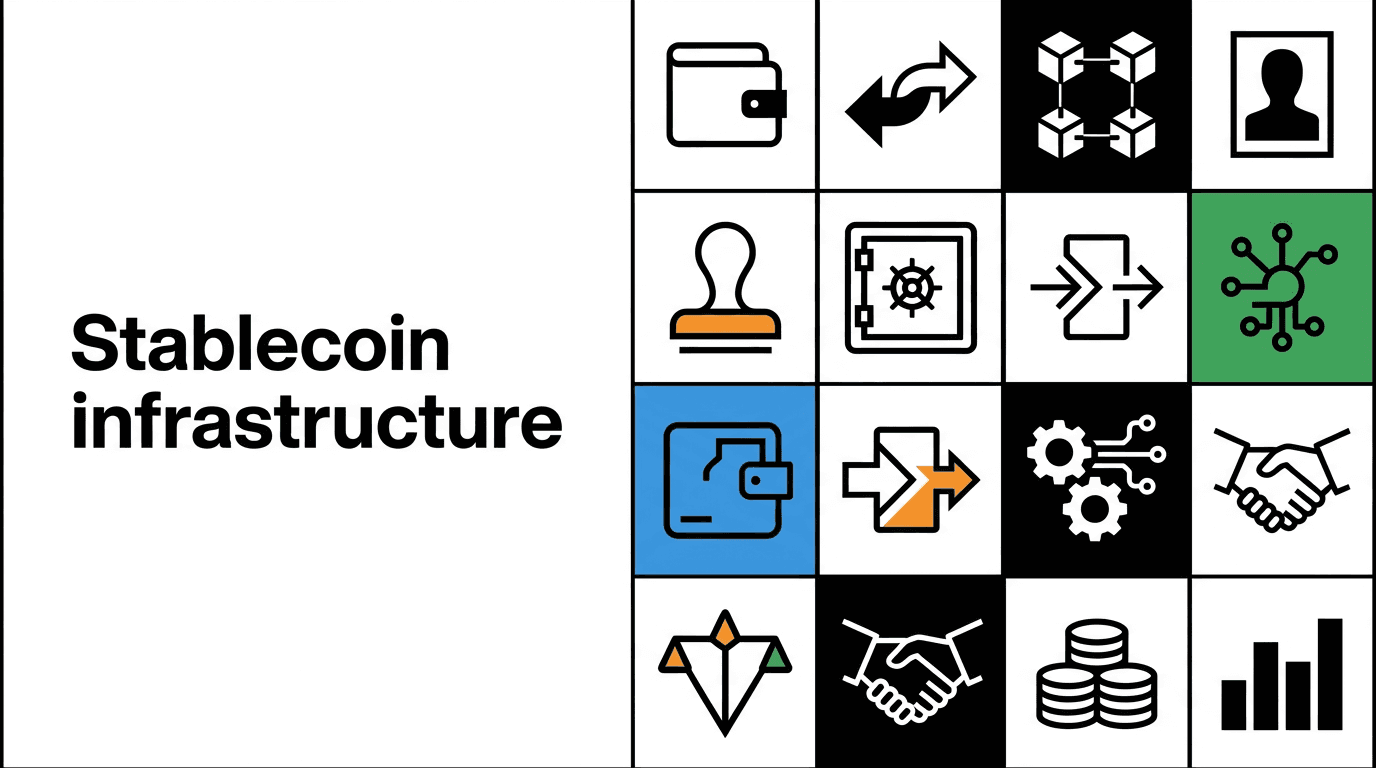
What Is Stablecoin Infrastructure?
Wallets, smart accounts, gas sponsorship, funding, and how the pieces of stablecoin infrastructure fit together.
Stablecoin Regulation and Licensing 2026
Which obligations attach to issuers, wallet providers, and builders — across MiCA, the GENIUS Act, and beyond.
Frequently Asked Questions
Can't find your answer?
Fintechs building stablecoin corporate cards, business treasury, payroll and payments, neobanking, and on/off ramp services. If you need users to hold, send, or receive stablecoins without blockchain complexity, Openfort is built for you.
Most fintechs go from SDK installation to production-ready wallets in under two weeks. Day 1: first wallet created. Day 3: authentication flow complete. Day 7: policy rules configured. Compare this to 6-12 months building from scratch.
Building in-house means hiring 3-5 blockchain specialists, 6+ months of development, $100K+ security audits, and ongoing maintenance. With Openfort, you get proven infrastructure that handles key management, gas fees, multi-chain support, and compliance, so your team focuses on product.
Openfort supports custodial, non-custodial, and hybrid models. Non-custodial wallets use passkeys or social recovery so users control their keys without the usual friction. This gives you regulatory flexibility without sacrificing user experience.
You define sponsorship rules—which users, which transaction types, spending limits. We sponsor gas on your behalf and bill you in fiat. Users never see gas fees, never need native tokens, and never experience failed transactions due to insufficient gas.
Openfort supports 40+ EVM networks including Ethereum, Base, Polygon, Arbitrum, and Optimism. Add new chains without re-architecture. Our abstraction layer means your integration code stays the same.
Yes. Openfort supports wallet screening for AML compliance, integrates with KYC providers, provides audit logs for every transaction, and enables policy rules that enforce compliance requirements onchain.