TL;DR
Embedded wallets remove the seed-phrase barrier, letting users sign in with email, social, or passkeys while the app handles keys invisibly. The top 10 providers in 2026 include Openfort, Para, Magic, Privy, MetaMask (via Web3Auth), Alchemy, Coinbase, Circle, Particle, and Fireblocks — each with different UX, account-abstraction depth, and vendor-lock-in profiles. Choose based on auth flexibility, smart-account support (ERC-4337/7702), signing latency, pricing model, and how exportable your users' keys are. The post scores each provider so you can shortlist quickly. Use it before committing to a wallet stack.
Last updated: July 15, 2026.
Choosing the right embedded wallet infrastructure matters for any application building on-chain. In 2026, developers have SDKs that onboard users with email, social login, and passkeys while maintaining non-custodial security. If you need a licensed custodian instead, our guide to crypto custody providers covers that market.
What is an embedded wallet?
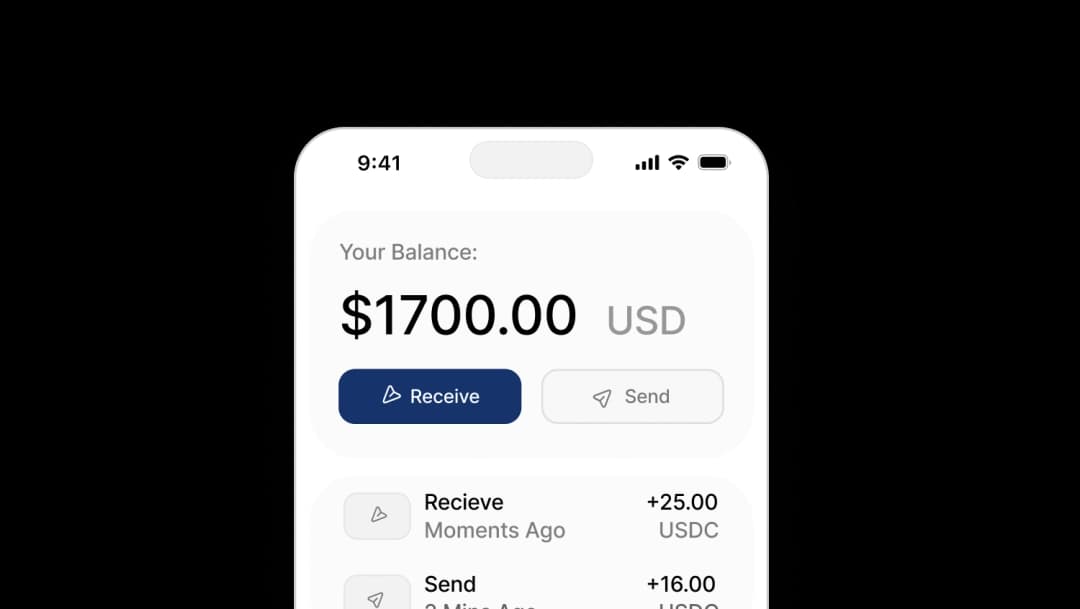
An embedded wallet is a non-custodial wallet your application provisions for a user behind the scenes, created on signup with email, social login, or a passkey, with no browser extension and no seed phrase. The keys are secured by the provider's infrastructure (MPC, a secure enclave, or a smart account), and the wallet lives inside your product rather than in a separate app.
For the mechanics — where the key lives, how signing is split, what a paymaster changes — see what an embedded wallet is and how one works.
Compared with a browser-extension wallet (MetaMask, Rabby) that a user installs themselves, an embedded wallet removes the biggest onboarding drop-off in crypto: the wallet is already there the moment someone signs up. Most embedded wallets also layer in account abstraction (ERC-4337 smart accounts or ERC-7702 smart EOAs), so you get gas sponsorship, transaction batching, and session keys on top of the wallet.
Embedded wallets vs Wallet-as-a-Service (WaaS)
The terms overlap, so it helps to separate them:
- Embedded wallet describes the user-facing outcome: a wallet baked into your app's signup flow.
- Wallet-as-a-Service (WaaS) describes the delivery model: the API/SDK infrastructure a provider sells so you don't build key management yourself.
In practice, every embedded wallet on this list is delivered as WaaS. For the broader infrastructure view — including enterprise custody and key-management primitives that aren't strictly "embedded" — see the Wallet-as-a-Service providers guide, which is the pillar this post sits under. If you're specifically building agent or stablecoin products, jump to agent wallets or embedded wallets for stablecoin payments.
Top 10 Embedded Wallet Providers for 2026
When evaluating embedded wallet SDKs, teams prioritize developer experience (DX), flexible login flows (email, SMS, social, and passkeys), and native support for advanced features like Account Abstraction (ERC-4337). Providers like Openfort offer a vertically integrated stack that includes smart accounts, gas sponsorship, and vendor-neutral key management, while providers like Para and Magic focus on universal portability and passwordless authentication. For enterprise needs, Coinbase, Circle, and Fireblocks provide regulated, compliant infrastructure tuned for institutional-scale on-chain payments and asset management.
What should you consider when choosing an embedded wallet?
When you evaluate embedded wallet SDKs, most teams care about:
- Developer experience (DX): SDKs, docs, example apps, and how quickly your team can ship.
- UX and login flows: email, SMS, social login, passkeys, and how “invisible” the wallet feels.
- Smart accounts / account abstraction: support for ERC-4337, ERC-7702, paymasters, gas sponsorship, session keys.
- Security model: non-custodial vs custodial, MPC vs smart accounts, audits, and whether users can export keys.
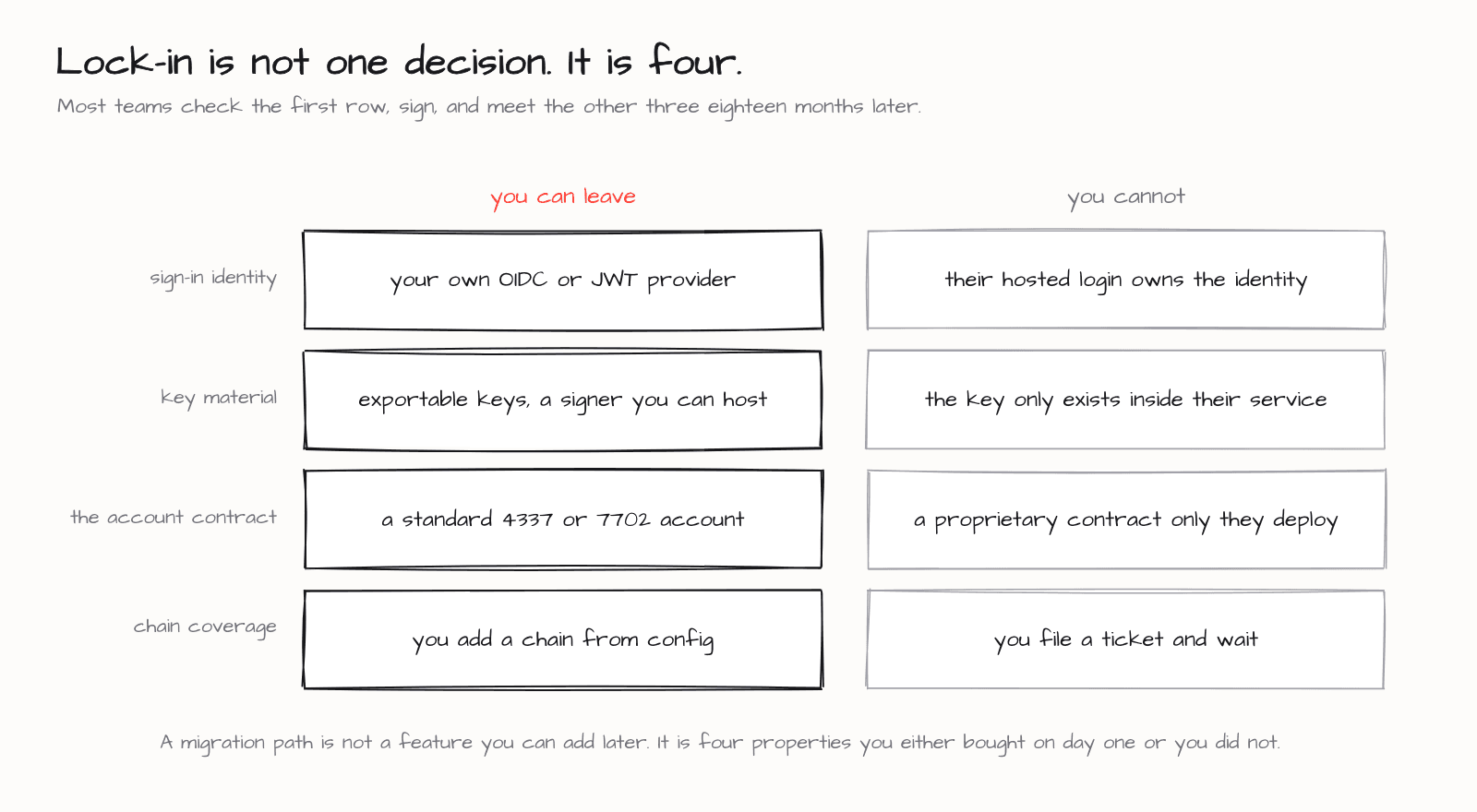
- Vendor lock-in and portability: open-source components, self-hostable key management, and clear migration paths.
- Chains and ecosystems: EVM only vs multi-chain (Solana, Cosmos, etc.) and how well they integrate with your infra stack.
Here are the top embedded wallet options for on-chain apps in 2026.
Top 10 Embedded Wallets in 2026
Openfort is a wallet-as-a-service platform for embedded wallets and “global” cross-app wallets. It bundles passkeys, account abstraction, gas sponsorship, and orchestration so you don’t have to stitch together three or four separate vendors.
Smart wallets created through Openfort are ERC-4337-compatible smart accounts, and Openfort also supports ERC-7702 smart EOAs where available. That lets you use paymasters, session keys, batched transactions, and other AA features without changing your app’s core business logic.
Under the hood, Openfort uses OpenSigner, an open-source, self-hostable key-management stack, so teams can bring their own infra, mix and match components, or migrate while keeping user addresses stable instead of being locked into a single provider.
- Vertically integrated AA stack: smart accounts, paymaster, bundler, and orchestration.
- Open-source, self-hostable key management to reduce vendor lock-in.
- Multi-chain support (EVM and SVM) and SDKs for web, mobile, and game engines like Unity.
- Cross-app wallets via the Ecosystem SDK to keep the same identity across apps.
If you want embedded wallets with account abstraction built in and the option to self-host the critical parts (keys, signing, routing), Openfort is usually the first place to look.
- Para
Para focuses on universal embedded wallets that work across multiple apps and ecosystems, so users don’t have to re-onboard or export keys between products.
It is very passkey-centric, tying each non-custodial wallet to a passkey stored in the user’s device (iCloud Keychain, Android Keystore, etc.) and using distributed key generation for recovery. Para’s SDKs span EVM, Solana, and Cosmos, with strong emphasis on UX across mobile, web, and server.
If you want cross-app portability and are happy to standardize on Para’s approach to identity and wallets, it’s a strong universal embedded wallet option.
- Magic
Magic offers non-custodial embedded wallets with passwordless authentication and multi-chain support. Developers typically integrate Magic to give users instant wallet creation and login via email, SMS, or social accounts, without forcing a separate extension or app.
Magic is often used when teams want a familiar “web-style” login and value enterprise features like API wallets, compliance tooling, and broad SDK coverage across web and native mobile.
- Privy
Privy is a wallet and authentication toolkit built around “progressive onboarding”. You can let users start with email, SMS, or social login and then gradually connect external wallets (MetaMask, Coinbase Wallet, etc.) as they become more advanced.
Privy provisions embedded wallets under the hood for users who don’t have a wallet yet, while offering strong connectors and integrations for swaps, bridges, and gas sponsorship. It’s a common choice when you need both embedded wallets and reliable connectors in a single UX.
See how Openfort compares to Privy.
- MetaMask Embedded Wallets
MetaMask Embedded Wallets (formerly Web3Auth) is a pluggable embedded wallet infrastructure now offered under the MetaMask brand. It provides social/OAuth login, non-custodial wallets, and SDKs for React, Android, Unity, and more, so you can embed a MetaMask-like experience directly into your app.
It’s a good fit if you like the MetaMask ecosystem, want deep compatibility with external wallets, and need multi-platform SDKs for web and mobile games.
See how Openfort compares with MetaMask.
- Alchemy Account Kit / Smart Wallets
Alchemy’s Account Kit and Smart Wallets combine embedded wallets, social login, and account abstraction infrastructure. You can create smart contract wallets for every user and plug into their Gas Manager and Bundler APIs to sponsor gas and batch transactions.
Because it’s tightly integrated into the broader Alchemy platform, it’s especially attractive if you’re already using Alchemy RPC, indexing, or analytics and want an “all in one” infra stack.
- Coinbase Developer Platform – Embedded Wallets
Coinbase Developer Platform (CDP) Embedded Wallets let you add non-custodial wallets directly into your app, with onboarding via email, SMS, or OAuth instead of seed phrases or browser extensions.
CDP focuses on an “everything wallet” concept: onramps, swaps, balances, USDC rewards, and policy controls are built-in, backed by Coinbase infrastructure. It’s particularly compelling for fintech and enterprise teams building on Base or integrating stablecoin payments at scale.
- Circle Programmable Wallets
Circle’s wallet-as-a-service offering (“Programmable Wallets” and Modular Wallets) lets developers embed secure wallets in their apps with integrated USDC support and a strong focus on payments, compliance, and enterprise needs.
If your roadmap is heavily centered on stablecoin rails, global payouts, and regulated financial use cases, Circle’s wallets give you a direct line into USDC plus infrastructure tuned for payment flows.
- Particle Network
Particle Network positions itself as a “Smart Wallet-as-a-Service” and wallet abstraction layer. It combines social logins with MPC-secured and AA-enabled embedded wallets, with SDKs across web, mobile, and game engines.
Particle is interesting when you want modular AA (choice of paymasters, bundlers, and smart accounts) and multi-chain UX, including support for chains like Base, Kava, Klaytn, and others out of the box.
- Fireblocks Wallet-as-a-Service and Embedded Wallets
Fireblocks offers Wallet-as-a-Service and Embedded Wallets aimed squarely at enterprise and institutional use cases. Their infrastructure uses MPC for key management and is designed to let businesses create and manage large numbers of wallets while keeping strong controls and auditability.
If you’re building an exchange, fintech platform, or large-scale financial product where security, policy controls, and compliance are the main driver (rather than pure consumer UX), Fireblocks tends to be on the shortlist.
See how their acquired company, Dynamic, compares to Openfort.
Other embedded wallet SDKs to know
The ten above are the most common shortlists, but a few more embedded wallet and WaaS SDKs show up in evaluations depending on your requirements:
| Provider | Angle | When it fits |
|---|---|---|
| Dynamic | Multi-wallet auth + embedded fallback (now part of Fireblocks) | Apps where users bring an external wallet but new users need an embedded one |
| Turnkey | Secure-enclave key management primitive | Treasury, high-frequency signing, teams that want to own the wallet UX |
| Crossmint | Wallets + payments + onramps + compliance | Consumer and agent products that need card rails and EU compliance |
| Dfns | Delegated-signing key infrastructure via REST API | Teams that require no single party ever holds a complete key |
| Thirdweb | Embedded wallets inside a broad EVM toolkit | Products spanning contracts, tokens, and marketplaces alongside wallets |
Web3Auth now ships as MetaMask Embedded Wallets (#5 above), and Dynamic is now part of Fireblocks — the same technology, different brands after 2025's consolidation.
Embedded wallet SDK: a 60-second quickstart
Most embedded wallet SDKs follow the same shape — wrap your app in a provider, drop in a button, and the SDK handles auth and wallet creation. Here's the pattern with @openfort/react:
_14// npm i @openfort/react_14import { OpenfortProvider, OpenfortButton } from '@openfort/react'_14_14function App() {_14 return (_14 <OpenfortProvider_14 publishableKey={process.env.NEXT_PUBLIC_OPENFORT_PUBLISHABLE_KEY!}_14 // walletConfig, recovery, and supported chains trimmed for brevity_14 >_14 {/* One button renders auth + provisions an embedded smart-account wallet */}_14 <OpenfortButton />_14 </OpenfortProvider>_14 )_14}
Signing in creates a non-custodial smart account with gas sponsorship and session keys available out of the box. See the full embedded wallet quickstart for the complete config.
Detailed feature comparison
| Provider | Custody model | Chains | Auth methods | Smart accounts (4337 / 7702) | Gas sponsorship | Pricing basis | Key export | Open-source / self-host |
|---|---|---|---|---|---|---|---|---|
| Openfort | Smart account + open signer | EVM + Solana | Email, social, passkey | Native (4337 + 7702) | Free tier | Ops / MAW | Yes | Yes (OpenSigner) |
| Para | Passkey + DKG (MPC) | EVM, Solana, Cosmos | Passkey, email, social | Via integrations | Partner | MAW | Yes | No |
| Magic | Delegated key (MPC) | EVM + others | Email, SMS, social | Not native | Not native | MAU | Limited | No |
| Privy | TEE + SSS (MPC) | EVM, Solana, Bitcoin | Email, social, passkey | Via third party | Via integration | MAU | Yes | No |
| MetaMask (Web3Auth) | MPC (Shamir shares) | EVM + others | Social / OAuth | Not native | Not native | MAU | Yes | Partial |
| Alchemy Account Kit | Smart account | EVM | Social, email | Native (4337) | Yes (Gas Manager) | Usage | n/a (contract) | Partial |
| Coinbase CDP | MPC / smart wallet | Base + EVM | Email, SMS, OAuth, passkey | Base smart wallet | Yes | Usage | Limited | No |
| Circle | MPC / programmable | EVM + others | Developer-controlled | Modular (SC option) | Via paymaster | Usage | Controlled | No |
| Particle | MPC + AA | Multi-chain EVM | Social, email | Native (4337) | Yes | Usage | Yes | Partial |
| Fireblocks | MPC (institutional) | 50+ chains | Enterprise auth | Not native | No | Enterprise contract | Controlled | No |
Openfort is the only option that pairs native smart accounts (ERC-4337 and EIP-7702) and free-tier gas sponsorship with a self-hostable, open-source signer — so you can keep the wallet's critical path under your own control instead of a single vendor's.
Related guides
- Best Wallet-as-a-Service (WaaS) providers — the infrastructure pillar this post sits under
- Best Ethereum wallets for developers — the EVM developer-wallet view
- Best agent wallets for developers — wallets for autonomous AI agents
- Best embedded wallet providers for stablecoin payments — the stablecoin-payments view
Try Openfort as Your Embedded Wallet
Whether you’re building a consumer app, a game, an agentic app, or a fintech product, Openfort lets every user get a non-custodial smart wallet with familiar logins, gasless UX, and no vendor lock-in. By combining embedded + cross-app wallets, account abstraction, and an open, self-hostable key stack, you can ship fast today while still keeping full control of your infra tomorrow.
Interested in integrating embedded wallets into your app? Let’s talk