Gaming has transformed significantly since the days of Pong in the 1970s. Today, we are seeing the rise of broader ecosystems that involve multiple games, publishers, and organizational structures. This evolution shifts the focus from individual games to how players interact across entire networks.
See how Openfort powers Web3 gaming with embedded wallets, gas sponsorship, and session keys.
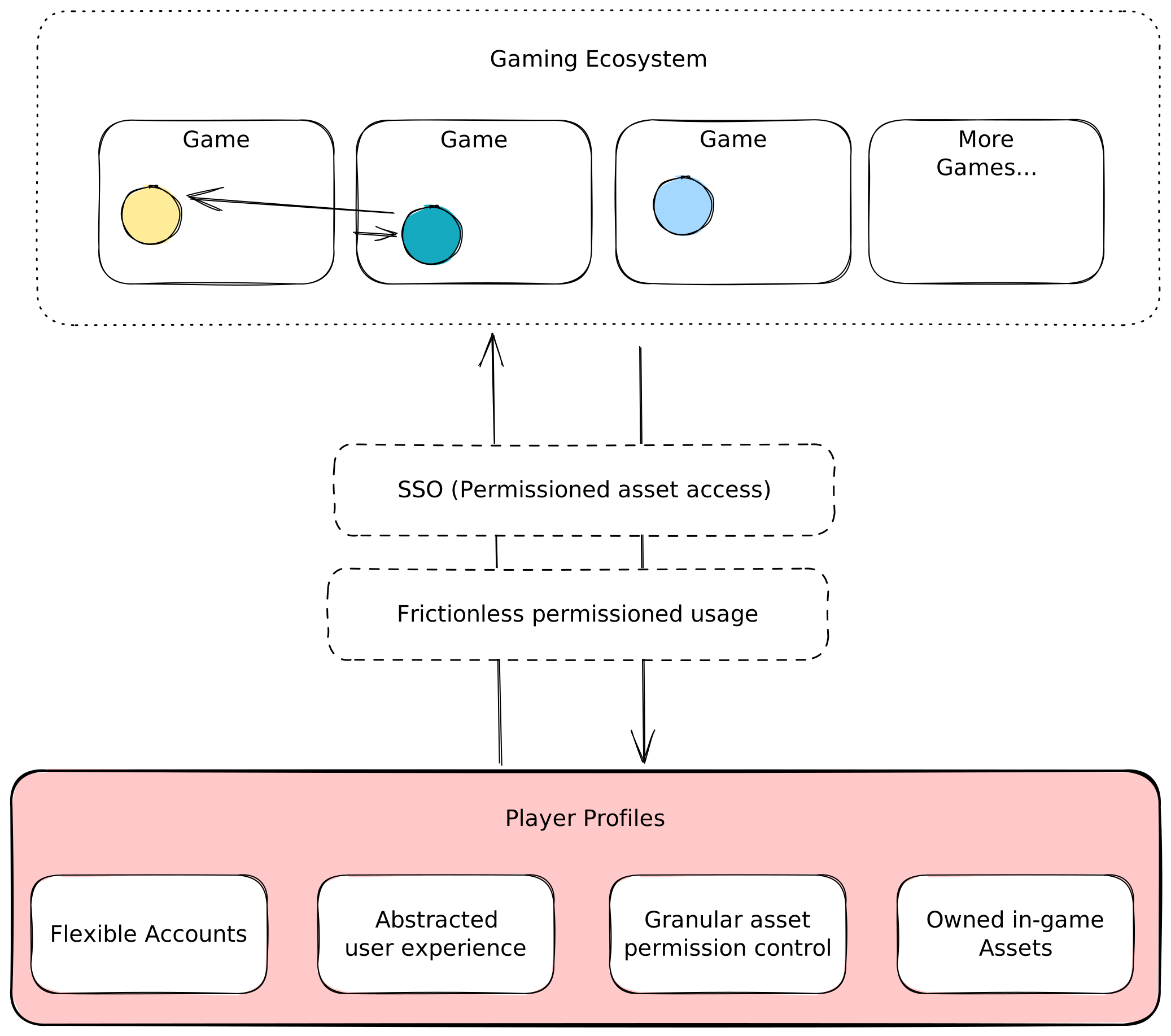
At Openfort, we have developed a framework to support this new gaming landscape. Our tools enable single sign-on (SSO), cross-game asset flow, achievement tracking, and enhanced security controls. This approach provides a seamless experience for players while simplifying development for studios.
What is Cross-Game Interoperability?
Cross-game interoperability is the ability for digital assets, currencies, and player data to move freely between different gaming environments. In a Web3 context, this means a player can earn a reward in one game and use or trade it in another, powered by decentralized smart contracts and portable digital identities.
The Openfort Framework: A New Approach to Gaming
Our framework introduces several features that are designed to enhance the gaming experience:
- Single Sign-On Across Games: One ecosystem-level profile serves as an SSO for any game within the ecosystem.
- Interoperability: Secure and standardized cross-game compatibility for in-game currencies, assets, and more via a player's managed or connected external wallet.
- Achievement Tracking: Ecosystem-level support for soul-bound tokens, achievements, XP, rank, and more.
- Enhanced Permissioning Flows: OAuth-like authorization for asset control across ecosystem games.
- Ecosystem Control & Security: Explicit approval for games requesting access to profile assets and authentication.
Creating a Seamless Experience for All
Our framework is designed to work seamlessly for everyone involved:
- Players: APIs work with ecosystem profiles and standard game-level player accounts, requiring no additional implementation.
- Developers: No extra logic is needed to make frictionless API calls on behalf of players using ecosystem profiles. The same accessToken and decryptWalletKey are provided for seamless integration with existing API usage.
Potential Use Cases
Our framework can be applied to a variety of scenarios:
- Gaming DAOs with Partnered Games
- Game Publishers with Multiple Games
- Game Marketplaces
- Gaming Guilds and Gaming Communities
Benefits of Gaming Ecosystems
The Openfort framework provides several advantages for both players and developers:
-
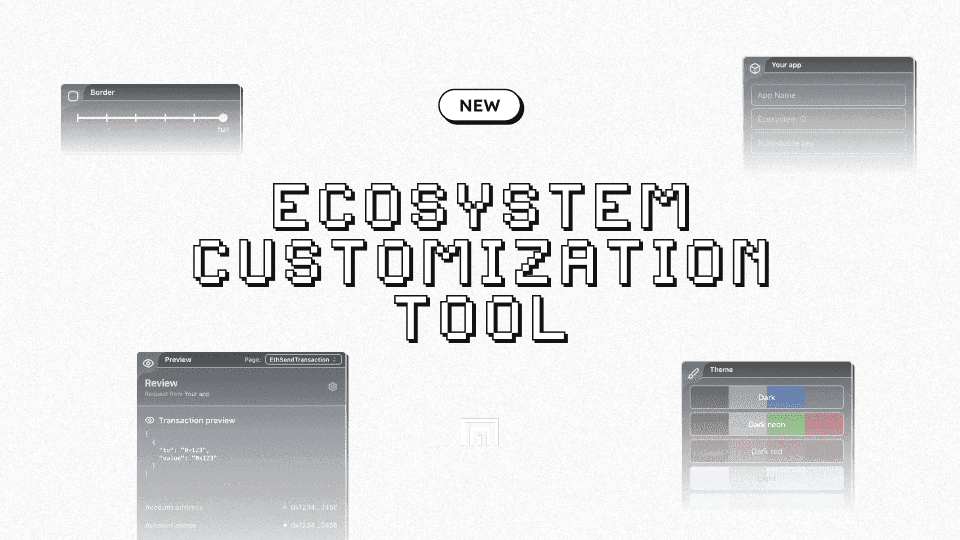
Customization and Branding: Partners can create their platform's UI/UX flow for ecosystem integration with fully documented APIs or opt for the existing UI/UX flow. Customization options include brand colors, logos, icons, background images, domain/subdomain attachment, and more.
-
Security and Private Asset Access: Our ecosystem authentication flow provides a clear way for games to request permission to access a player's profile assets. This approach works like a standard OAuth flow, reducing the risk of compromised accounts.
-
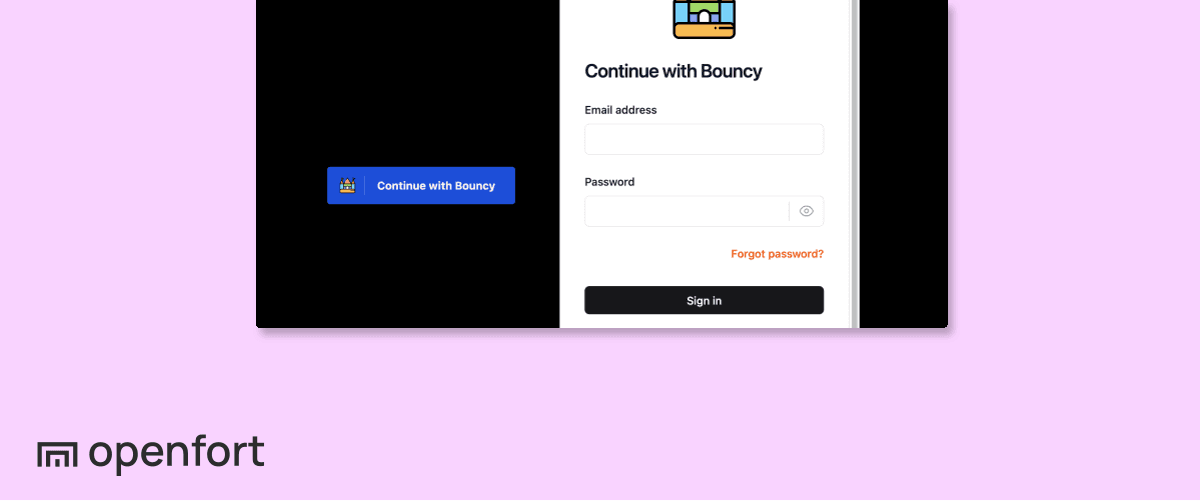
Fast Integration for Any Game: The ecosystem product integrates with new or existing games through a simple "Sign In With..." button. This requires no extra logic or heavy development, ensuring a smooth start for players and teams.
-
Secure and Permanent Progress: Switching or losing a device won't disrupt your progress. Your Game ID ensures your account remains secure and accessible, so you can pick up exactly where you left off.
-
Unified Gaming Experience: Imagine connecting all your favorite games to a single ID. By creating a unified profile, you enjoy a streamlined experience across our entire network of games.
-
Build and Connect with Your Community: Interaction is key to the gaming experience. With Game ID, you can find and connect with friends across different titles. The community you build in one game stays with you as you explore new worlds.
-
Portable Virtual Assets: Your Game ID is the key to our marketplace. You can easily trade, buy, and sell assets from any game within the ecosystem, making asset management a natural part of your gaming journey.
Let's get started by looking at our documentation and our Youtube video.