Prediction markets are evolving from niche experiments into a mature product category. Success in this space is no longer just about the underlying philosophy—it's about the technical plumbing: making belief tradable through efficient collateral management, low-latency execution, and seamless settlement.
Prediction Markets Architecture and Design
Building a successful prediction market requires coordinating four critical architectural layers: market creation, trading infrastructure, custody/settlement, and outcome resolution. While builders often focus on the trading UX, the underlying "plumbing"—such as using embedded wallets for session-based signing—is what determines whether a product can scale to high-frequency usage. By abstracting away manual transaction approvals and gas management, developers can create "consumer-grade" markets where users can browse, trade, and redeem winnings instantly without the constant friction of traditional on-chain signatures.
This is a builder-friendly guide to the plumbing: what prediction markets are, how the core architectures fit together, what can go wrong, and how embedded wallets change what you can realistically ship.
The Belief-to-Price Machine
At their core, prediction markets “turn belief into price”: instead of asking what people think, they ask what people will stake. Prices move with new information, and over time the market price becomes a continuously updating signal of aggregated belief.
The useful distinction is incentive alignment: prediction markets reward accuracy (or profitable accuracy), not expression.
So yes, it’s “probabilities.” But it’s also collateral, settlement, resolution, and trust.
The Unsexy Stack
No matter how “onchain” or “regulated” the venue is, most prediction markets collapse into the same four architectural layers:
- Market creation (define the question, outcomes, and timeframe)
- Trading (where users price risk)
- Custody & settlement (escrow collateral, hold positions, pay out)
- Resolution (determine the final outcome)
This framing is critical because builders often start with the trading UX and leave everything else as “later.” Later is where you lose.
Also: the category has scaled fast enough that “later” arrives quickly. One report cites monthly notional volume rising from under $100M to over $13B since early 2024, alongside large jumps in transactions and monthly active users.
High-frequency usage is brutal on weak infrastructure.
The Liquidity Sandwich
Liquidity is the filling. Distribution is the bread. Most teams obsess over the filling and then wonder why users don’t show up.
Builders typically choose between two postures:
Build on top of existing liquidity (app-layer)
Polymarket and Kalshi have become reference points, and both are explicitly encouraging third-party builders—via programs that let external teams build new interfaces and workflows on top of their liquidity.
That “builder program” direction matters because it treats the venue less like a destination site and more like an underlying market layer you can route into your own product.
You move faster. You also inherit constraints (market rules, resolution model, and compliance perimeter).
Build a new venue (full-stack)
Some teams are starting from scratch with their own market structures, dispute resolution models, and liquidity designs—trading speed for control.
This is a different sport. A prediction venue is closer to a derivatives product than a “web app with a chart.” You’re not just building software—you’re operating a market.
The Regulation Perimeter
One reason Polymarket vs. Kalshi is such a useful mental model is that it shows two viable “perimeters”:
- Polymarket is described as crypto-native and permissionless, with decentralized settlement mechanisms and public primitives/APIs to build on.
- Kalshi originated as a centralized, CFTC-regulated exchange—and has been extending onchain using tokenized prediction markets (starting with Solana), where outcomes can be represented and exchanged as onchain assets.
Builders should read that as: the category is converging on tokenized outcomes + composable distribution, even when the regulatory posture differs.
The Resolution Tax
If liquidity is the expensive ingredient, resolution is the tax you pay forever.
Resolution answers three questions: who decides, how disputes work, and when it’s final. Get this wrong and your market becomes a courtroom with a price chart.
A useful builder heuristic:
- If resolution is slow or contestable, spreads widen.
- If resolution is opaque, users churn.
- If resolution is gameable, you get adversarial trading that looks like “market activity” until it empties your credibility.
Some emerging products are experimenting with hybrids—AI-assisted workflows plus internal review—precisely because “pure” resolution designs can be hard to operate at scale.
In practice, resolution is not a detail. It’s your root of trust.
The Wallet Friction Cliff
Here’s the non-obvious truth: prediction markets are session-heavy. People don’t place one trade and leave. They browse, enter, adjust, close, redeem, repeat.
That makes wallet UX existential.
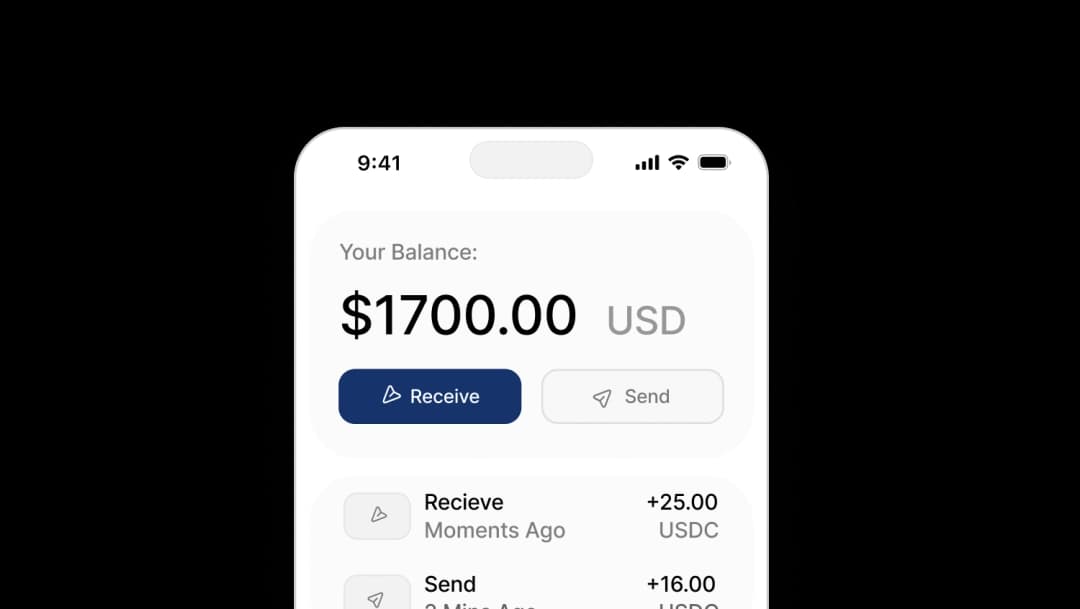
One primer puts it plainly: wallets are the account layer where collateral lives, trades execute, and winnings settle—and when that experience is slow, complex, or brittle, adoption stalls.
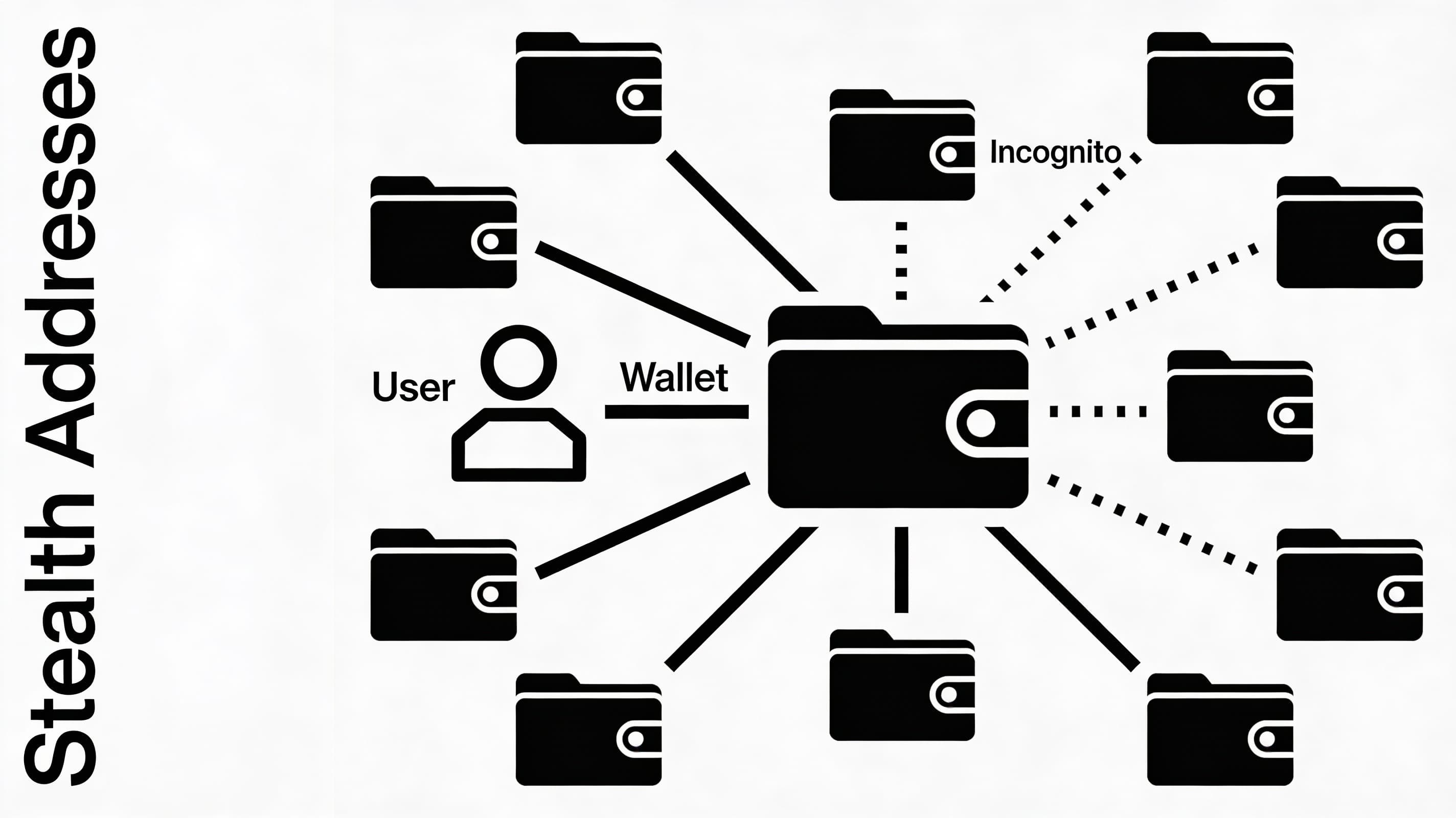
This is why the “embedded wallet” approach shows up again and again in prediction market writeups: if users must install an extension, acquire gas, approve tokens, and sign repeatedly before a first meaningful action, your product is effectively a filter for on-chain power users.
And prediction markets are not a category that can afford a high-friction filter.
The Account Layer Sidecar
This is where the Openfort angle is real (and conveniently unromantic):
Most prediction market teams end up rebuilding the same account plumbing:
- onboarding + wallet creation,
- funding with stablecoins,
- repeated signing without breaking flow,
- recovery,
- policy controls,
- and—if you want "consumer-grade"—gas abstraction.
Competitors will describe this as “embedded wallets + session-based signing,” where users authenticate once and subsequent actions stay efficient without constant prompts.
Openfort’s worldview is similar but builder-first: make wallets our problem, not yours—so you can focus on market design, distribution, and resolution instead of re-implementing account infrastructure in every app.
In practice, that means treating the wallet as a programmable account layer:
- create wallets at signup (passkeys/social/email style UX),
- sponsor transactions when it improves conversion,
- batch steps (approve → trade) so flows feel like one action,
- use session permissions / scoped keys so frequent actions don’t equal frequent friction,
- enforce policy controls (spend caps, contract allowlists, rate limits) so smooth UX doesn’t become smooth exploitation.
It turns out “wallet infrastructure” is just UX + risk containment, expressed as code.
A builder’s blueprint: the minimal system that actually ships
If you’re building a prediction market product (not just a demo), here’s the simplest end-to-end loop you need to make boring and reliable:
-
Question → market Define outcomes, expiry, collateral asset, and resolution rules.
-
User → account User signs in; an embedded wallet/account is created or linked.
-
Funding → collateral Move stablecoin collateral into the account (onramp, transfer, or internal routing).
-
Trade → position User buys/sells outcome shares (AMM, order book, or hybrid).
-
Portfolio → reality Show positions, P/L, and exit paths. This is mostly indexing and data integrity.
-
Resolution → finality Oracle/arbiter finalizes outcome; disputes handled per spec.
-
Redeem → payout Winning shares redeem into collateral; funds settle back to the user account.
If that sounds obvious, good. “Obvious” is what you want. The teams that win tend to make this loop feel like a standard app flow—despite sitting on top of a market structure.
The future is modular (and slightly annoying)
One report makes the key point: because event contracts can be tokenized and markets can live onchain, a single market can power many front ends—liquidity flowing across wallets, DeFi protocols, media platforms, and consumer apps.
That’s the category trajectory: not one prediction market to rule them all, but prediction markets as a modular ecosystem—a shared layer that gets embedded everywhere.
And that brings us back to the builder takeaway:
Usually, prediction markets are sold as “truth.” But this time the opportunity is distribution + UX + settlement—make uncertainty tradable without making users learn the machinery.
It turns out the winners won’t be the most ideological. They’ll be the most operational.