Many people look at early Web3 games and doubt that the technology can reach a mainstream audience. However, dismissing a new technology based on its first iterations is often short-sighted.
Web3 games use blockchain elements like smart contracts and non-fungible tokens (NFTs) to give players true digital ownership. This shifts control from developers back to the players, allowing them to trade and manage assets without a central gatekeeper.
Early productions don't define the future potential
When Nokia first ported Snake to mobile phones, many dismissed it as a distraction for casual users. Today, mobile gaming is a massive, multi-billion dollar industry. Just as early mobile games didn't define the potential of smartphones, current Web3 experiments shouldn't be seen as the final form of the genre.
In a few years, Web3 titles will likely exist naturally alongside console and mobile games, with players focusing more on the gameplay than the underlying tech.
How "Blockchain Gaming" got started
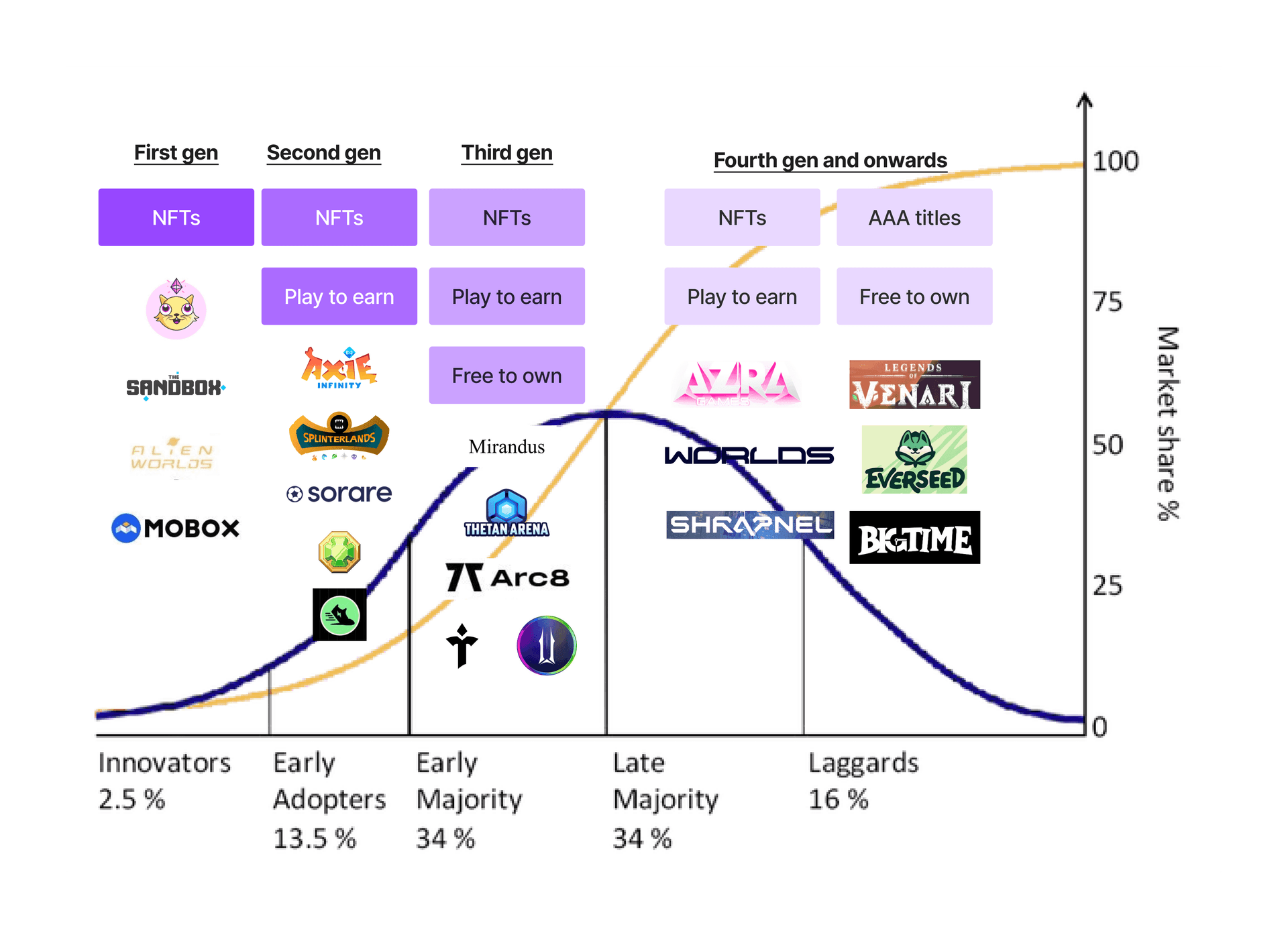
From CryptoKitties and their lack of user engagement (despite having breeding capacity) to P2E with Axie, onboarding thousands of new players to the upcoming third generation of games will start bringing in the larger mainstream gaming community as production value increasingly aligns with traditional AAA games (together with the economic incentives that come with play-to-earn).
What is Free-to-Own (F2O)?
Free-to-Own (F2O) is a gaming model where players receive digital assets for free before they even start playing. Unlike Free-to-Play, where players are eventually funneled into buying locked items, F2O focuses on building a community of owners first. This empowers players by giving them items with immediate value and utility within the game's ecosystem.
According to industry data, players spend over $120 billion annually on mobile in-game items they don't actually own. Free-to-Own aims to flip this model by giving that value back to the community.
Evolution beyond free-to-play and ownership of in-game items
Players are incentivized to own the item, so they now own the item and can develop further value to it. Essentially, this democratises the free-to-play economy and gives it out for free.
The world we are heading toward isn't limited by digital scarcity. Imagine 3 million NFTs given to 3 million wallets for free. While the individual floor price might start at zero, the most successful communities will create immense demand around these assets.
Virtual items cost almost nothing to generate, so the logical step is to give them away to capture the ultimate currency: attention. By onboarding players with free ownership, we create a more sustainable path toward mass crypto adoption. That is the probable end-game for Web3 gaming.
