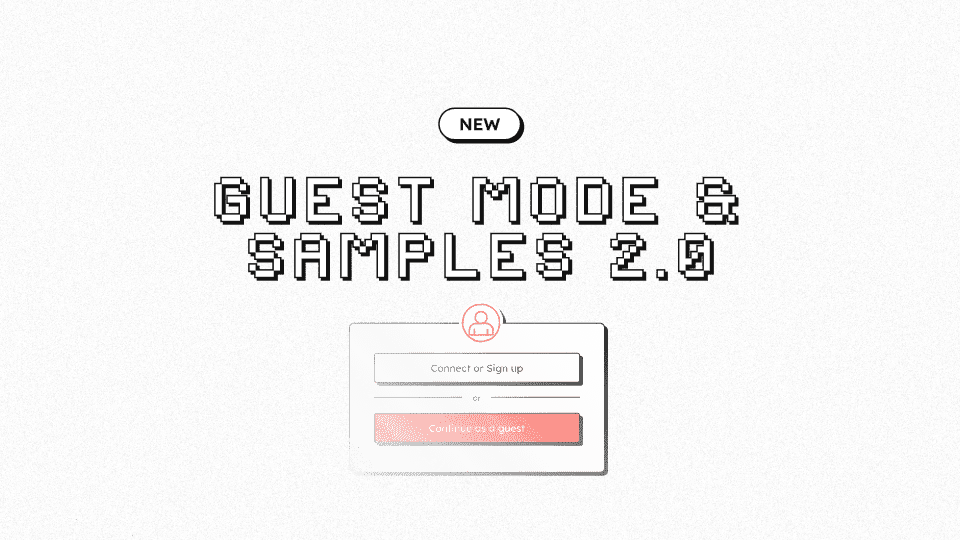
You can now onboard users instantly without requiring a login. Our new Guest Accounts feature allows players to jump into your app and start building their digital inventory immediately, with the option to link a permanent identity later.
What is an Openfort Guest Account?
A Guest Account is a temporary, local-first wallet that is created automatically when a user opens your app. It uses the device's local storage to persist a player ID and an embedded wallet, allowing the user to return and continue their progress without needing to authenticate. When the user is ready, they can "link" their guest account to a social login or email, preserving all their assets and history as they transition to a full account.
Guest Accounts let users "continue as a guest" and upgrade to full accounts later. This feature is ideal for gaming and shopping apps, where reducing friction is key to keeping users engaged.
How Guest Accounts work
-
Instant engagement When users onboard via guest accounts, they can interact with your app right away. Behind the scenes, Openfort creates a persistent player ID and a fully-functional embedded wallet tied to the user’s local storage.
-
No login friction Guest accounts allow users to return to your app on the same device and access their account and wallet without needing to log in. This makes re-engagement effortless.
-
Easy account upgrades Guest accounts are fully upgradeable to logged-in accounts. Calling the
link()function transitions a user to a full account and keeps their assets and history.
Streamlined samples: Focused and maintained
We’ve also simplified our sample projects to better support your development journey.
After listening to community feedback, we realized that too many sample projects could be overwhelming. To address this, we’ve curated the most useful and maintainable examples to make it easier for developers to get started.
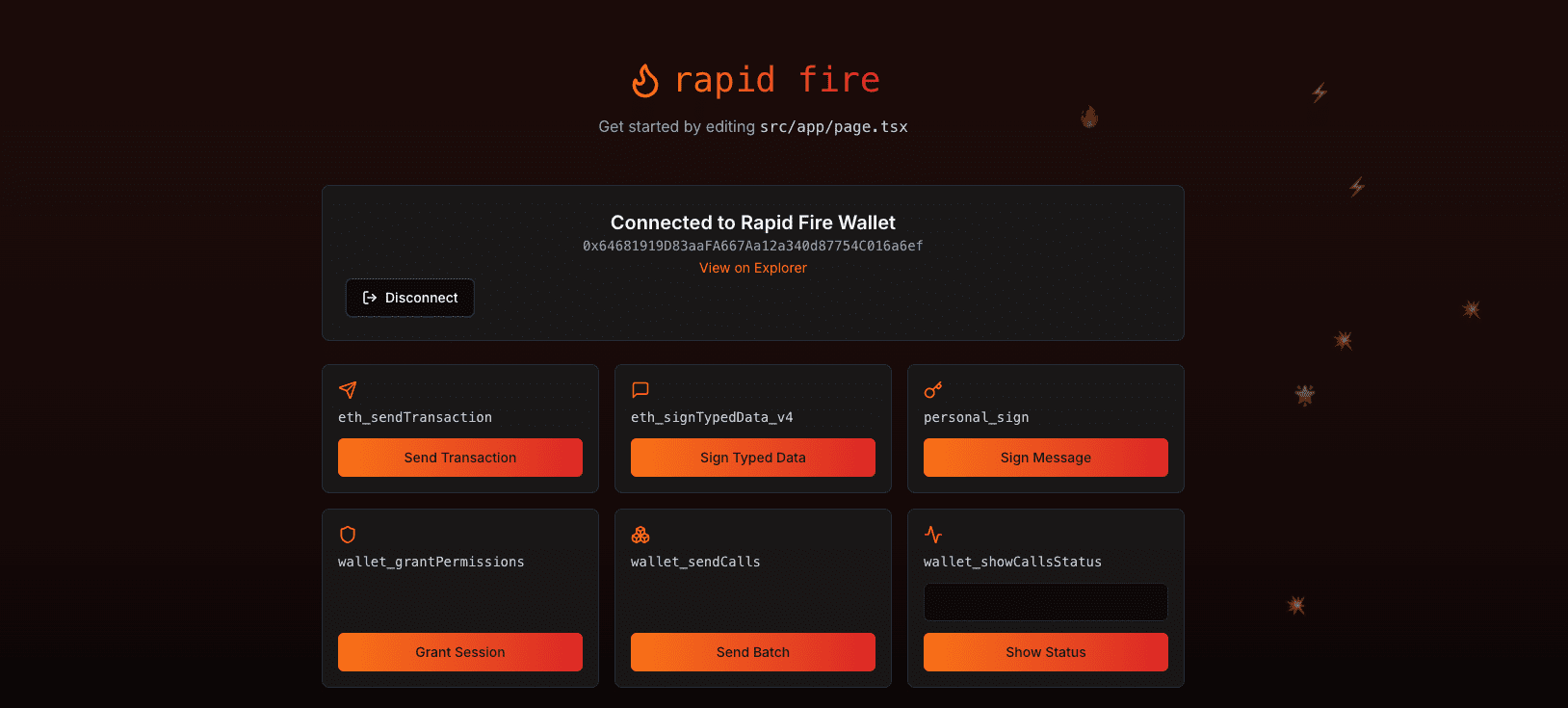
The newest one is Rapid Fire, an example built on Openfort’s ecosystem. It helps you implement key features quickly, so you can focus on building.
What's next
Guest Accounts and our updated sample library are the latest steps in making wallet integration easier. We’ll keep improving the development experience.
Check out the docs and explore the new samples today!
Related reading
- React Native SDK for embedded wallets -- use guest accounts in your mobile app with the React Native SDK
- Embedded wallets explained -- learn how the wallets created behind the scenes for guest users actually work
- Openfort wallets: build vs. buy -- see why integrating a managed wallet solution beats building from scratch
- How to build Telegram Mini-Apps with React -- guest accounts pair well with Telegram Mini-Apps for zero-friction onboarding
- Session keys for smooth UX -- combine guest accounts with session keys to let users transact without signing prompts