2025 was a pivotal year for Openfort as we transitioned from simple wallet infrastructure to a comprehensive transaction orchestration platform. Here is a recap of the top features we shipped to make onchain application development more accessible, modular, and vendor-neutral.
Top Openfort Features Shipped in 2025
The most significant updates we released in 2025 focus on removing friction for both developers and users. Highlights include OpenSigner (a vendor-neutral key management layer), Passkey Wallets for biometric authentication, and the Orchestration Platform, which provides complete transaction visibility across modular stacks. We also expanded our reach with new Swift and React Native SDKs, added support for Solana, and implemented protocol-level improvements like x402 payments and EIP-7702 delegator accounts. These features collectively turn the complex "plumbing" of onchain interactions into a silent, reliable infrastructure for production-ready applications.
If you want copy/paste starting points (not “read the docs and vibe”), our Recipes are the fastest path: Recipes index and the open-source Recipes Hub.
1) OpenSigner
OpenSigner is our vendor-neutral key management layer: you can evolve signers, infra, and smart account implementations without re-onboarding users or migrating keys. The theory is “non-custodial solves it.” The reality is “you’re still locked into someone’s key architecture.” OpenSigner is the escape hatch.
It’s designed to be self-hostable and auditable, so “non-custodial” isn’t just a marketing adjective—it’s an operational property you can keep even if vendors change pricing, priorities, or existence.
Links
2) Passkey wallet
Passwordless wallets with WebAuthn / passkeys—think Face ID / Touch ID UX, but for signing and wallet access. It’s the most mainstream authentication primitive on the planet, and it turns out people prefer it to “here’s 12 words, don’t lose them.”
Passkeys are built on WebAuthn (a W3C standard) and championed by the FIDO Alliance, so you’re not betting your onboarding funnel on a proprietary login gimmick.
Links
3) React SDK
A React-native way to ship wallet UX fast: drop in prebuilt components or go headless, with typed hooks (useWallet, useAuthSession, useTransaction, etc.) so you don’t reinvent state machines and error handling every sprint.
It also includes Playground—a dev toolkit that helps you prototype, debug, and sanity-check responses in one interface (instead of chasing logs across three dashboards).
Links
4) x402 payments
A practical path to “pay per request” with stablecoins by moving payment negotiation closer to the HTTP layer—using the long-reserved HTTP 402 Payment Required status code.
If you’ve ever tried monetizing an API with subscriptions + keys + invoices + retries, you’ll appreciate what x402 does: it makes payment a first-class part of request/response, closer to how auth and caching already work.
Links
5) Orchestration platform
Orchestration is the control plane for “modern onchain architecture,” where teams mix signers, smart accounts, delegators, paymasters, and third-party contracts. The feature is not “a nicer dashboard.” It’s end-to-end transaction visibility when your stack is no longer a single vendor.
You get a coherent lifecycle view: who signed, what executed, how gas was handled, where it stalled, what succeeded—without jumping between tools and reconstructing timelines like a detective with a caffeine problem.
Links
6) Onramp, Send & Receive with Wallet UI
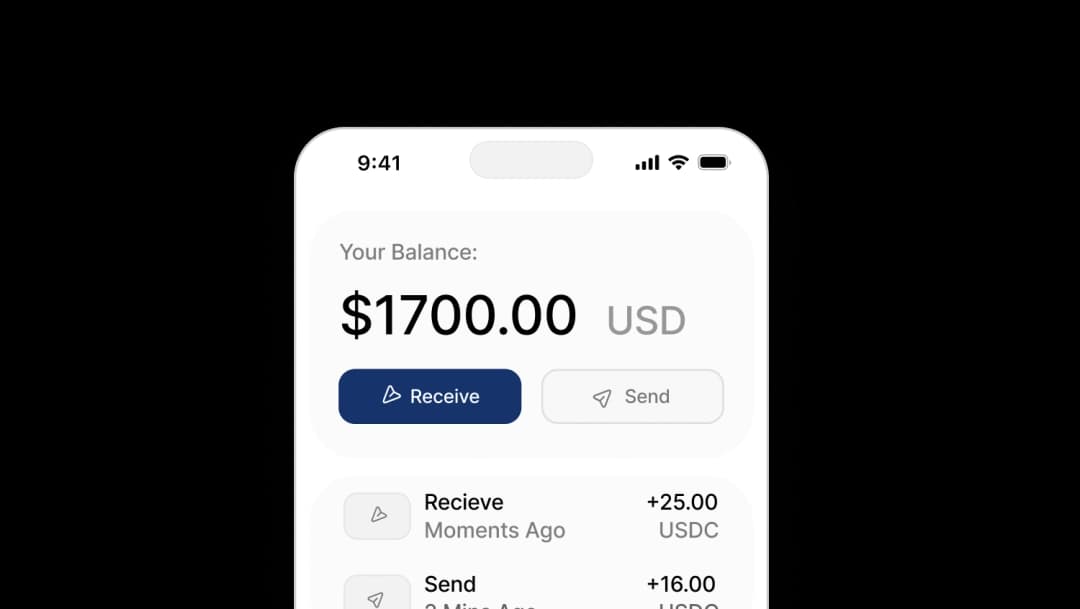
We upgraded the wallet widget from “connect & view” into an actionable money console: users can fund and move assets inside your app UI, reducing drop-off from broken, multi-screen flows.
It supports:
- Send directly from the modal (no extra pages).
- Receive via clear address/QR UX and network guidance (fewer mis-sends).
- Onramp options integrated into the same flow, so “add funds” doesn’t feel like leaving your product.
Links
- Blog: Send & deposit assets with Openfort UI
- Docs: Embedded Wallet (React)
- Recipes (for funding / transfers patterns)
7) Swift SDK
Embedded wallets + account abstraction for iOS with Swift-first APIs, multi-account support, and a ready-to-run sample app.
The SDK handles the annoying-but-inevitable pieces (persistence, session state, switching accounts), so your team can focus on product flows instead of wallet scaffolding.
Links
8) React Native SDK
A smooth native experience for iOS + Android with mobile-ready hooks, multi-account support, and native Apple/Google auth—so onboarding doesn’t feel like a webview time capsule.
It’s designed to reduce boilerplate (no custom Redux gymnastics just to manage wallets) while keeping full control over how you present UI.
Links
9) Solana Support
Secure, non-custodial Solana wallets with simple APIs—built for apps that care about throughput, fees, and consumer-grade UX.
The initial launch focused on the essentials: wallet creation, transaction/message signing, and developer-friendly integration—so Solana support isn’t an “also available” footnote, it’s actually usable.
Links
10) 7702 Accounts
ERC/EIP-7702 unlocks “smart account features” while keeping the EOA model: batching, sponsorship, session keys, and modern signing options—without forcing every user into a full contract wallet migration.
This is critical: it’s a new middle path. The theory was “EOAs are simple, smart accounts are powerful.” The reality is you can now blur the line—safely and explicitly—at the transaction level.
Links
Looking forward
We hope you enjoyed the new features we launched this year. If you’re building in 2026, the pattern is pretty clear: wallets are becoming a commodity; control planes, portability, and payment rails are where the leverage is.
See you in the next one.