Our implementation of the Mobile Wallet Protocol (MWP) for Unity is now publicly available. This allows any game developer to connect their in-game wallets to external onchain applications securely and without complex manual integrations.
What is the Mobile Wallet Protocol (MWP)?
The Mobile Wallet Protocol is an open-source communication standard that allows mobile applications to interact securely with wallet apps using deep links and end-to-end encryption. In Unity, MWP enables a "handshake" between a game and an external wallet, allowing players to sign transactions or connect their accounts without needing to rely on web-based intermediaries. At Openfort, we’ve optimized this protocol specifically for gaming environments to ensure sub-second response times and a native feel.
You can start using our MWP implementation in Unity right away. Check out our comprehensive documentation and sample project to get started.
Why Mobile Wallet Protocol Matters for Gaming
The gaming industry has long faced challenges when connecting in-game experiences to external onchain applications. Traditional approaches often required complex integrations, multiple SDK implementations, or clunky user experiences. With MWP in Unity, we're eliminating these barriers by providing a standardized, secure protocol for communication between games and external applications.
Mobile Wallet Protocol was originally developed as an open-source communication standard that helps wallets communicate securely with applications. At Openfort, we've adapted this technology specifically for gaming environments, enabling Unity developers to leverage cross-app wallets without the complexity.
How Mobile Wallet Protocol Works in Unity
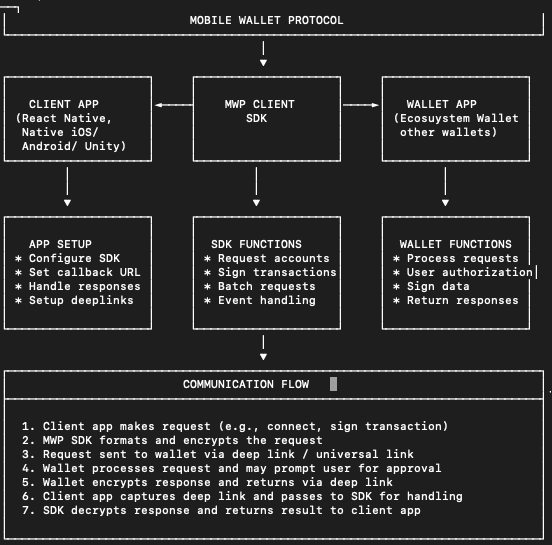
At its core, MWP is a two-step process that creates a secure communication channel between applications. Let's break down how this works in the gaming context, where your Unity game can securely connect to external wallets or applications:
Session Establishment
The communication between a client application and a wallet application begins with session establishment. This process involves several key steps:
-
The client game configures the MWP SDK with essential parameters including callbackURL, CustomScheme (for Unity).
-
When the user initiates an action requiring wallet interaction, the client app triggers a request through the SDK.
-
The SDK prepares this request, typically including encryption to ensure secure communication.
-
The request is sent to the wallet app using platform-specific deep linking mechanisms.
The deep linking mechanism is central to the protocol's architecture, enabling direct app-to-app communication without requiring web-based intermediaries.
Request Processing and Response Handling
Once a request reaches the wallet application, several steps occur:
-
The wallet app receives and processes the incoming request.
-
For operations requiring user approval (such as signing transactions), the wallet presents appropriate interfaces to the user.
-
After processing (and potential user interaction), the wallet generates a response.
-
This response is encrypted for security and returned to the client app via the previously configured callback URL.
-
The client app's deep link handler captures this incoming URL and passes it to the SDK's handleResponse function.
-
The SDK decrypts and processes the response, then provides the result to the client app for further action.
This request-response pattern supports various operations, including connecting to wallets, signing transactions, and making batch requests.
Benefits for Game Developers
Our Unity implementation of MWP offers several key advantages:
-
End-to-end encryption to prevent unauthorized access to messages exchanged between the client app and wallet.
-
Secure key exchange mechanisms for establishing encrypted communication channels.
-
Decentralized identity verification using well-known URI standards, eliminating the need for centralized verification services.
-
Batch request support to minimize the number of security-sensitive interactions required.
-
Cross-Platform Support: Works across desktop, mobile, and console gaming environments.
Real-World Applications
-
NFT Marketplace Integration: List in-game items directly on marketplaces like OpenSea without requiring players to use external wallets.
-
Cross-Game Asset Transfer: Move assets between different games securely.
-
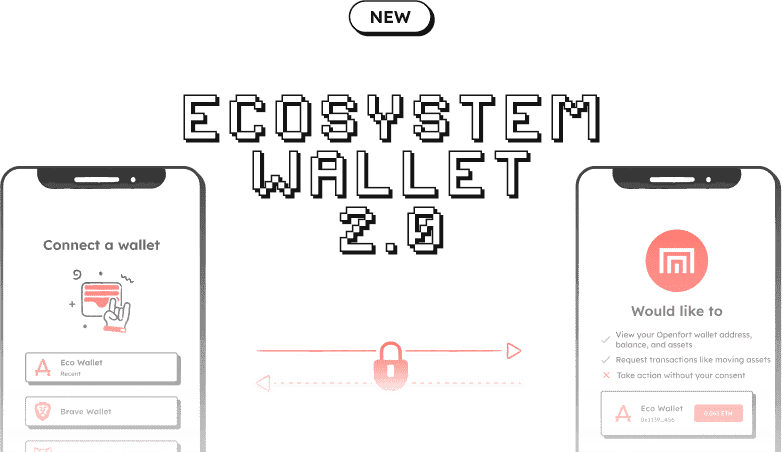
External Wallet Connections: Allow players to connect their favorite wallets to your game ecosystem.
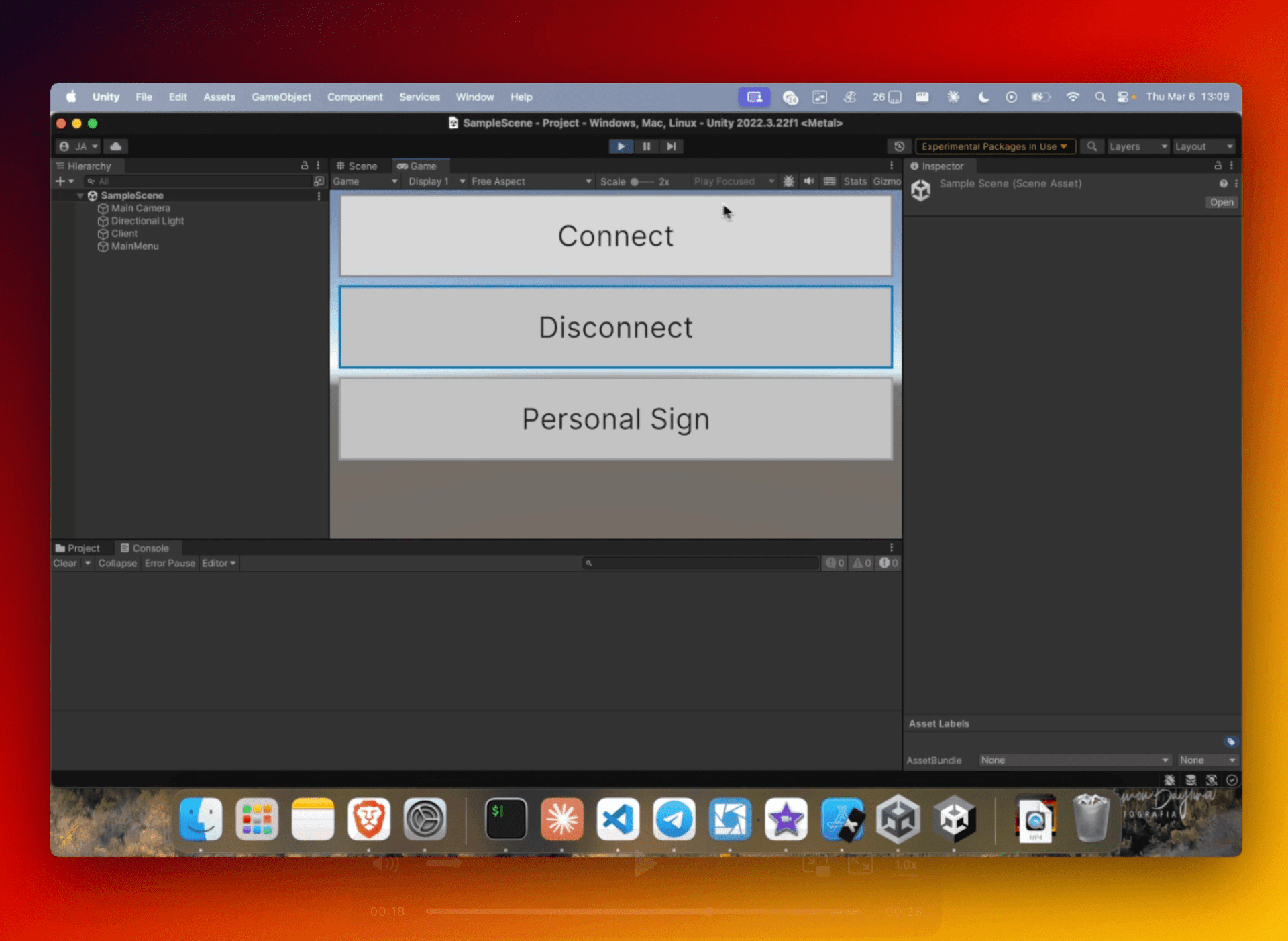
A standout example is our OpenSea integration demo, where players can list their in-game NFTs directly to the marketplace without leaving the game environment. This seamless connection between gaming and NFT marketplaces demonstrates the power of MWP in creating unified onchain experiences.
A Public Good for the Gaming Ecosystem
By bringing MWP to Unity, we're contributing to the broader gaming ecosystem and promoting interoperability between games and Web3 applications. This implementation represents our commitment to creating open standards that benefit the entire industry.
We believe that standardized protocols like MWP are essential for the growth of blockchain gaming. By making our implementation available to all developers, we're helping to create a more connected and seamless experience for players across the on-chain gaming landscape.
We can't wait to see what you build with Mobile Wallet Protocol in Unity. Connect with us on X.