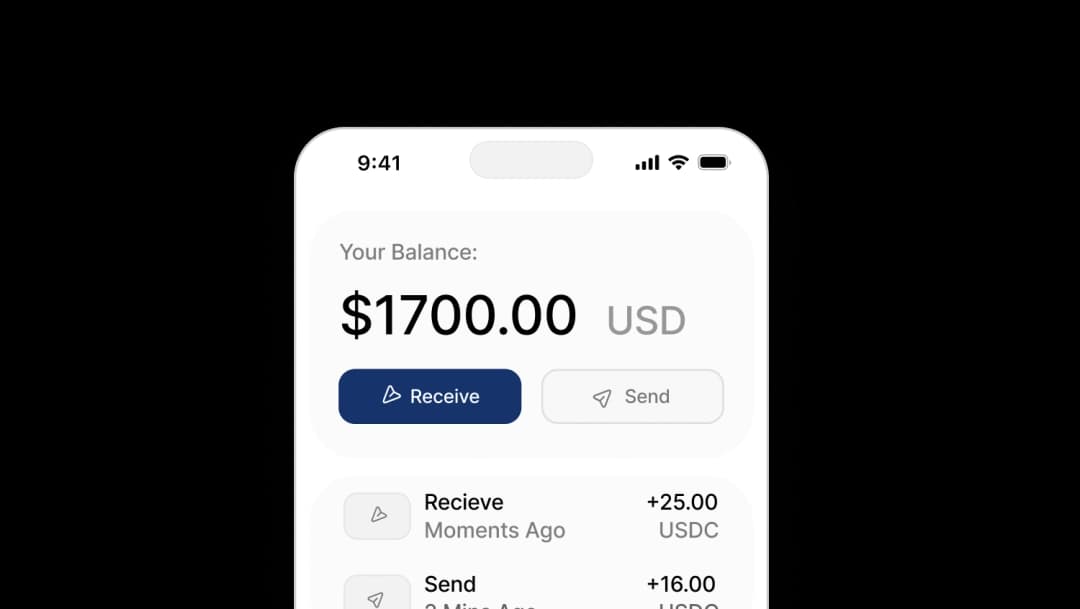
Wallets were originally designed focused on token speculation rather than everyday use. However, as crypto becomes more user-friendly, new applications are emerging that make the technology more accessible to everyone.
Build with Openfort embedded wallets — non-custodial wallets backed by smart accounts, with email, social, and passkey login built in.
The era of rewarding users for taking technical risks is ending. While wallets remain the primary way to interact with blockchains, we believe there is significant room to improve how they abstract financial complexity across different industries.
Evolution of Crypto Wallets
The way we interact with digital assets has gone through several distinct stages:
- Paper & Private Keys: Manually writing down private keys and using public addresses to receive Bitcoin.
- Custodial to Self-Custody: Moving from centralized exchanges to self-custody wallets where users control their keys.
- App Access: Self-custody wallets evolved into portals for applications.
- Smart Accounts: The current shift toward programmable accounts that abstract technical hurdles.
Take the Axie Infinity example: it has plenty of flaws and awful UX, but it has become the biggest play-to-earn game, taking many in the crypto and gaming space by surprise. While the UX was definitely a roadblock, the fact that it was (i) fun and (ii) productive was enough reason for a whole generation to learn about crypto and get onboarded.
The primary issue with crypto lies not in its user experience, but in its lack of utility. While this may seem counterintuitive, it presents an opportunity to bring blockchain technology up to par with other industries where current methods fall short, such as marketplaces, communities, and games.
By taking the premise that everyone will have multiple addresses, addressing its most challenging aspects will allow individuals to experiment and create new verticals and user behaviours that were previously unimaginable with blockchain technology.
What is an Externally Owned Account (EOAs)?
An Externally Owned Account (EOA) is a crypto account controlled by a private key. Most users are familiar with EOAs through wallets like MetaMask, where a seed phrase or private key manages all account activities. If the private key is lost, the account and its assets are gone forever.
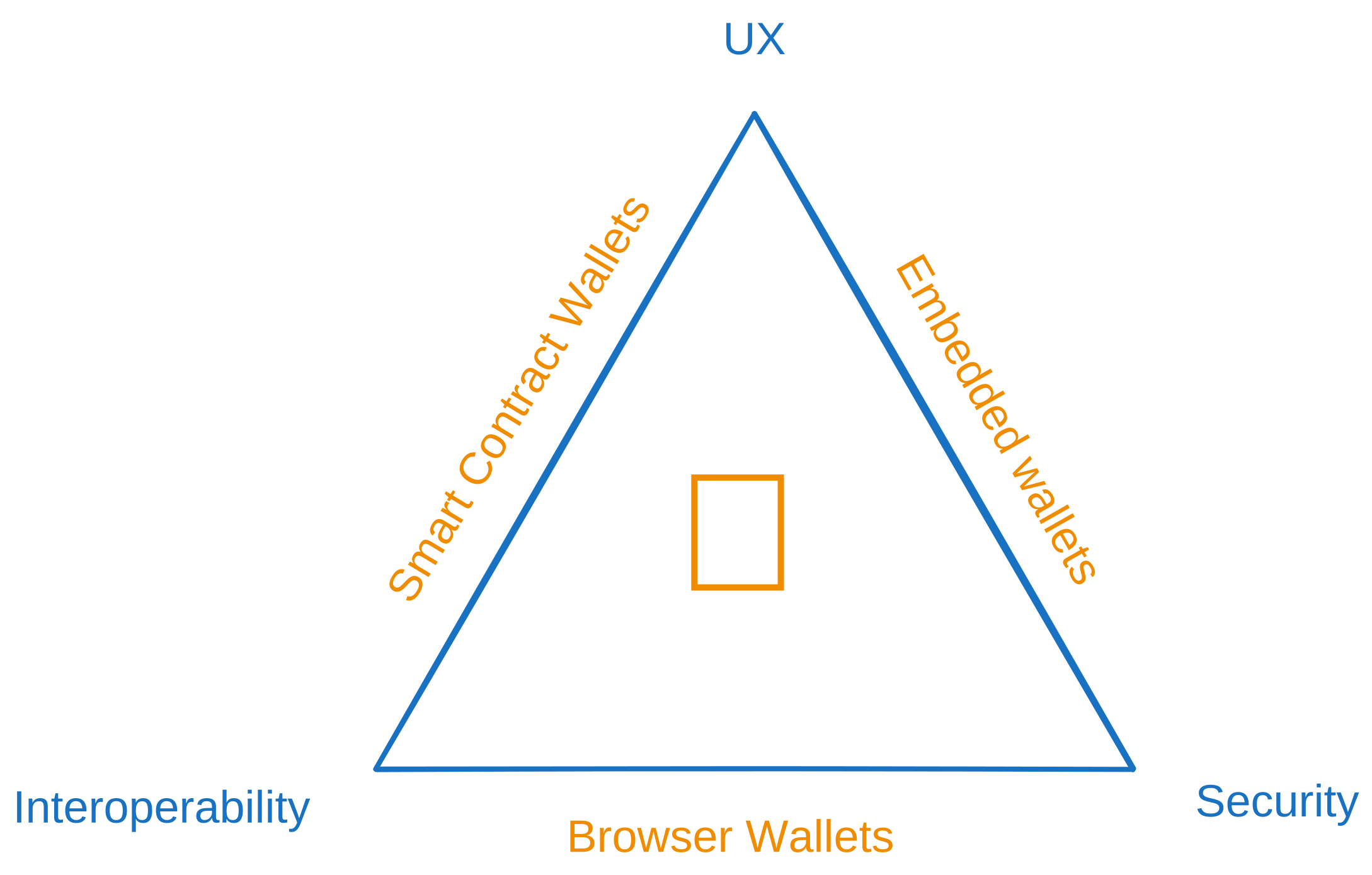
The next step in this evolution is Contract Accounts (CAs). Unlike EOAs, CAs do not have a private key; they are smart contracts governed by code. This programmability allows for hardware wallets, chrome extensions, multisig accounts, and executable NFTs.
| Externally Owned Account | Smart Contract Account | |
|---|---|---|
| Creation | Created with an on-chain address linked to a private key. No fees required. | Requires the deployment of a smart contract on-chain. Fees are applicable. |
| Control | Managed with private keys. | Governed by the underlying smart contract code. |
| Functionality | Enables direct transfer of assets and interaction with dApps and other smart contracts. | Highly programmable due to the flexibility of smart contract and account abstraction. |
| Transaction Fees | Mandatory balance in ETH is required for transactions. | Can leverage gas-saving mechanisms. Fee payment possible in stablecoins or other tokens (depending on integrated networks). |
| Security | Security depends on the user's private key management. | More sophisticated with options for 2FA or Hybrid (multisig) security. |
| Recovery | Account recovery is typically not possible. | Supports account recovery options such as social recovery. |
The Future of Wallets
By looking at both types of wallets, we can see how the industry is moving toward Account Abstraction (AA) and Multi-Party Computation (MPC).
Account abstraction (AA) uses Smart Contract Wallets (SCW) to unlock features like gas sponsorship, paying fees in stablecoins, or automated security policies. This is largely driven by the ERC-4337 standard.
On the other hand, MPC provides off-chain programmability for existing EOAs. This means users don't always need to deploy new on-chain addresses, and policies can remain private.
Key Takeaway
While MPC and SCW have different technical foundations, they both aim to make blockchain invisible. The future likely involves a hybrid approach, such as using an MPC signing scheme to control a smart contract wallet. This allows developers to provide a seamless, pop-upless experience for players.