Commerce has reinvented itself roughly once per decade. Catalogs gave way to websites. Websites gave way to mobile apps. Apps gave way to marketplaces. Each shift changed how humans discovered, evaluated, and purchased goods. The next shift is different: the buyer isn't human at all.
Agentic commerce — where AI agents act as autonomous or semi-autonomous purchasers — is not a distant prediction. Stripe launched its agentic commerce toolkit in 2025 and partnered with OpenAI for the first shopping experiences inside ChatGPT. Visa completed hundreds of real-world agent transactions and is targeting millions of AI-agent shoppers by holiday 2026. McKinsey estimates that AI agents could mediate $3–5 trillion of global consumer commerce by 2030 — with US B2C retail alone representing a $900 billion to $1 trillion opportunity. And protocols like x402 are turning the web itself into a payment-aware network that agents can transact on natively.
This article explores what agentic commerce actually means, how it differs from putting a chatbot on your checkout page, and what it implies for merchants, infrastructure providers, and the payment stack.
What Is Agentic Commerce?
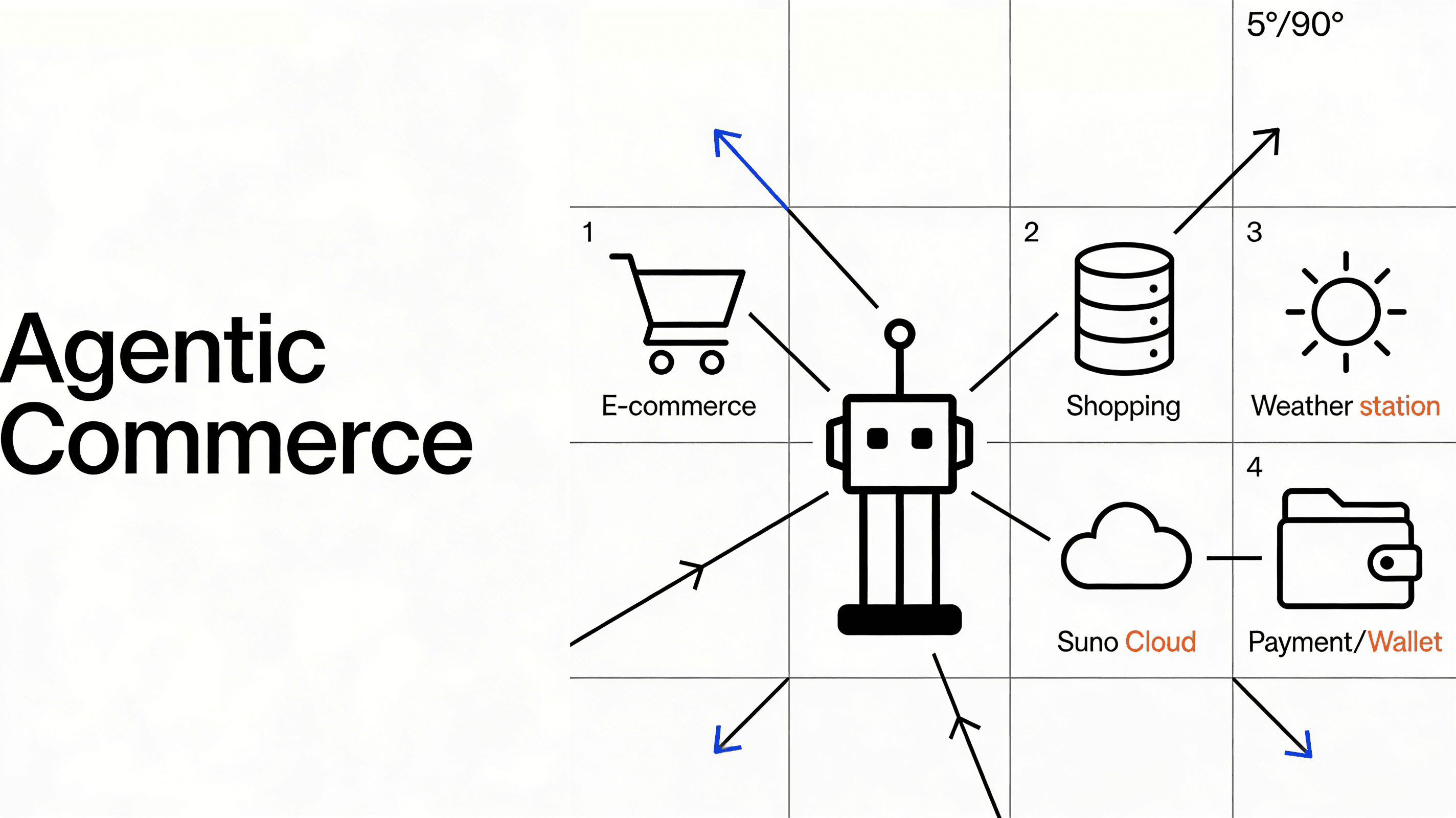
Agentic commerce is a model where AI agents handle purchasing decisions on behalf of users. McKinsey formalized this as an "automation curve" with six levels — from Level 0 (rule-based auto-replenishment) through Level 3 (delegated execution within constraints) to Level 5 (multi-agent coordination where personal agents negotiate with merchant agents). The spectrum ranges from simple delegation ("find me the cheapest flight to Berlin") to full autonomy ("manage my household supplies within a $500 monthly budget").
The key distinction from traditional e-commerce: the buyer is software. Software doesn't browse. It doesn't respond to banner ads or urgency timers. It queries APIs, compares structured data, evaluates trade-offs against pre-set criteria, and executes transactions programmatically. Gartner projects that by 2028, approximately 15% of global retail transactions will be autonomously decided and completed by AI agents.
This creates a fundamentally different commerce layer:
- Discovery shifts from SEO and social media to API discoverability and structured data feeds.
- Evaluation shifts from reviews and product images to machine-readable specifications and verifiable performance claims.
- Purchasing shifts from checkout flows and card numbers to protocol-level payments that settle in seconds.
- Fulfillment shifts from order confirmation emails to webhooks and status APIs.
The Evolution of Payment Rails
To understand why agentic commerce is emerging now, trace the payment stack:
1990s–2000s: Credit cards on the web. Stripe, PayPal, and dozens of processors made it possible to accept card payments online. Commerce exploded, but the underlying rails — designed for human-to-merchant transactions — stayed the same.
2010s: Mobile wallets and embedded finance. Apple Pay, Google Pay, and buy-now-pay-later products reduced friction at checkout. Payments got faster and more embedded, but still assumed a human in the loop.
2020s: Stablecoins and programmable money. USDC, USDT, and their peers introduced programmable value transfer. Payments became composable: escrow, streaming, conditional release — all encoded in smart contracts.
Now: Protocol-level payments with x402. The x402 specification makes payment a native HTTP concern. A server responds with 402 Payment Required, the client (human or agent) signs a payment authorization, and the transaction settles on-chain. No checkout page. No redirect. No SDK integration. Payment becomes as natural to the web as authentication. x402 has already processed over 140 million transactions and $600 million in payment volume, with over 400,000 unique buyers.
This progression matters because each step removed a layer of human friction. x402 removes the last one: the assumption that a human is making the purchasing decision. As Erik Reppel, the protocol's creator at Coinbase, put it: "2026 will be the year of agentic payments, where AI systems programmatically buy services like compute and data. Most people will not even know they are using crypto."
What Changes for Existing Merchants
Agentic commerce doesn't require merchants to abandon their existing infrastructure. But it does require them to think about their offering from two perspectives: the human buyer and the agent buyer.
Product discovery becomes API-first
Today, merchants optimize for Google and social media. In an agentic world, they also need to optimize for agent discovery. This means:
- Structured product catalogs accessible via API, not just rendered as HTML.
- Machine-readable pricing that includes volume discounts, bundling logic, and dynamic pricing rules.
- Standardized schemas so agents from different platforms can parse and compare offerings consistently.
Think of it as SEO for machines. The merchants who make their catalogs easy for agents to parse will capture the first wave of agentic spend.
Checkout flows become transaction APIs
When the buyer is an agent, a multi-step checkout flow is unnecessary overhead. Agents need:
- A single API endpoint that accepts a purchase request with payment authorization.
- Support for programmatic payment methods — x402, stablecoin transfers, or Stripe's agent-facing APIs.
- Instant confirmation via webhook or response payload.
Trust and reputation go on-chain
Human buyers read reviews. Agent buyers need verifiable reputation data. This creates demand for:
- On-chain merchant reputation scores based on fulfillment history, dispute rates, and delivery times.
- Verified product claims — agents can't evaluate subjective quality, but they can verify objective claims like "ships in 2 days" or "organic certified."
- Dispute resolution protocols that agents can invoke programmatically when an order goes wrong.
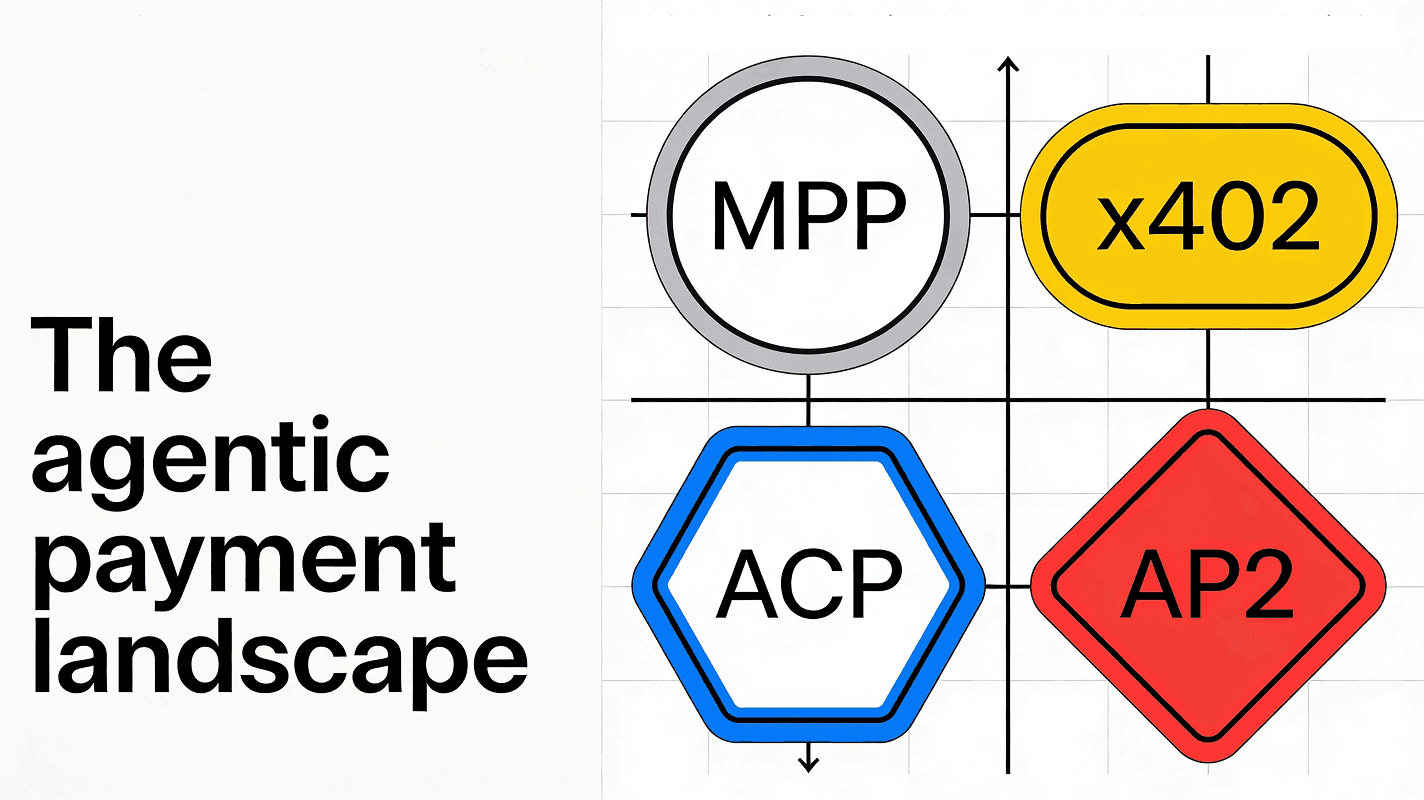
The trust infrastructure is already forming. Visa launched a Trusted Agent Protocol to help merchants distinguish legitimate AI agents from bots. Mastercard's Agent Pay requires trusted agents to be registered and verified before making payments. Google's Agent2Agent (A2A) protocol — with over 150 organizations in its ecosystem — provides a communication layer, while their Agent Payments Protocol (AP2) handles the financial side with 60+ partners including American Express, Mastercard, and PayPal.
New Types of Businesses That Will Emerge
Beyond adapting existing merchants, agentic commerce creates entirely new business categories that don't exist in human-driven commerce.
Agent-to-agent service brokers
When your AI travel agent needs to book a hotel, it might negotiate with the hotel's AI booking agent. This creates a market for broker services that facilitate agent-to-agent transactions: matching supply and demand, handling escrow, and resolving disputes — all without human involvement.
Per-request API marketplaces
Today, most APIs use subscription pricing. Agentic commerce enables true pay-per-use: an agent pays $0.001 for a single weather API call, $0.05 for a product recommendation, or $0.50 for a complex data analysis. x402 makes this viable by reducing payment overhead to near-zero.
This unlocks the long tail of API monetization. Services that couldn't justify a subscription model become viable when agents can pay per request at the protocol level.
Dynamic pricing engines
When buyers are machines operating on explicit budgets and criteria, pricing becomes a real-time negotiation. New businesses will emerge that:
- Set optimal prices based on demand signals from agent traffic.
- Offer personalized pricing to agents based on their spending history and reputation.
- Run automated auctions where agents bid on limited inventory.
Procurement automation platforms
Enterprise purchasing — office supplies, SaaS licenses, raw materials — is ripe for agent automation. A procurement agent with access to approved vendor lists, budget constraints, and quality requirements can handle the entire purchasing cycle: sourcing, comparing, negotiating, ordering, and tracking delivery.
Reputation and identity oracles
Agents need to assess the trustworthiness of counterparties they've never transacted with. This creates demand for reputation oracles — services that aggregate on-chain transaction history, fulfillment data, and dispute outcomes into verifiable trust scores that agents can query before committing to a transaction.
The Role of x402 in Agentic Commerce
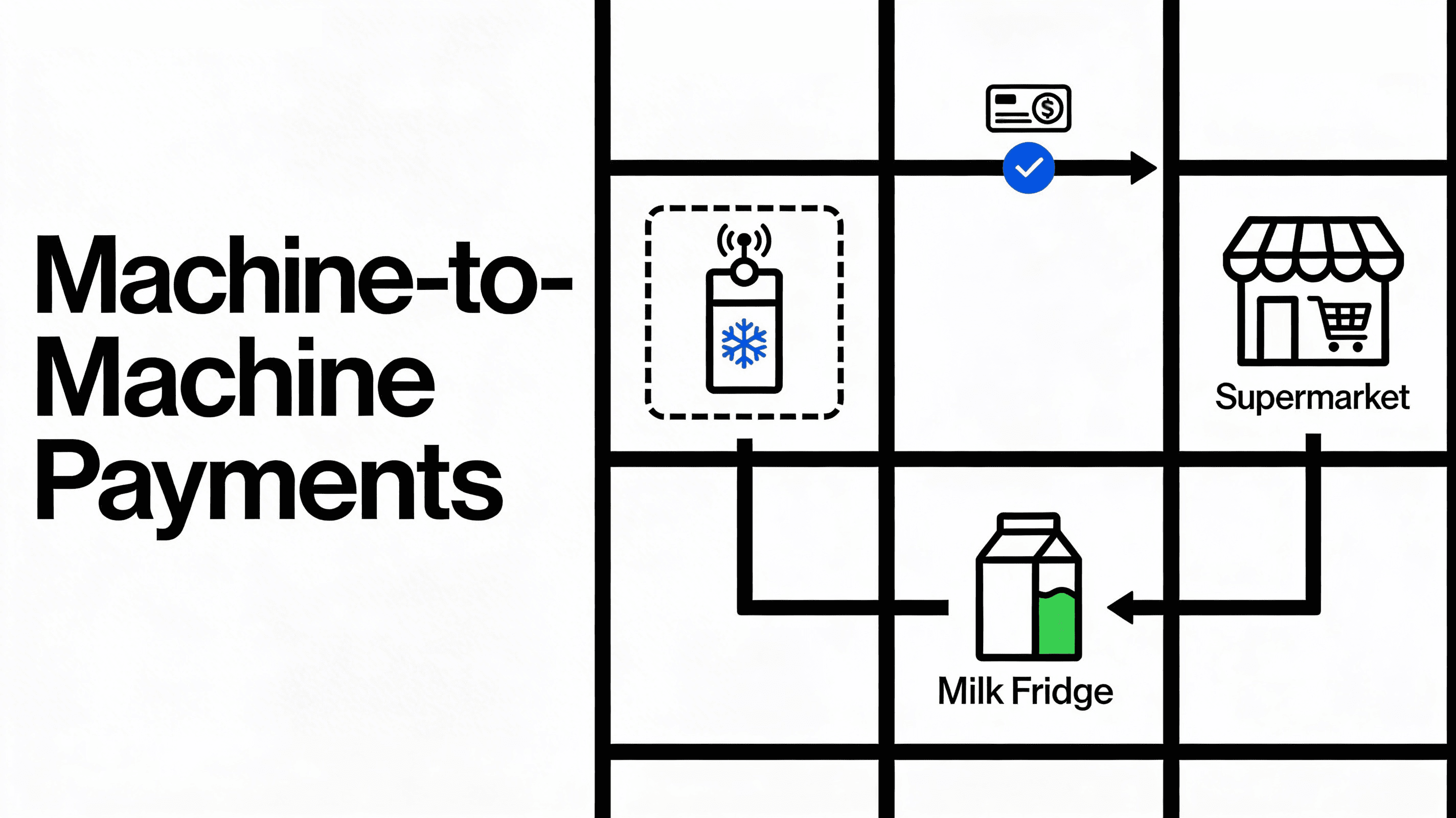
x402 is the payment protocol that makes agentic commerce practical at scale. Without it, every agent-to-merchant interaction would require custom payment integration — exactly the kind of friction that prevented machine-to-machine commerce from taking off before.
Here's why x402 is the natural payment layer for agentic commerce:
It's native to HTTP. Agents already communicate over HTTP. x402 turns payment into another HTTP interaction — no separate payment SDK, no redirect, no session management.
It supports micropayments. An agent paying $0.001 for an API call needs a payment rail where transaction costs don't exceed the payment amount. On-chain stablecoin settlements via x402 make sub-cent transactions economically viable.
It's machine-readable by default. The 402 response includes structured payment requirements — amount, asset, chain, recipient — that any agent can parse and act on without human interpretation.
It's wallet-agnostic. x402 works with any wallet that can sign transactions. This means agents can use backend wallets, smart accounts, or any signing infrastructure — including TEE-secured wallets like Openfort's agent wallets.
What This Means for Developers
If you're building commerce infrastructure, the strategic question isn't whether agents will become buyers — it's how quickly your platform can serve them.
Practical steps:
- Expose structured APIs alongside your human-facing interfaces. If your product catalog is only accessible via HTML pages, agents can't discover or compare your offerings.
- Support programmatic payments. Integrate x402 for per-request pricing, or use Stripe's agent-facing APIs for more traditional payment flows.
- Build for composability. Agents combine services from multiple providers in a single workflow. Your service should be easy to compose with others — clean APIs, standard data formats, predictable behavior.
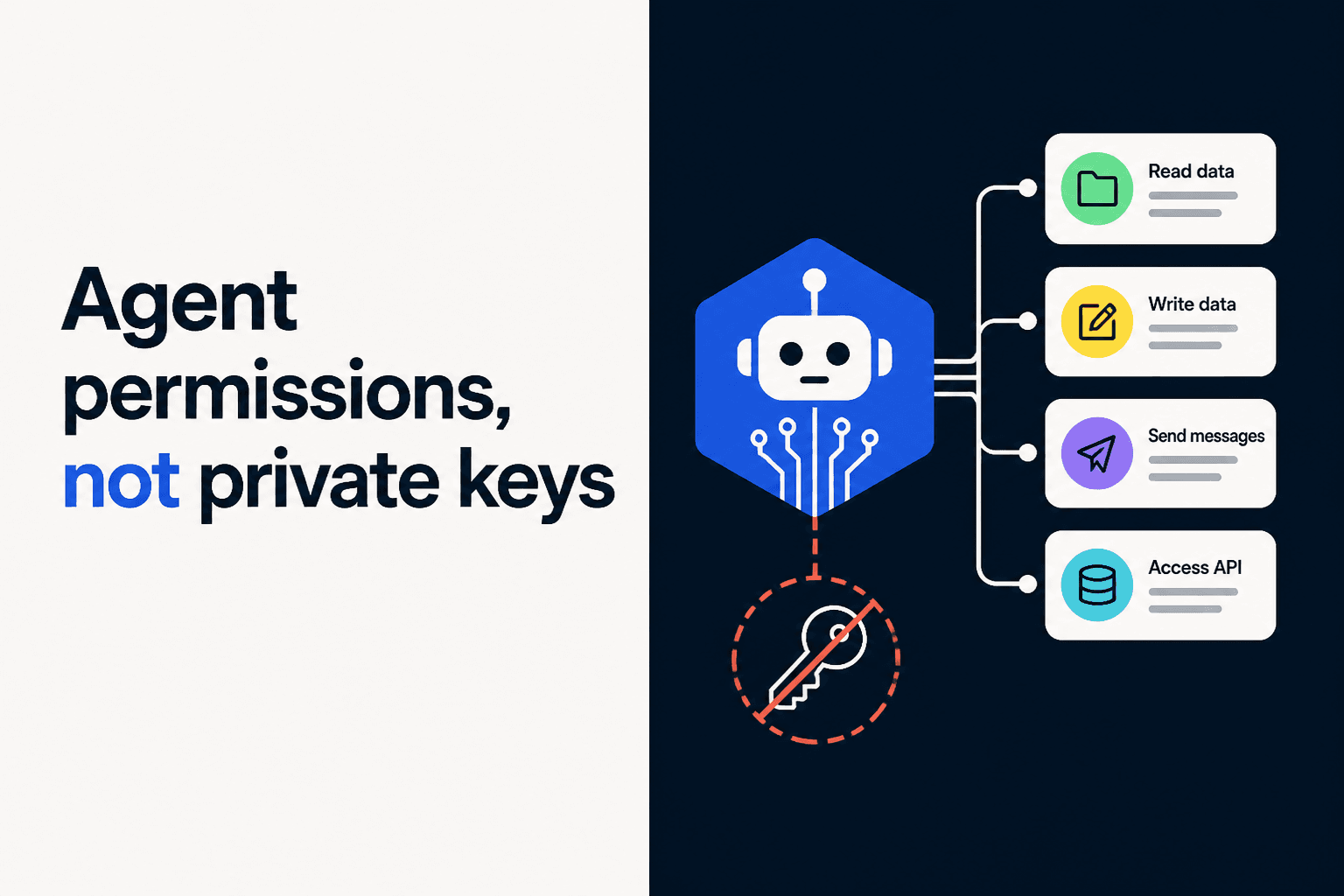
- Think about agent authentication. How does an agent prove it's authorized to spend on behalf of a user? Solutions range from API keys and OAuth to on-chain delegation via smart accounts.
- Invest in machine-readable reputation. Verifiable fulfillment data, on-chain dispute history, and standardized quality metrics will become competitive advantages as agents optimize purchasing decisions based on data, not brand recognition.
The Bigger Picture
Commerce has always been shaped by the capabilities of the buyer. When buyers could only shop locally, commerce was local. When buyers went online, commerce went online. When buyers moved to mobile, commerce followed.
Now the buyer is becoming an AI agent — software that can evaluate options at superhuman speed, transact programmatically, and optimize across dimensions that no human shopper would bother with. The merchants, platforms, and payment rails that adapt to serve this new buyer will capture the next era of commerce. Those that don't will find themselves optimizing for an audience that increasingly delegates its purchasing decisions to machines.
The convergence is institutional, not just technical. In December 2025, the Linux Foundation launched the Agentic AI Foundation (AAIF) with platinum members including AWS, Anthropic, Google, Microsoft, and OpenAI — and gold members like Adyen, Shopify, and Salesforce. The infrastructure is converging: smart wallets for agent custody, x402 for protocol-level payments, stablecoins for programmable settlement, and backend wallets for server-side signing. The question isn't whether agentic commerce will happen. It's who builds the rails.