In 2015, launching a neobank meant convincing a sponsor bank to underwrite your charter, negotiating card network contracts with Visa or Mastercard, integrating a core banking ledger, building ACH connectivity, hiring a compliance team, and waiting 12-18 months before a single customer could open an account.
In 2026, a team of five engineers can ship a stablecoin-powered financial product with embedded wallets, instant settlement, and cross-border payments in weeks.
This is not a marginal improvement. It is a structural collapse of the fintech infrastructure stack.
This article explains what changed, why it matters, and what it means for anyone building financial products today. For a hands-on implementation guide, see How to Build a Neobank.
The Four Eras of Fintech
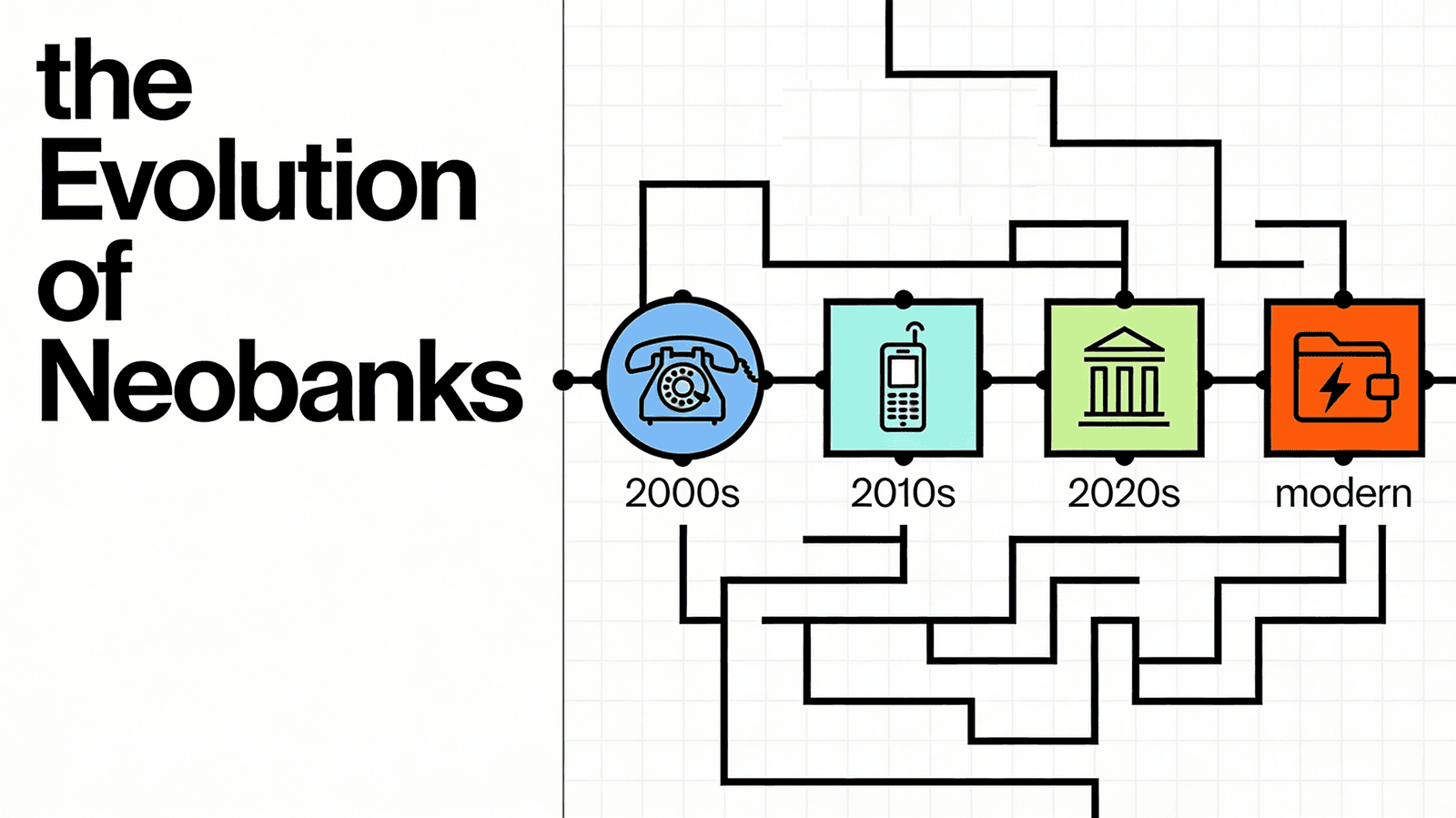
To understand where we are, it helps to see how we got here.
Era 1: Digital Distribution (2000-2010)
The first wave of fintech digitized existing banking services. PayPal made online payments possible. ING Direct brought savings accounts to the web. But the underlying infrastructure was unchanged — settlement was slow, compliance was manual, and payments closed on rigid schedules.
These companies were distribution layers on top of the same banking rails that existed since the 1970s.
Era 2: The Neobank Wave (2010-2018)
Chime, N26, Revolut, and Monzo promised a better banking experience. Sleek mobile apps, instant notifications, no hidden fees. They attracted millions of users with superior product design.
But beneath the polished interfaces, every neobank relied on the same infrastructure:
- Sponsor banks (Bancorp, Stride, Sutton) for the banking charter
- BaaS providers (Synapse, Unit, Treasury Prime) for the API layer
- Card networks (Visa, Mastercard) via processors like Marqeta
- Payment rails (ACH, Fedwire, SWIFT) for transfers
- Compliance vendors (Alloy, Sardine, Socure) for KYC/AML
- Core banking systems (Thought Machine, Mambu) for the ledger
A typical neobank's vendor stack looked like this:
_11┌─────────────────────────────────────────────────────┐_11│ NEOBANK APP (Mobile + Web) │_11├─────────────────────────────────────────────────────┤_11│ BaaS Provider (Unit, Synapse, Treasury Prime) │_11├──────────┬──────────┬──────────┬────────────────────┤_11│ Card │ Payment │ Core │ Compliance │_11│ Network │ Rails │ Banking │ & Identity │_11│ (Visa) │ (ACH) │ (Mambu) │ (Alloy, Socure) │_11├──────────┴──────────┴──────────┴────────────────────┤_11│ Sponsor Bank (holds the charter) │_11└─────────────────────────────────────────────────────┘
Every box in that diagram is a separate contract, a separate integration, a separate point of failure. And every neobank had roughly the same stack.
Era 3: Embedded Finance (2018-2023)
Companies like Stripe, Plaid, and Unit made it easier to embed financial services into any product. "Every company is a fintech company" became the rallying cry.
This reduced integration complexity but did not change the underlying infrastructure. BaaS providers were middleware — they made the same banking rails easier to access, but settlement still took days, cross-border was still expensive, and every participant paid rent to the same intermediaries.
The result was a commoditization problem. When every neobank uses identical sponsor banks and BaaS providers, differentiation becomes a marketing arms race — card colors, signup bonuses, and cashback rewards rather than substantive innovation.
Era 4: The Stablecoin Stack (2024-Present)
Stablecoins represent something fundamentally different. They are not a new layer on top of existing rails — they are a replacement for the rails themselves.
When USDC moves from one wallet to another on Base, there is no ACH batch processing, no T+2 settlement, no correspondent banking chain, no SWIFT messages. The transfer is final in seconds and costs fractions of a cent.
This is not just faster. It eliminates entire categories of infrastructure.
Before vs. Now: The Infrastructure Comparison
The Traditional Stack: 10+ Vendors, $5M+, 12-18 Months
Building a neobank on traditional rails required:
| Layer | What You Needed | Cost | Timeline |
|---|---|---|---|
| Banking Charter | Sponsor bank relationship or own license | $500K-$2M/year | 6-18 months |
| Core Banking | Ledger system (Thought Machine, Mambu) | $200K-$1M/year | 3-6 months |
| Card Program | Visa/Mastercard via processor (Marqeta) | $100K+ setup | 3-6 months |
| Payment Rails | ACH, Fedwire, SWIFT connectivity | $50-200K/year | 2-4 months |
| Compliance | KYC/AML vendors, BSA officer, SAR filing | $300K-$1M/year | Ongoing |
| Identity | Verification providers (Alloy, Socure) | $50-200K/year | 1-2 months |
| Fraud | Transaction monitoring (Sardine, Unit21) | $100-300K/year | 2-3 months |
| Data | Account aggregation (Plaid, MX) | $50-150K/year | 1-2 months |
Total: $5-15M to launch, 12-18 months minimum, team of 30-50 people.
And this was the optimized version, using BaaS providers. Getting your own banking charter could take years and tens of millions more.
The Stablecoin Stack: Collapsed Complexity
Building the same product with stablecoins and embedded wallets:
| Layer | What You Need | Cost | Timeline |
|---|---|---|---|
| Settlement | Stablecoins on L2 (USDC on Base) | Near zero | Day 1 |
| Wallets | Embedded wallet infrastructure (Openfort) | Usage-based | 1-2 weeks |
| Payments | On-chain transfers + gas sponsorship | Cents per tx | Days |
| On/Off Ramp | Fiat bridge (Bridge, MoonPay, Transak) | Revenue share | 1-2 weeks |
| Compliance | On-chain monitoring + KYC provider | $20-100K/year | 2-4 weeks |
| Card Program | Stablecoin-to-card (optional) | Per card | 2-4 weeks |
Total: $50K-500K to launch, 4-12 weeks, team of 5-15 people.
The difference is not incremental. It is an order of magnitude.
What Stablecoins Actually Replace
Let's be specific about what changes and what stays the same.
Settlement: From Days to Seconds
Traditional banking settlement runs on batch processing. ACH transfers take 1-3 business days. Wire transfers take hours and cost $25-45. International wires via SWIFT can take 3-5 business days and cost even more.
Stablecoin transfers on L2 networks like Base or Arbitrum settle in seconds and cost less than $0.01. There is no batch window, no business hours, no correspondent banking chain.
What this means for neobanks: Real-time settlement eliminates the need for provisional credit, reduces fraud windows, and enables instant cross-border payments.
Payment Rails: From Intermediary Chains to Peer-to-Peer
A traditional cross-border payment from the US to the Philippines might pass through:
_10Sender's Bank → Correspondent Bank → SWIFT Network →_10 Correspondent Bank → Recipient's Bank → Recipient
Each intermediary takes a cut and adds latency. Total cost: 5-7% of the transfer amount. Total time: 3-5 business days.
A stablecoin transfer for the same route:
_10Sender's Wallet → Blockchain → Recipient's Wallet
Total cost: < $0.01. Total time: seconds.
Card Networks: From Required to Optional
Traditional neobanks needed Visa or Mastercard to let users spend their money. The card was the interface between the digital account and the physical world.
With stablecoins, peer-to-peer transfers work natively. Card programs become an optional add-on for backward compatibility with merchants who only accept cards — not a core infrastructure requirement.
Compliance: From Black Box to Transparent Ledger
This is counterintuitive, but stablecoin-based systems can be more transparent for compliance than traditional banking. Every transaction is recorded on a public ledger. Wallet addresses can be screened against sanctions lists in real-time. Transaction patterns are visible to monitoring tools.
The compliance challenge shifts from "getting data" to "interpreting data" — a much more tractable problem.
Why Specialization Becomes Possible
Here is where the Multicoin Capital thesis about specialized stablecoin fintechs becomes relevant.
Traditional neobanks were forced to be generalists. When your infrastructure costs $5M+ per year and requires 10+ vendor relationships, you need millions of users to justify the overhead. This pushed every neobank toward the same mass-market positioning.
Stablecoins invert this constraint. When infrastructure costs drop by 10-100x, serving smaller, more specific communities becomes viable.
Consider markets that traditional banking serves poorly:
- Cross-border freelancers who need to receive payments in USD but spend in local currency
- Digital nomads who move between jurisdictions and need multi-currency access
- Creator economy workers who face deplatforming risk and delayed payouts
- Small businesses in emerging markets that need working capital without traditional credit infrastructure
- Crypto-native teams that operate in stablecoins but need fiat off-ramps
Each of these is a distinct product with specific needs. The traditional neobank stack made it uneconomical to serve any of them individually. The stablecoin stack makes each one a viable business.
What the Modern Architecture Looks Like
For teams building neobanks today, here is how the stack comes together:
_18┌─────────────────────────────────────────────────┐_18│ YOUR PRODUCT │_18│ (Neobank UI, Treasury, Payments, Cards) │_18├─────────────────────────────────────────────────┤_18│ WALLET INFRASTRUCTURE │_18│ • Embedded Wallets (passkeys, social login) │_18│ • Smart Accounts (spending controls, policies) │_18│ • Gas Sponsorship (invisible fees) │_18│ • Backend Wallets (treasury, automation) │_18├─────────────────────────────────────────────────┤_18│ STABLECOIN RAILS │_18│ • On/Off Ramps (fiat ↔ stablecoin) │_18│ • Cross-chain Bridging │_18│ • On-chain Compliance Monitoring │_18├─────────────────────────────────────────────────┤_18│ BLOCKCHAIN NETWORKS │_18│ (Base, Arbitrum, Ethereum, Polygon...) │_18└─────────────────────────────────────────────────┘
The key insight is that the wallet infrastructure layer handles all the blockchain complexity. Users never see wallets, gas fees, or chain switching. They see a banking app.
Embedded Wallets: The User-Facing Layer
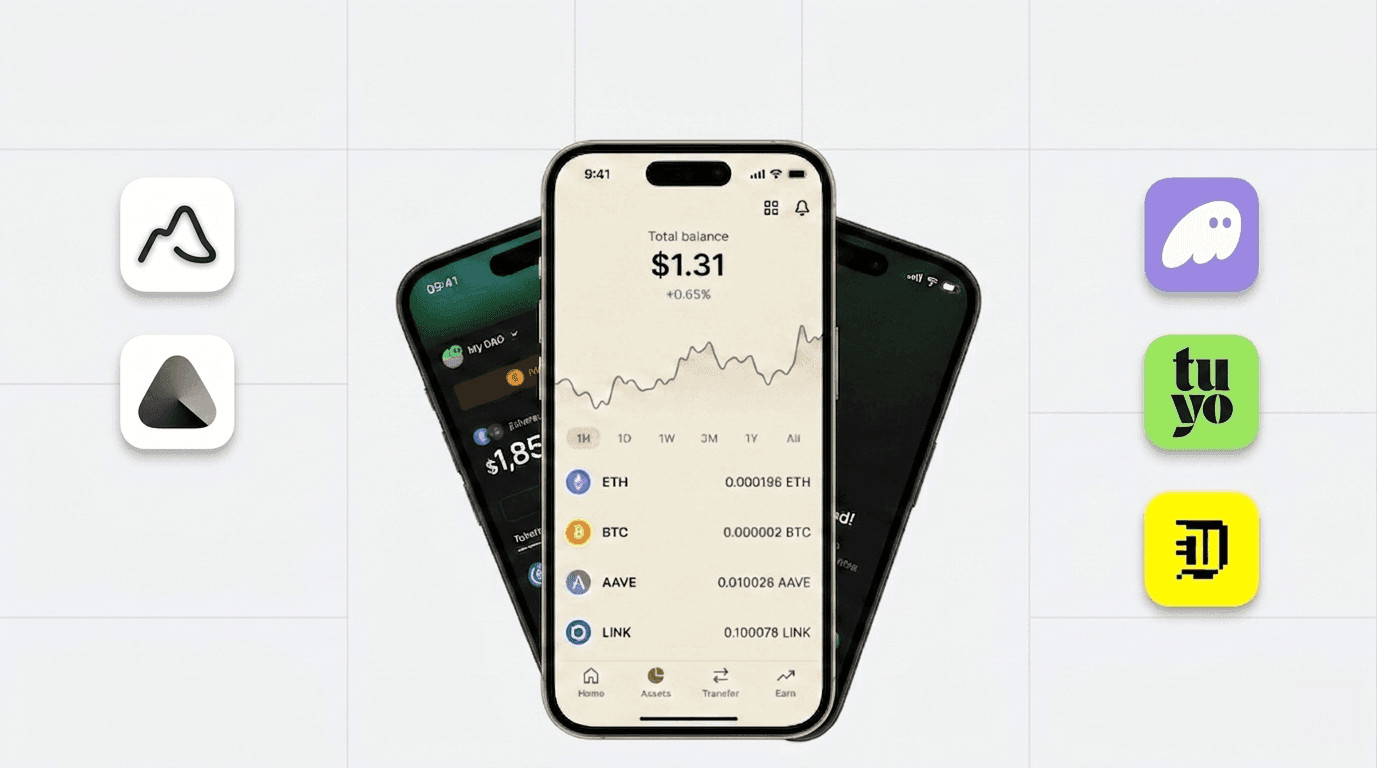
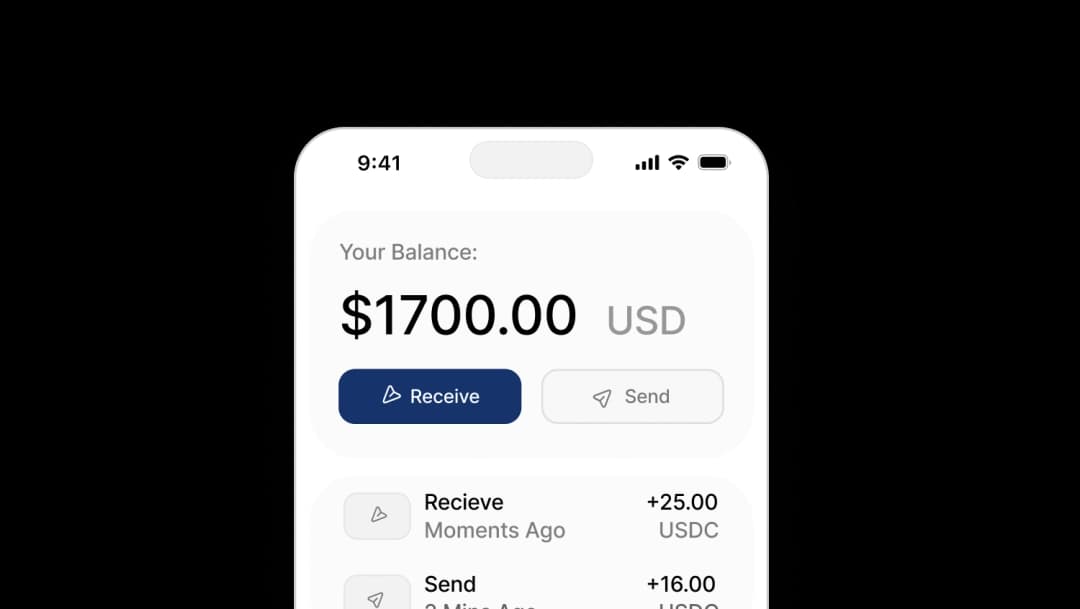
Embedded wallets are non-custodial wallets provisioned automatically during onboarding. Users authenticate with familiar methods — email, social login, or passkeys (Face ID, Touch ID) — and a wallet is created invisibly in the background.
From the user's perspective, there is no blockchain. They see balances, send money, and approve transactions. Behind the scenes, a smart account executes ERC-4337 user operations, a paymaster sponsors gas, and stablecoins move on-chain.
Smart Accounts: Programmable Controls
Smart accounts add the business logic that financial products need:
- Spending limits per user, per transaction, per merchant category
- Approval workflows requiring multi-signature for high-value transfers
- Time-based restrictions for compliance or parental controls
- Allowlists and blocklists for approved counterparties
These rules execute on-chain, making them auditable, tamper-proof, and transparent to regulators.
Backend Wallets: Server-Side Operations
Treasury management, automated sweeps, payroll distribution, and high-throughput operations run through backend wallets. These are server-side wallets secured by HSMs or TEEs, capable of signing hundreds of transactions per second.
What Stays the Same
Not everything changes with stablecoins. Some requirements are constants regardless of the underlying infrastructure:
- KYC/AML compliance is still required. Users need to be verified. Transactions need to be monitored. Suspicious activity needs to be reported. See our stablecoin regulation guide for details.
- Regulatory licensing varies by jurisdiction but still exists. Money transmission licenses, e-money licenses, or partnerships with licensed entities are still necessary.
- Customer support does not get replaced by blockchain.
- Product-market fit still matters more than infrastructure choices.
The stablecoin stack makes the infrastructure problem smaller so teams can spend more time on the product problem.
The Window Is Now
The stablecoin infrastructure stack has reached a maturity inflection point:
- USDC has crossed $50B in circulation with institutional-grade compliance
- Stripe acquired Bridge for stablecoin payment processing
- PayPal launched PYUSD for mainstream adoption
- Visa and Mastercard are integrating stablecoin settlement
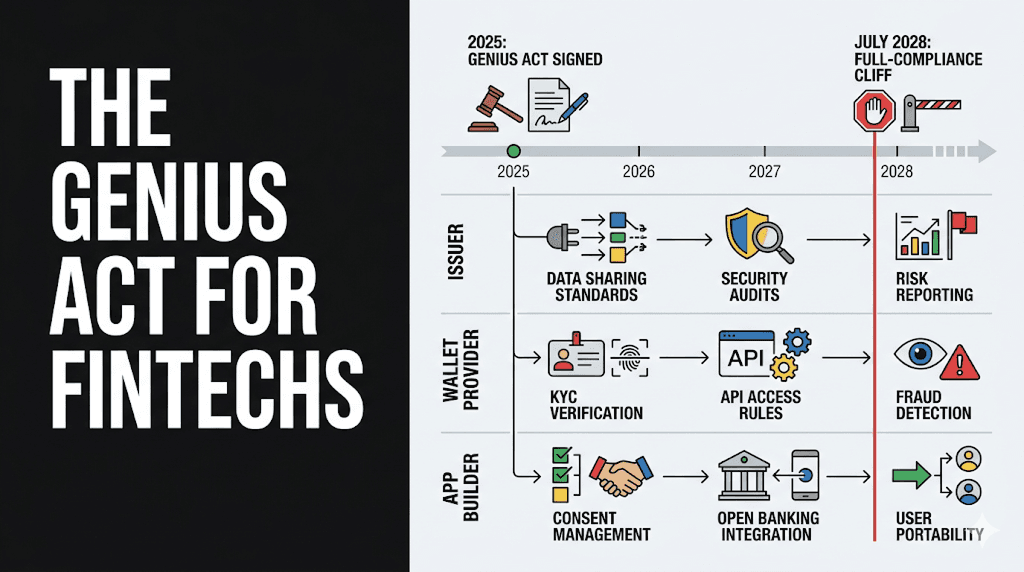
- The GENIUS Act in the US has established a regulatory framework for payment stablecoins
- MiCA in the EU provides clear guidelines for stablecoin operations
The combination of mature infrastructure, regulatory clarity, and collapsing costs means the next wave of neobanks will look fundamentally different from the last.
They will be smaller teams, serving more specific communities, shipping faster, and building on infrastructure that would have been unimaginable five years ago.
The question is no longer whether stablecoins will power financial products. It is who will build the best products while the infrastructure handles the rest.
If you are building a stablecoin-powered fintech and need wallet infrastructure that handles the complexity so your team can focus on the product, we should talk. Or start with the Openfort documentation to see how embedded wallets, smart accounts, and gas sponsorship work in practice.