Most Fireblocks versus Turnkey comparisons start by putting their feature tables side by side. That produces a tidy grid and the wrong answer, because the two products sit at different layers. Fireblocks runs digital asset operations for institutions. Turnkey signs transactions. A bank replacing a custody stack and a developer replacing a signing service are not shopping in the same market, even though both vendors now use the word "wallets" on their homepage.
If you are evaluating both, the useful question is not which is better. It is which layer you are buying.
The layer test
Answer these before reading the comparison table:
- Do you need to hold client assets under a regulatory obligation? Fireblocks Trust Company holds a NYDFS limited-purpose trust charter granted in August 2024. Turnkey does not do qualified custody at all. If this is a yes, the evaluation is essentially over.
- Do you need treasury operations, settlement workflows, and exchange connectivity? That is Fireblocks' core. Turnkey does not offer it.
- Do you need to create and sign from a large number of wallets programmatically, and build the product surface yourself? That is Turnkey's core.
- Do you need all of it? Fireblocks acquired Dynamic in October 2025 for roughly 90M USD specifically to add the embedded wallet and onboarding layer to its institutional stack.
Side by side
| Fireblocks | Turnkey | |
|---|---|---|
| Category | Digital asset operations platform | Wallet and signing infrastructure |
| Self-description | "Digital asset and stablecoin infrastructure company" | "Unopinionated Wallet-as-a-Service infrastructure" |
| Key management | Proprietary MPC (MPC-CMP) | AWS Nitro Enclaves with verifiable attestation |
| Self-hosting | API Co-signer on AWS Nitro, Azure, GCP Confidential Space, Alibaba; Keylink for existing KMS | Runs in Turnkey-operated enclaves |
| Qualified custody | Fireblocks Trust, NYDFS charter since August 2024 | Not offered |
| Certifications | SOC 2 Type II (zero material findings), ISO 27001, 27017, 27018, C4 CCSS QSP Level 3 | SOC 2 Type II; pen tests by Cure53, Disttrust, Trail of Bits |
| Chain coverage | 150 public blockchains as of February 2026 | EVM plus others; EIP-7702 across 38 EVM networks |
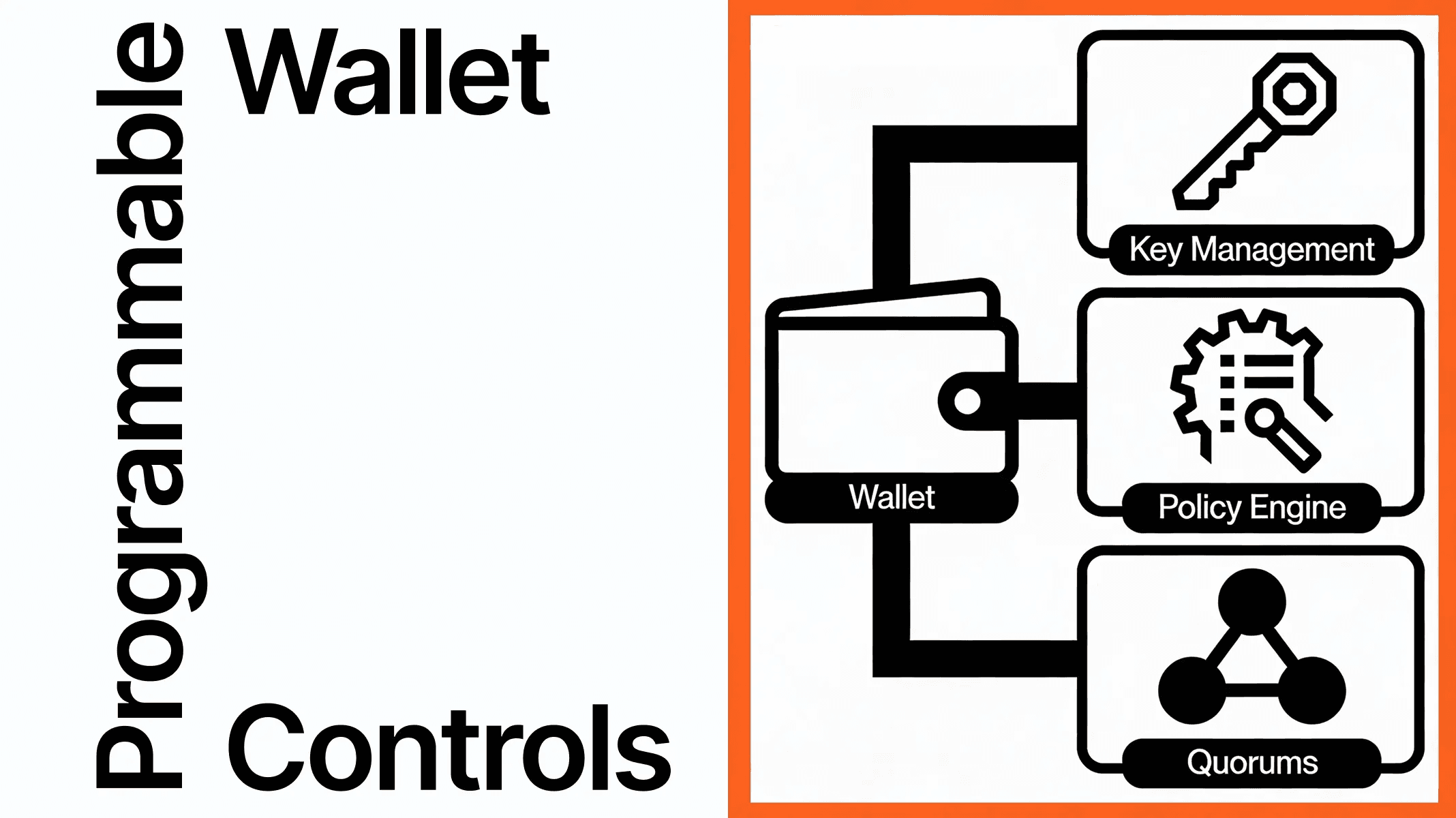
| Approvals | Enterprise policy engine and governance workflows | Policy engine with key-quorum approvals |
| Embedded wallets | Yes, via the Dynamic acquisition | Yes, as primitives you assemble |
| Stablecoin payments | Fireblocks Flow, launched June 2026, 800+ wallet types | Not a product; build it on the primitives |
| Agent payments | Agentic Payments Suite, May 2026, x402 Foundation member | Per-signature model and policy engine suit agent signing |
| Pricing | Custom enterprise, quoted through sales | Published: 0.10 USD/signature PAYG to 0.0015 USD enterprise |
| Scale | 10T+ USD in annual transfers, 2,400+ organisations | 65M+ USD raised, independent |
Two things people get wrong
"Fireblocks MPC cannot be self-hosted." This one circulates constantly and is only half right. Fireblocks API Co-signers can run on your own AWS Nitro, Azure, GCP Confidential Space, or Alibaba Cloud infrastructure, and Keylink connects existing key management systems. What you cannot do is audit the MPC-CMP protocol, because it stays proprietary. Running the co-signer yourself is a deployment choice. It is not the same as source availability, and vendors on both sides of this argument blur the distinction.
"Turnkey is the enterprise-grade one because it uses hardware enclaves." Turnkey's attestation model is genuinely strong, and reproducible builds let you verify what is running. But SOC 2 Type II is the only compliance certification Turnkey publishes. If your procurement checklist has ISO 27001 on it, that is a gap you will hit in week two of the review.
If you are answering a procurement questionnaire
Enterprise buyers in this category tend to arrive with the same list. Here is where each vendor actually stands, and where you will have to ask.
| Requirement | Fireblocks | Turnkey |
|---|---|---|
| MPC key management | Yes, MPC-CMP | No, TEE-based |
| Hardware isolation | Co-signer in confidential compute | AWS Nitro Enclaves |
| HSM integration | Via Keylink | Ask |
| SOC 2 Type II | Yes | Yes |
| ISO 27001 | Yes, plus 27017 and 27018 | Not published |
| Independent pen tests | Yes, published programme | Yes, three named firms |
| Qualified custodian | Yes, NYDFS trust charter | No |
| Multi-approver governance | Enterprise policy engine | Key-quorum approvals |
| Audit logs | Ask for retention and export format | Ask for retention and export format |
| Incident response SLA | Ask, contractual | Ask, contractual |
| Published pricing | No | Yes |
Two rows are deliberately left as "ask". Audit log retention and incident response commitments are contractual, they vary by tier, and no comparison article should be inventing them for you. Get both in writing.
Where each one wins
Fireblocks wins when you are a bank, a payment service provider, an exchange, or a fintech with a custody obligation, when you need 150-chain coverage, and when the compliance certificate list is a hard gate rather than a preference. It also wins when you want stablecoin settlement and agent payments as products rather than as things you build.
Turnkey wins when you are a developer team building your own product surface, when your signing volume is high and predictable enough that per-signature pricing is cheaper than an enterprise contract, and when you want to model costs without a sales cycle.
Neither wins when you want native smart accounts, gas sponsorship, and session keys as first-class features. Fireblocks treats smart accounts as a separate integration. Turnkey supports EIP-7702 but leaves the account layer to you.
Where Openfort fits
Interested party disclosure applies here. Openfort targets that last gap: native ERC-4337 and EIP-7702 smart accounts, built-in paymasters and session keys, backend wallets in TEEs for server-side automation, and OpenSigner as an open-source, self-hostable signer. Pricing is per operation.
We are not a qualified custodian and do not pretend to be. If your requirement is holding client assets under a trust charter, Fireblocks is the answer on this page.
Next step
Work out your layer first, then shortlist. Teams that skip that step run a twelve-week evaluation and discover in week ten that one vendor was never in the category.
More detail on either side: Fireblocks alternatives, Turnkey alternatives, and Privy vs Turnkey if you are comparing the developer-facing options instead.