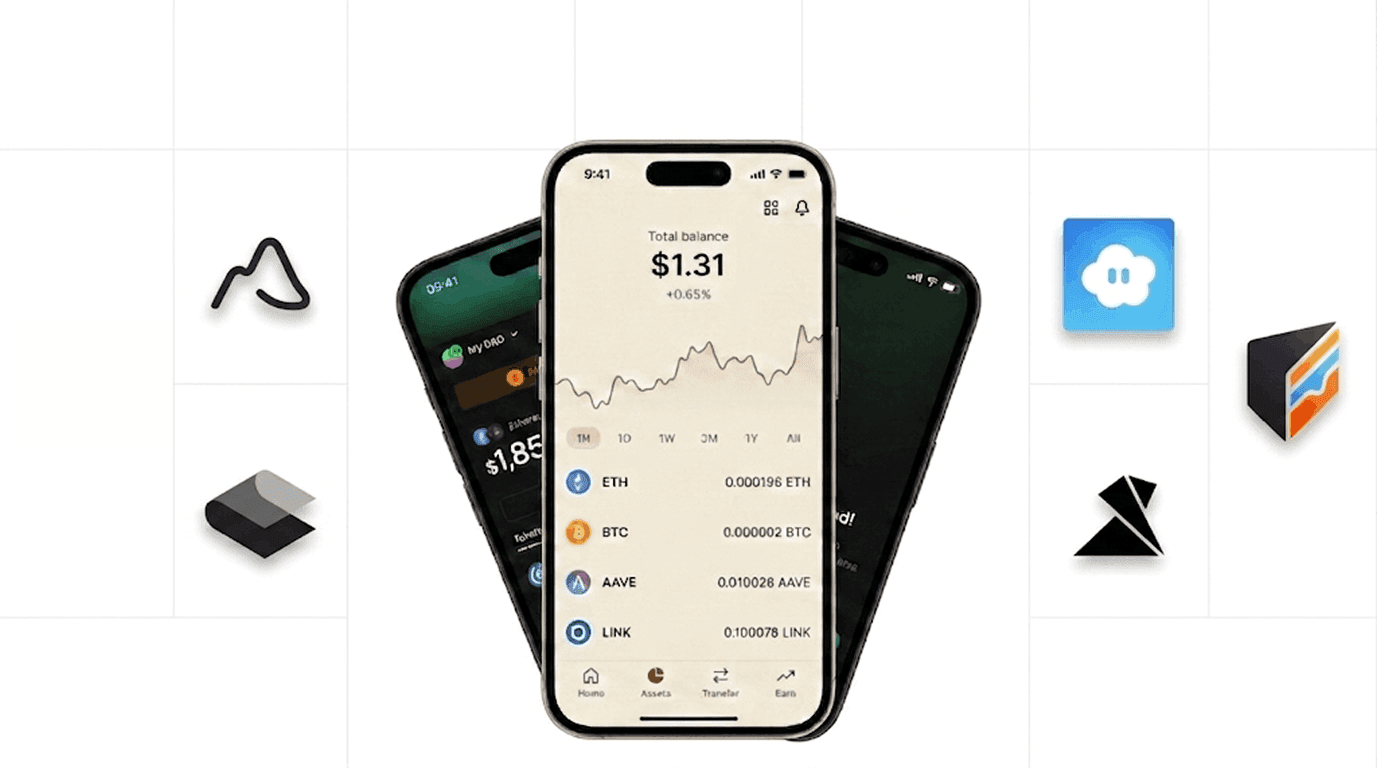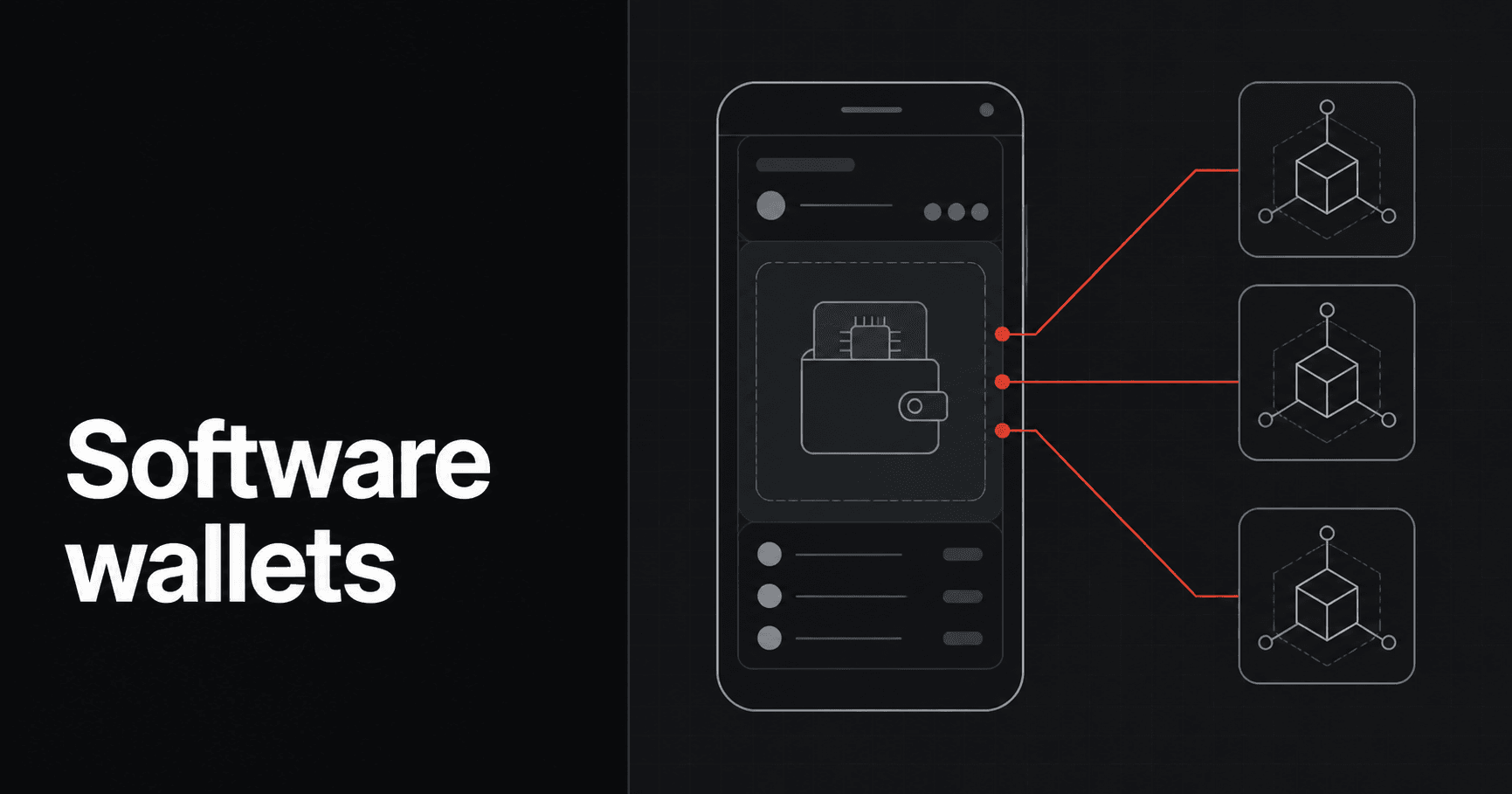
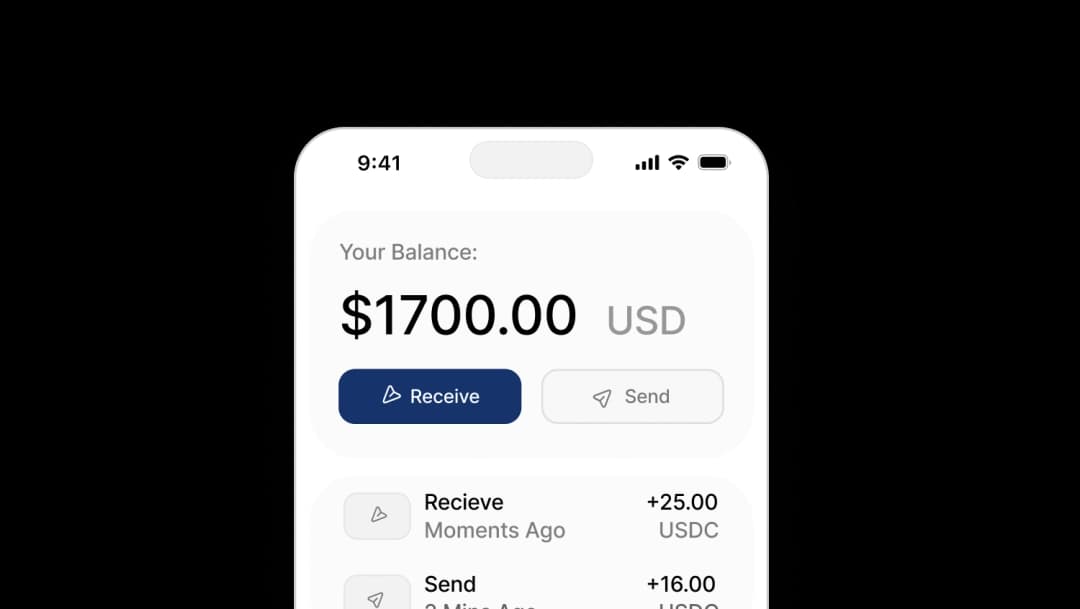
A software cryptocurrency wallet keeps a user's keys in software — in a browser, on a device, or embedded inside your app — instead of on a separate hardware device. It signs blockchain transactions and lets people hold digital assets without buying anything extra.
This guide is written for builders, not buyers. If you're a developer or technical founder deciding how to put a wallet inside your own product, the questions that matter are different from "which wallet should I download." You care about where keys live, how recovery works, what you can program the wallet to do, and how long the integration takes. We'll cover all four, and we'll be specific about where Openfort and Privy take different paths.
Software vs. hardware cryptocurrency wallets
The core split is where the private key lives. A software wallet is "hot" — keys are usable in software and the wallet is connected. A hardware wallet is "cold" — keys sit on an offline device and only sign when you physically approve.
Most apps ship software wallets for one reason: experience. Users won't buy a hardware device to try your app, and they expect login and signing to feel instant. Software wallets also make recovery and onboarding programmable, which hardware can't match.
Hardware still wins for one job: parking large balances in deep cold storage. For an in-app wallet that users transact with daily — payments, gaming, agents — a software wallet is the right tool. The real question isn't software vs. hardware; it's how the software handles keys.
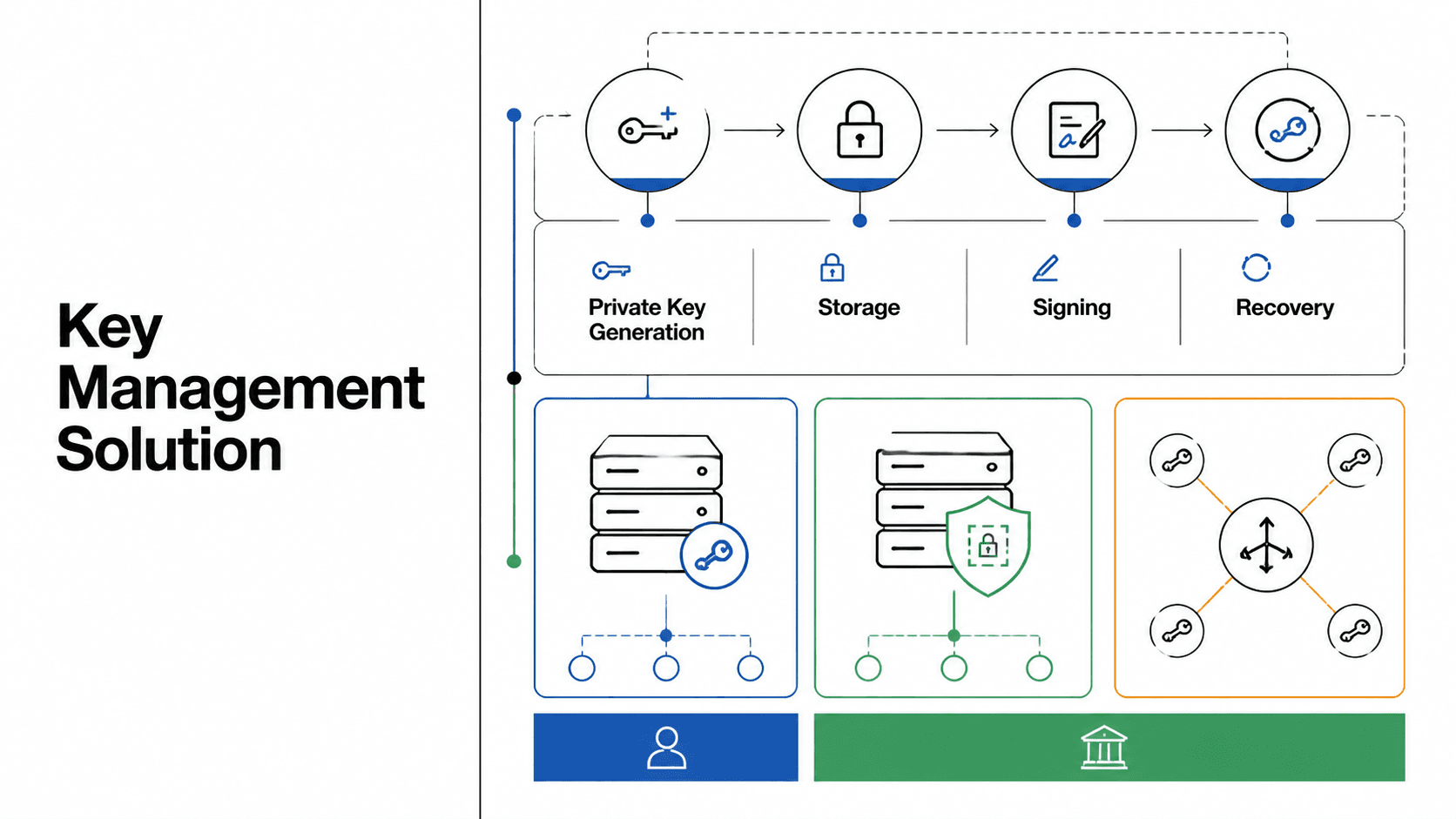
How cryptocurrency wallet software manages keys
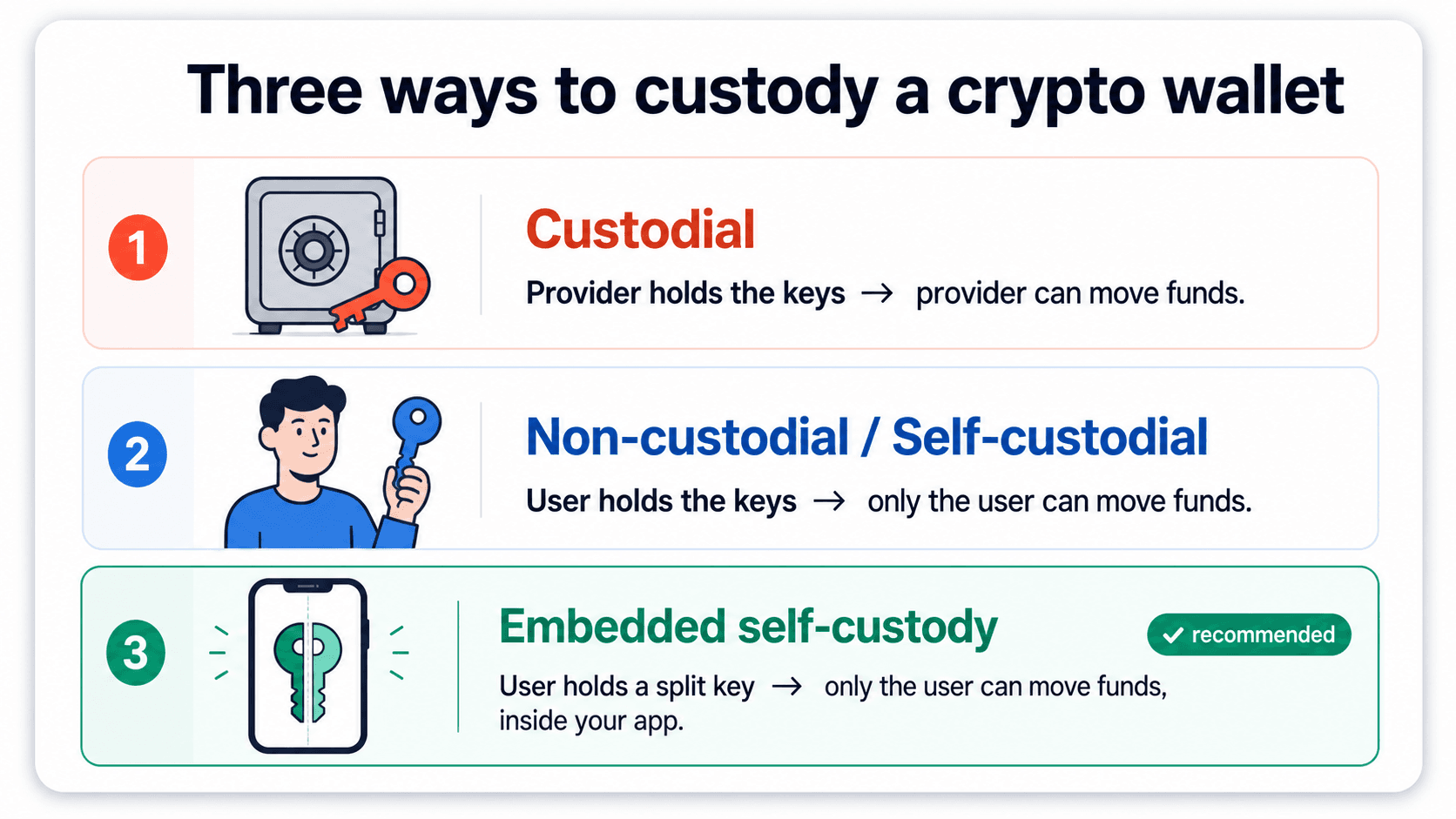
There are three custody models you'll choose between when you build with cryptocurrency wallet software:
- Full self-custody (seed phrase). The user holds a 12–24 word seed. Maximum control, worst UX — lose the seed, lose the funds. Rarely the right default for a mainstream app.
- MPC / secret sharing. The key is split into shares so no single party holds the whole thing. This is the model Privy is best known for, and it's why they rank for "secret sharing."
- Smart-account custody. The "account" is a smart contract on-chain. Signing keys can rotate, be scoped, or be recovered without ever exposing one master seed. This is the model Openfort leads with.
Secret sharing (Shamir's Secret Sharing) is worth understanding because it's the heart of MPC wallets. The private key is divided into n shares, and any k of them can reconstruct it — but fewer than k reveal nothing. MPC wallets go further: they sign across the shares without ever reassembling the full key, so there's no moment where the complete secret exists in one place. It's a genuinely strong way to remove a single point of failure. For how Openfort secures keys, see our security model.
What "self-custodial" actually means for software wallets
"Self custodial crypto wallet" is the most-searched term in this cluster, and it's also the most misunderstood. Self-custody means the user controls the keys, not the provider. It is not a single yes/no — it's a spectrum.
A seed-phrase wallet is fully self-custodial and fully unforgiving. An MPC wallet can be self-custodial if the user controls enough shares that the provider alone can't move funds. A smart-account wallet can be self-custodial and recoverable, because you can program guardians and key rotation without handing custody to the provider.
The practical takeaway for developers: don't promise "self-custody" as a marketing word. Decide concretely who holds which keys, and whether your provider can move funds without the user. Then make that architecture explicit. Account abstraction makes this easier — see how ERC-4337 wallet providers work.
Smart-account wallets — the model Privy underweights
Here's where Openfort and Privy diverge most, and it's the angle we think the category misses.
Privy's public positioning centers on self-custodial MPC — solid key custody for consumer apps. What that model doesn't natively give you is programmability. A raw key, however well it's split, can only sign. A smart account can do more, because the account itself is a contract:
- Session keys — grant a temporary, scoped key so users (or AI agents) can transact without re-approving every action.
- Gas sponsorship — pay gas for your users so they never need to hold a native token to get started.
- Programmable recovery — set guardians and rotation rules instead of relying on a single seed.
- Batching and policies — bundle actions and enforce on-chain spending rules.
These come from ERC-4337 and EIP-7702, the standards that turn an account into programmable software. If your product is a game, a payments app, or anything with agents, programmability is the difference between a wallet that holds assets and one that does work for the user. That's the surface a pure MPC wallet leaves on the table.
How to add a software wallet to your app
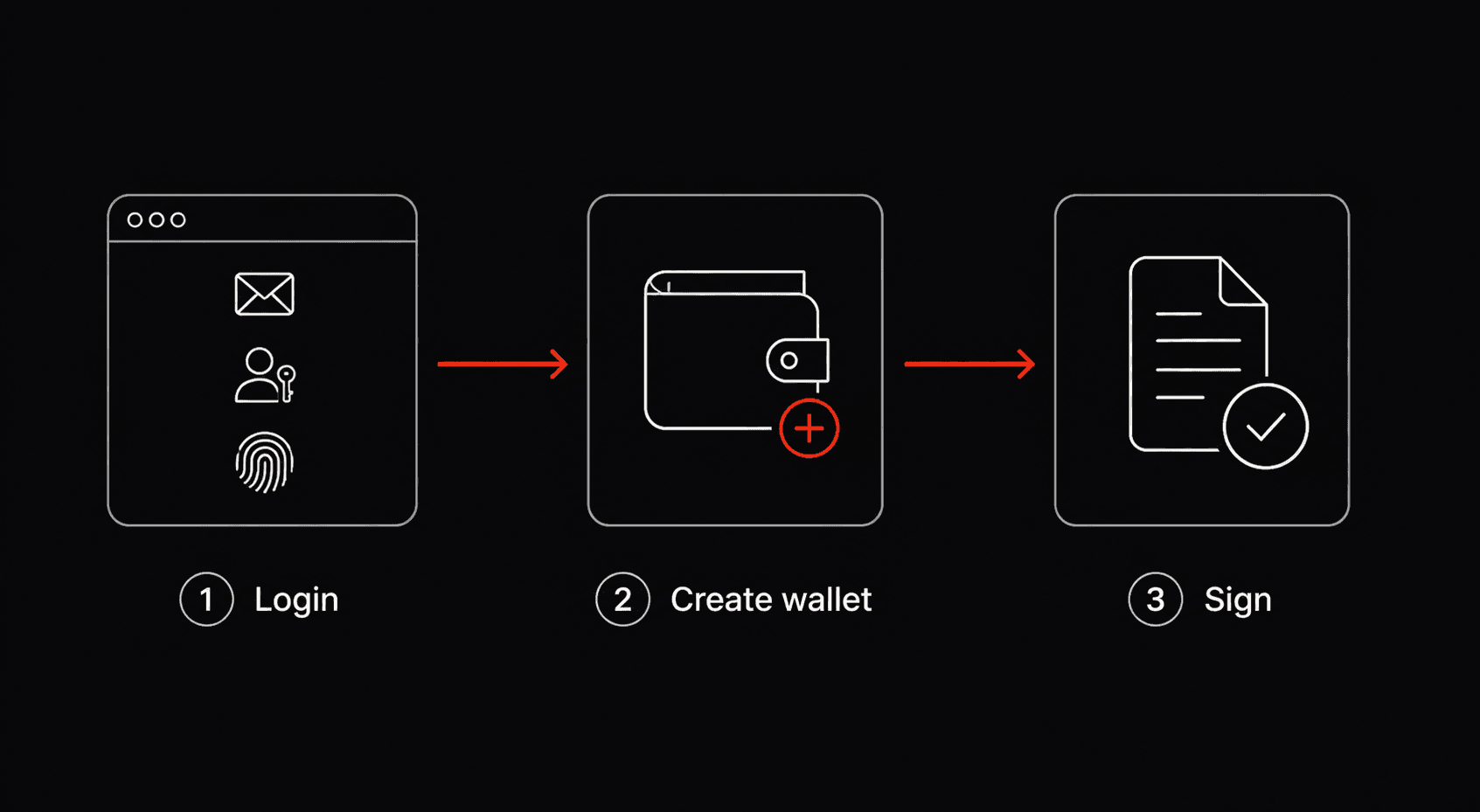
The build path for an embedded software wallet is shorter than most teams expect. It comes down to three steps:
- Blockchain login. Connect an auth method — email, social, or passkey. This is the "blockchain login" pattern: the user signs in the way they already know, and a wallet is provisioned behind it. No seed phrase prompt on day one.
- Wallet creation. On first login, the SDK creates the user's wallet — ideally a smart account so you get programmability from the start.
- Signing. Your app requests signatures through the SDK; the provider handles key management and, with smart accounts, gas and policies.
With wallet-as-a-service infrastructure you don't build key management, recovery, or smart-account deployment yourself. That's the turnkey integration Openfort is built for — embed the SDK, wire your auth, and ship. See the embedded wallet docs for the concrete flow.
If you're shipping the wallet under your own brand to regulated clients, read the white label crypto wallet guide on custody perimeter and exit.
Openfort vs Privy for software cryptocurrency wallets
Both are real options for an embedded software wallet. They optimize for different buyers.
| Dimension | Openfort | Privy |
|---|---|---|
| Primary positioning | Turnkey wallet infrastructure for developers | Self-custodial wallets for consumer apps |
| Account model | Native smart accounts (ERC-4337 + EIP-7702) | Embedded EOA + MPC |
| Key custody | Self-hostable signer + managed options | TEE/SSS |
| Programmability | Session keys, gas sponsorship, policies, batching | Third party or pure backend |
| Open source / self-host | Self-hostable signer — no hard lock-in | No |
| Ownership | Independent | Part of Stripe (acquired June 2025) |
| Pricing model | Usage-based per operation | MAU/transactions |
The honest read: if you want strong consumer-grade MPC custody and a polished default, Privy is a credible choice. If you want programmable smart-account wallets and the option to self-host the signer so you're never locked to one vendor, that's where Openfort is built differently. For the full breakdown, see Openfort vs Privy.
Choosing software wallet infrastructure — a checklist
Run any provider through these five questions:
- Custody model — seed, MPC, or smart account? Match it to your users' risk and UX needs.
- Programmability — can you do session keys and gas sponsorship, or only sign?
- Chain coverage — does it support the chains you actually ship on?
- Exit / lock-in — can you self-host or migrate if the vendor's roadmap changes? (A live concern after consolidation in this space.)
- Pricing model — does cost scale with operations or jump at MAU tiers? Compare on pricing.
If programmability and no lock-in rank high on that list, start with the embedded wallet quickstart.
Frequently asked questions
What is a software cryptocurrency wallet? A wallet whose keys live in software — device, browser, or embedded in an app — rather than on a hardware device. It signs transactions and holds assets without extra hardware.
Is a software wallet safe and self-custodial? It can be both. Safety depends on how keys are generated, split, and stored; self-custody means the user, not the provider, controls the keys. MPC and smart accounts keep wallets self-custodial while still allowing recovery.
Software wallet vs hardware wallet? Software is hot and convenient and embeds in apps; hardware is cold and safer for large cold-storage balances but can't power an in-app experience.
What is secret sharing in a crypto wallet? A scheme that splits a key into shares so no party holds the whole key; MPC wallets sign across shares without rebuilding it.
How do I add a software wallet to my app? Connect auth, create a wallet on first login, sign through an SDK — embedded-wallet infrastructure handles key management, smart accounts, and gas.
Openfort vs Privy? Privy centers on MPC self-custody for consumer apps; Openfort centers on programmable smart accounts plus a self-hostable signer for developers who want no lock-in.