White-label Wallet-as-a-Service, live in days
Add embedded, cross-app, and server-side wallets under your own brand through a single API — open-source keys you can self-host. No extension, no vendor lock-in.
No credit card required • Free testnet accounts









One account across all your apps
Users get a single wallet identity powered by your wallet-as-a-service that follows them across games, apps, and products. No more scattered balances or fragmented user data.
Set the rules once, enforce them everywhere
Define spend limits, allowed contracts, and session keys at the org level. Each app gets its own UX while sharing consistent WaaS rules and analytics.
Secure by nature
Learn about security- 1M+
- wallets created
- 10M+
- transactions
- <200ms
- signing speed
- 99.99%
- uptime
From developers that use Openfort
"Beam onboards +800k users with Openfort in less than a year."

Beam
"Kroma, a leading optimistic chain from Korea, scales with Account Abstraction"

Kroma
"DOS Chain ecosystem is pioneering web3 experience in SEA"

DOS Chain
"Beam onboards +800k users with Openfort in less than a year."
Beam
"Kroma, a leading optimistic chain from Korea, scales with Account Abstraction"
Kroma
"DOS Chain ecosystem is pioneering web3 experience in SEA"
DOS Chain
Everything you need to run a wallet platform
White-label wallets with cross-app identity and built-in payments infrastructure.
Login With Your Brand
Transform your ecosystem into a universal login method compatible with major wallet adapters like RainbowKit and ConnectKit.
Global Identities
Provide personalized handles under your brand's subdomain.
Your own NPM package
Move across any app with your own SDKs and single wallet authentication.
Cross platform Compatibility
Natively interact with the ecosystem sdk on iOS and Android with React Native.




Ecosystem Hub
A whitelabel centralized hub for projects and devs while maintaining your brand presence.




Advanced Security
Protect users with encryption, Mobile Wallet Protocol library, and advanced recovery options.
Dedicated WaaS support for ecosystem teams
24/7 Slack Support
Round-the-clock support for your entire ecosystem across all applications.
Ecosystem Success Team
Get direct access to blockchain infrastructure experts who understand scaling and can optimize your ecosystem architecture.
Developer SDK
Support for developers building on your ecosystem: documentation, SDKs, and direct engineering assistance.
Learn more about wallet-as-a-service
Guides on embedded wallets, cross-app identity, and WaaS infrastructure
Best Wallet-as-a-Service (WaaS) Providers in 2026
Wallet-as-a-service providers compared on features, pricing, and use cases: Openfort, Privy, Turnkey, Fireblocks, and more.
Embedded Wallets Explained (2026 Guide)
Comprehensive guide on how embedded wallets work: seedless onboarding, in-app signing, and paymaster-powered gasless UX.

Cross-App Wallets Explained: One Identity, Every App
How cross-app wallets provide a single, portable digital identity that lets users access assets across an entire ecosystem.
How to Boost Your Brand with White Label Crypto Wallet
How white-label wallet platforms speed up market entry while keeping your brand consistent.

The Wallet Services Guide
Comprehensive guide to wallet custody models and key management architectures for wallet-as-a-service providers.
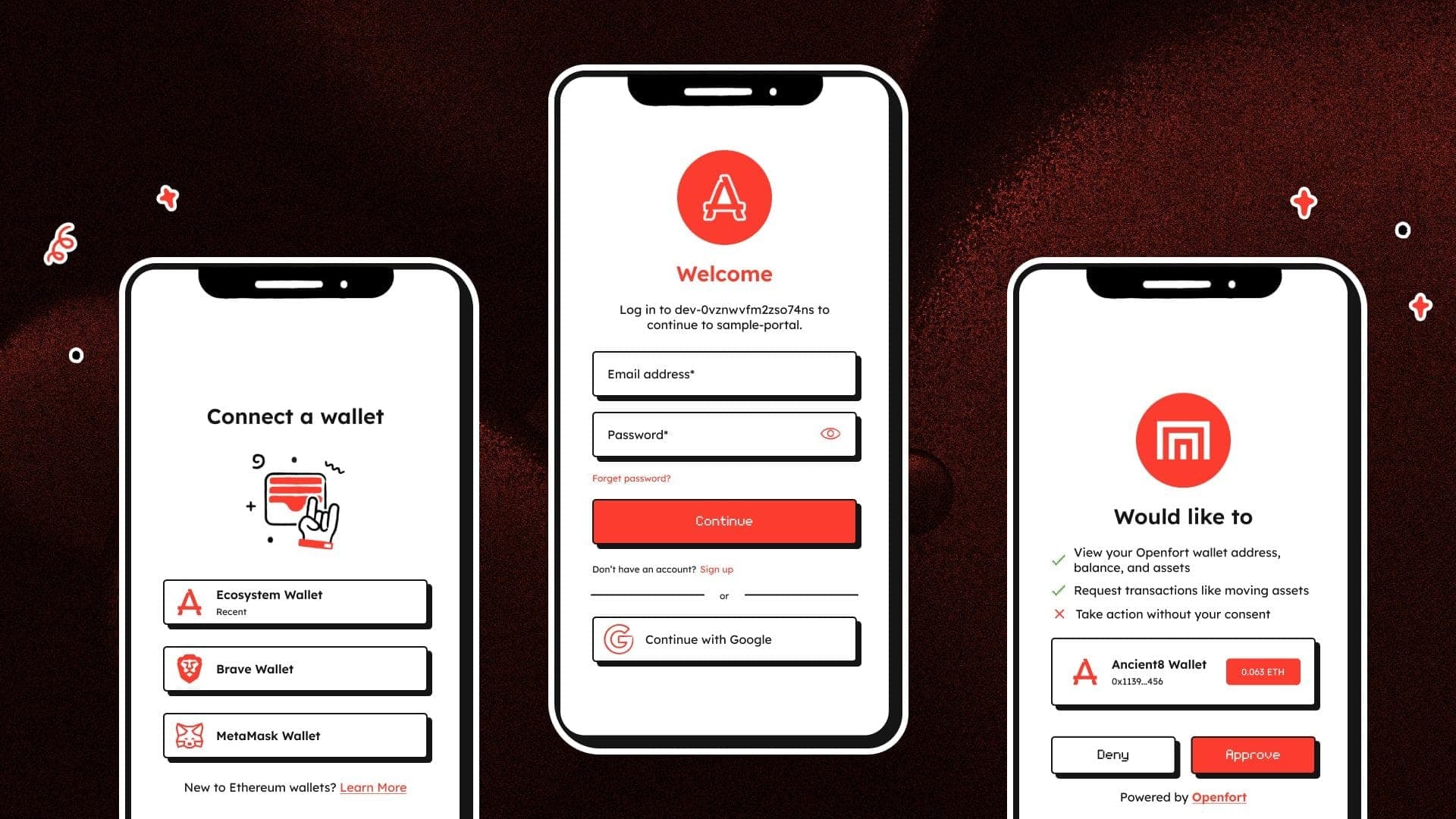
Introducing Global Wallets, Powered by the Ecosystem SDK
A single persistent identity users carry across multiple apps and blockchains, powered by the Ecosystem SDK.
Frequently Asked Questions
Can't find your answer?
Wallet-as-a-service (WaaS) is a managed platform that lets you embed non-custodial wallets into your product without building wallet infrastructure from scratch. Openfort's WaaS provides white-label wallets, cross-app identity, authentication, gas sponsorship, and payments — all through a single API. You get production-ready wallet infrastructure that scales to millions of users.
Most wallet-as-a-service providers keep critical key infrastructure opaque or fully custodial. Openfort takes a different approach: embedded, non-custodial wallets with self-hostable key management (OpenSigner). This means you can launch a WaaS product quickly while retaining the option to bring key management in-house later — no vendor lock-in.
Yes. Openfort's wallet-as-a-service is fully white-label. Your users interact with your brand, your UI, and your app — they never see Openfort. The WaaS infrastructure powers everything behind the scenes: wallet creation, signing, gas sponsorship, and cross-app identity.
With Openfort WaaS, each user gets a single wallet identity that follows them across your games, apps, and products. You define one cross-app wallet per user at the org level and surface it in multiple frontends (web, mobile, game clients) via the SDKs. Balances, permissions, and limits stay consistent across your entire product suite.
Teams typically go from integration to production in days, not months. Openfort WaaS provides TypeScript/JS SDKs, React helpers, Unity support, and comprehensive documentation. You plug in your existing auth (OAuth, Firebase, passkeys) and Openfort handles wallet creation, transaction orchestration, and signing automatically.
Custodial wallets hold user keys on a centralized server: the provider can move funds and you inherit their compliance posture. MPC wallets split a key across parties using threshold cryptography, which adds signing latency and operational coordination. A wallet-as-a-service like Openfort sits between the two: keys are non-custodial and TEE-backed, signing is sub-200ms, and every wallet is a smart account so gas sponsorship, session keys, and batching come built in. You get custodial-quality UX with self-custody guarantees.
The most-evaluated wallet-as-a-service providers in 2026 are Openfort (open-source, native smart accounts, exportable keys), Privy (now part of Stripe, embedded wallets with Bridge payment integration), Turnkey (low-level TEE signing infrastructure), Thirdweb (bundled web3 platform), and Dynamic (polished auth UI, now part of Fireblocks). Openfort is the only option that is fully open-source with self-hostable key management — see our guides comparing it against Privy, Turnkey, Thirdweb, and the legacy MetaMask SDK.