Move treasury liquidity instantly across borders
Tokenize bank deposits for instant intercompany transfers, real-time cash visibility, and programmable treasury automation.
No credit card required • Free testnet accounts







Bank-issued tokens on shared infrastructure
Regulated financial institutions issue tokenized representations of deposits. Funds move directly between counterparties on a shared distributed ledger with near-instant settlement, reducing settlement windows and counterparty exposure.
Read the docs→Automate cash management with threshold triggers
Treasury teams see live balances and can configure automated sweeps, FX conversions, and collateral swaps when balances reach predefined levels. Multi-party transactions settle simultaneously or not at all.
Learn more→
Bank-issued, on-balance sheet, fully regulated
Tokenized deposits remain bank-issued liabilities governed by existing capital, liquidity, and compliance requirements. They convert to and from stablecoins through native DEX integration.
Get started→Scale 2x further for the same cost
Openfort runs at half the cost per operation of any other wallet provider. Pricing is operation-based — you pay for what you use, with no volume caps or gated features.
- 1M+
- wallets created
- 10M+
- transactions
- <200ms
- signing speed
- 99.99%
- uptime
“Openfort lets us move and reward users through our own global wallet with institutional-grade reliability.”
Kroma
Optimistic L2
Secure by nature
Learn about securityReal-time visibility
Onchain balances give treasuries an up-to-the-minute view of global liquidity across all entities.
24/7 settlement
Operate around the clock, eliminating banking hour restrictions and cut-off windows.
Programmable workflows
Automate approvals, sweeps, and compliance processes via smart contracts with threshold triggers.
Learn more about tokenized deposits
Explore guides and technical deep-dives on treasury modernization
Treasury Wallets: Managing Digital Assets at Scale
What treasury wallets are, how they work, and why enterprises use them to secure and move funds.
How to Build a Neobank: The PM's Guide for the Stablecoin Era
Scoping and building a stablecoin neobank — architecture decisions and vendor choices.
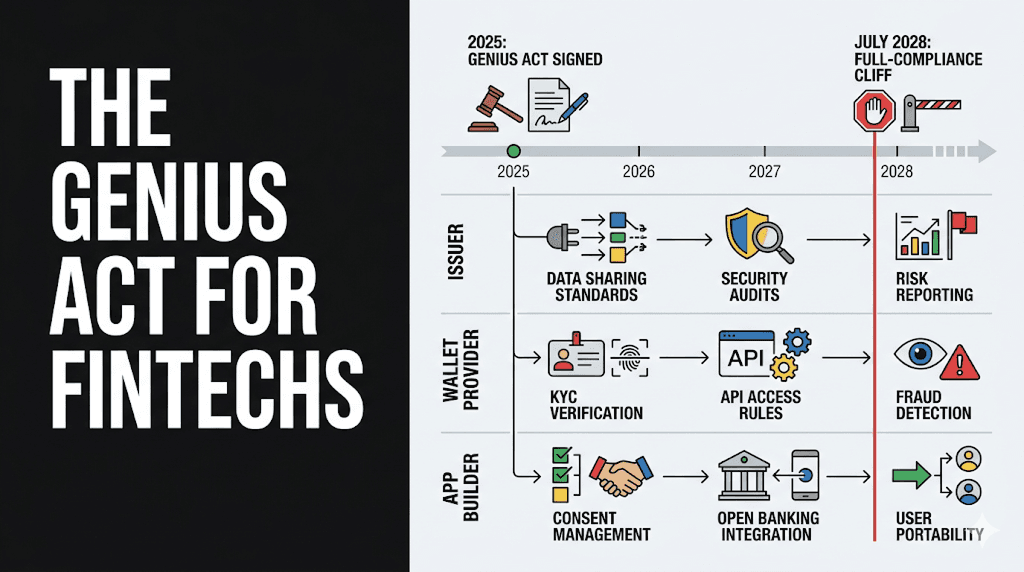
The GENIUS Act for Fintechs: What Changes by July 2028
Every app that embeds USD stablecoins inherits obligations from the GENIUS Act — here is what changes.
Frequently Asked Questions
Can't find your answer?
Yes. They are backed one-for-one by funds held at insured depository institutions and governed by existing capital, liquidity, and compliance requirements.
Tokenized deposits are bank-issued liabilities on the bank's balance sheet, while stablecoins are reserve-backed instruments issued by non-bank entities. Both can operate on the same infrastructure.
Yes. Native DEX integration converts between tokenized deposits and stablecoins, giving you flexibility for different use cases and counterparties.
Cross-border payments, intraday liquidity management, collateral optimization, supply chain finance, and intercompany settlements. All benefit from real-time settlement and visibility.
Configure rules to automatically trigger internal sweeps, FX conversions, or collateral swaps when balances reach predefined levels. Multi-party transactions settle atomically.